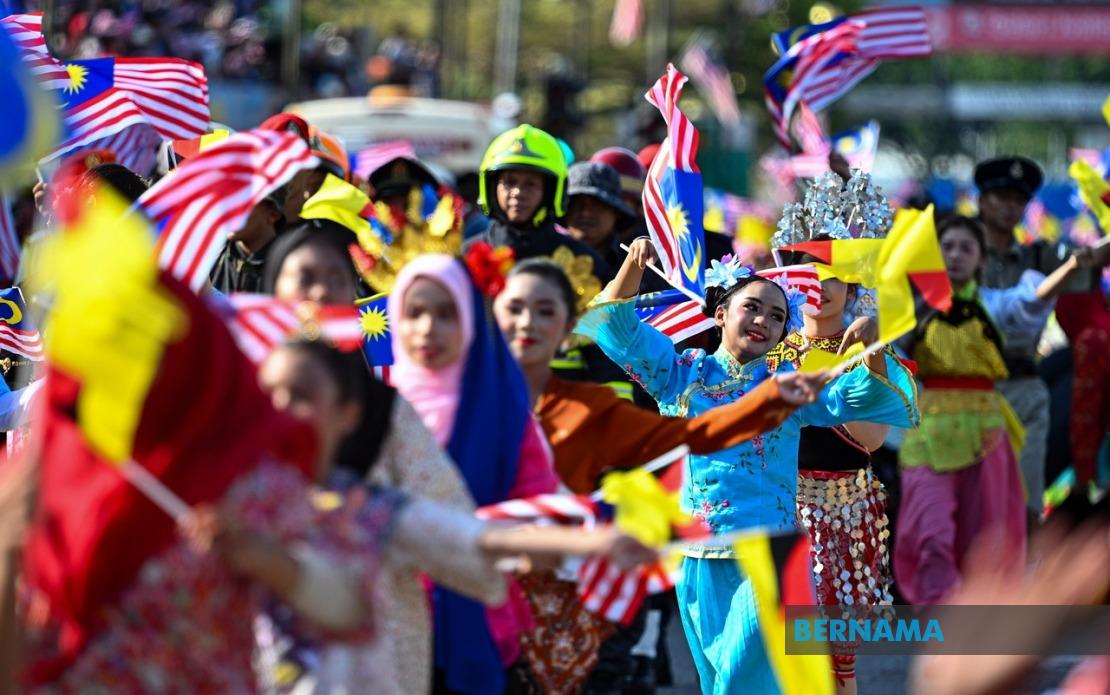
More than 30,000 visitors from diverse backgrounds converged on Dataran Majlis Bandaraya Seremban to participate in the state's National Day 2026 observance, underscoring what officials characterised as a remarkable display of patriotic fervour across Negeri Sembilan. The substantial crowd, many of whom began arriving in the pre-dawn hours, created a festive atmosphere that extended from the early morning through the afternoon festivities.
Menteri Besar Datuk Ismail Lasim attributed the impressive attendance to the population's deep commitment to the national occasion and their appreciation for the cultural performances staged throughout the event. During conversations with attendees, Lasim learned that some participants had arrived as early as 5.30 am, demonstrating what he characterised as an unwavering affection for the nation and genuine enthusiasm for the entertainment programme.
While acknowledging the strong turnout, Lasim revealed that organisers had deliberately reduced the number of parade contingents and military assets on display compared to previous years. This decision reflected concern about potential public health risks from prolonged exposure to haze conditions, a recurring environmental challenge across Southeast Asia during certain seasons. Fortunately, atmospheric conditions on the day of the celebration proved favourable, negating the worst-case scenario that planners had anticipated.
The celebration drew royal patronage with the attendance of Tuanku Muhriz Tuanku Munawir, Yang Dipertuan Besar of Negeri Sembilan, and Tunku Ampuan Besar Tuanku Aishah Rohani Tengku Besar Mahmud, who arrived at approximately 8.20 am. Their presence added ceremonial significance to the occasion and underscored the state's commitment to honouring the nation's independence.
Despite the scaled-back format, the parade remained substantial in scope, with 82 contingents encompassing more than 4,000 participants representing a cross-section of Negeri Sembilan's institutional landscape. Participants included representatives from government departments, statutory bodies, district administrations, non-governmental organisations, educational institutions ranging from primary schools to universities, and private sector organisations. This inclusive approach reflected the broad-based nature of Malaysia's national identity and the shared civic responsibility toward celebrating independence.
The Main Guard of Honour, a ceremonial centrepiece of the celebration, consisted of three officers and 103 other ranks drawn from the 15th Battalion Royal Malay Regiment at Senawang, under the command of Major Dr Muhammad Hazim Abdul Qhalib. The unit's ceremonial precision was complemented by a combined military band featuring musicians from both the 24th Battalion Royal Malay Regiment and the Malaysian Army Basic Training Centre, performing traditional and contemporary pieces that enhanced the patriotic atmosphere.
Beyond the marching contingents, the celebration featured a distinctive showcase of defence and security agency assets, including decorated modern vehicles and a curated collection of vintage automobiles and antique bicycles. These displays proved particularly captivating to spectators and offered rare opportunities for civilians to view military equipment and heritage vehicles typically unavailable for public inspection. Participating agencies encompassed the full spectrum of national security and emergency response infrastructure, including the Malaysian Armed Forces, Royal Malaysia Police, Immigration Department, Fire and Rescue Department of Malaysia, Health Ministry, Malaysian Civil Defence Force and Seremban City Council.
For many families attending, the National Day celebration served purposes extending beyond festive entertainment. Siti Ruayiza Rebin, a 42-year-old housewife, explained that she had prioritised bringing her three children—aged 19, 15 and 12—to National Day observances consistently since their early childhood. Her approach reflects a deliberate strategy to cultivate historical awareness and civic appreciation in younger generations. She noted that whenever independence-related programmes occurred at her children's schools, she actively supported their participation to deepen their understanding of the sacrifices that preceding generations endured to secure the nation's independence.
Similarly, Mohd Khairul Azmi, a 45-year-old private sector employee, attended with his two young children aged five and seven, arriving at 6 am to secure an optimal viewing position. Their particular enthusiasm centred on observing military assets and vintage vehicles rarely accessible to civilian audiences. Khairul Azmi articulated a conviction that such celebrations serve essential educational functions by enabling children to appreciate historical events and recognise the institutional contributions of previous generations toward national development.
The strong family participation evident throughout the celebration reflects broader trends in how Malaysian communities engage with civic occasions. Across the Southeast Asian region, where rapid modernisation sometimes creates intergenerational disconnects regarding national narratives, these events function as vehicles for transmitting historical memory and reinforcing collective identity. The fact that parents actively ensured their children's attendance, sometimes sacrificing considerable inconvenience through early morning arrivals, suggests that National Day observances retain substantial cultural significance beyond mere public holidays.
For Negeri Sembilan specifically, the celebration demonstrated the state's capacity to mobilise its institutional resources and civil society networks toward a unified observance despite environmental constraints. The decision to moderate parade scale rather than cancel elements entirely reflected practical risk management while maintaining the event's essential character and appeal. The enthusiastic response from attendees validated this approach and suggested that quality of experience mattered more to participants than sheer programme magnitude.

