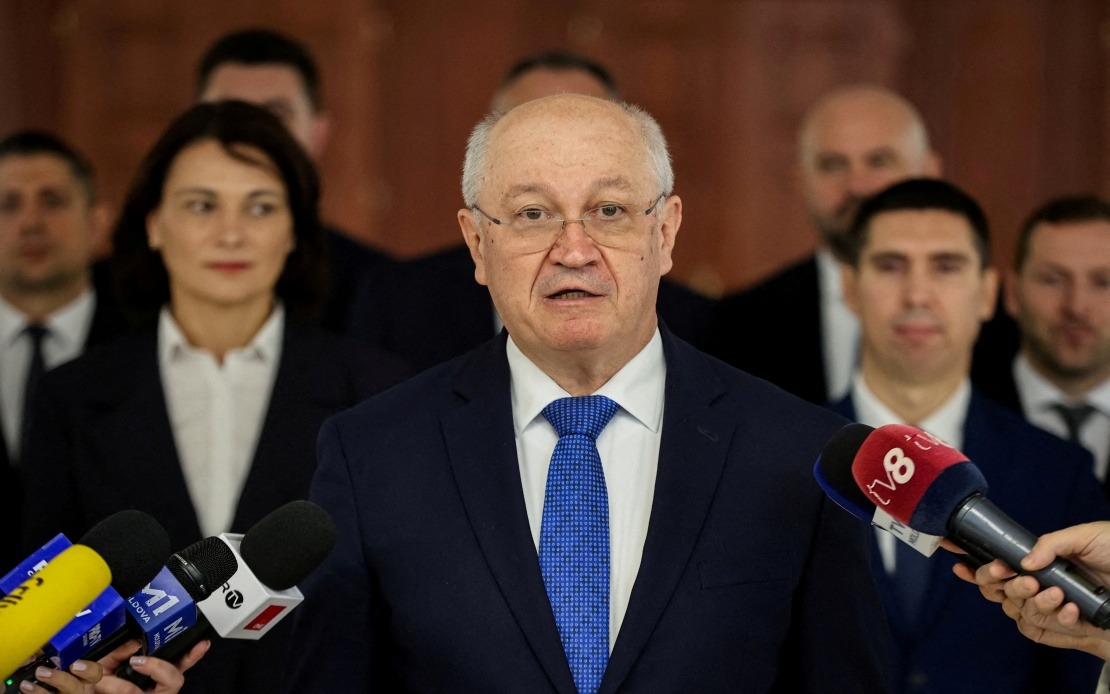
Alexandru Munteanu, who took the helm as Moldova's Prime Minister in November 2025, announced his decision to resign on Friday through a post on social media platform X, marking a significant political development in the Eastern European nation. The announcement came with minimal explanation, with Munteanu offering only a brief statement that he had reached a point where continuing in the role was incompatible with his fundamental principles and beliefs.
The resignation represents a sudden end to Munteanu's tenure, which lasted approximately eight months. His departure from the prime ministerial office signals potential instability within Moldova's government at a critical juncture in the country's political trajectory. The timing of the resignation raises questions about the underlying circumstances that prompted such a decisive exit, even as Munteanu refrained from elaborating on specific grievances or disputes that may have contributed to his decision.
In his brief statement, Munteanu articulated his reasoning in measured terms, emphasizing the conflict between his personal convictions and the requirements of the office. This approach—stepping down quietly rather than publicly airing disputes—suggests either a desire to maintain diplomatic decorum or perhaps recognition that detailed public criticism could further destabilize an already fragile political situation. His words reflected a principled stance, indicating that the decision stemmed from fundamental disagreements rather than personal circumstances or external pressures.
Moldova, a small nation sandwiched between Romania and Ukraine, occupies a geopolitically sensitive position in Europe. The country has been navigating complex relationships with both Western institutions and its larger neighbors while managing internal political divisions. Any change in leadership carries implications for Moldova's foreign policy orientation and domestic reform agenda. Munteanu's exit therefore warrants attention not merely as a domestic political incident but as a potential indicator of deeper tensions within the Moldovan government's strategic priorities.
The announcement comes at a time when Eastern European governments face mounting pressures related to regional security concerns, economic challenges, and questions of democratic governance. For Moldova specifically, maintaining stable leadership has been critical to advancing integration with European institutions and managing relations with Russia-aligned factions within the country. The loss of a prime minister midway through what would normally be a longer tenure disrupts continuity and may necessitate realignments within the cabinet and broader government structure.
Political observers in the region will likely scrutinize what transpired behind closed doors during Munteanu's months in office. Whether the resignation reflects policy disagreements with the president, conflicts with parliament, opposition from oligarchic interests, or disputes over governance approaches remains unclear from his terse public explanation. The absence of detail in his statement may itself be telling, suggesting either an agreement to depart quietly or a calculation that restraint serves his political interests better than transparent disclosure.
Moldova's constitutional framework will now require appropriate procedures for either appointing a successor or facilitating a transition period. The specific mechanism depends on the timing and parliamentary dynamics following this announcement. Any interim arrangements or transitional leadership will need to maintain sufficient credibility and continuity to manage outstanding government business while stakeholders position themselves for potential longer-term changes.
For Southeast Asian observers monitoring broader international politics, Moldova's situation underscores how even smaller nations experience acute leadership instability when senior officials determine they cannot reconcile personal conviction with institutional responsibility. This principle resonates across different political contexts and regions, offering lessons about governance legitimacy and the tensions inherent in holding high office.
The resignation also reflects a pattern observed periodically in post-Soviet states, where senior officials sometimes depart office somewhat abruptly when fundamental disagreements with their government's direction become untenable. Munteanu's decision to exit rather than persist suggests he retained sufficient autonomy and personal standards to walk away, which itself indicates something about Moldova's democratic framework, however contested that framework might be by international observers.
International partners of Moldova, including the European Union and individual European nations, will be monitoring developments closely. Munteanu's departure may trigger diplomatic outreach to understand the situation and ensure continuity in Moldova's European integration efforts and security cooperation. Regional actors, particularly those invested in Moldova's trajectory, will assess whether the resignation signals fundamental shifts in government policy or represents a more isolated personnel change.
As Moldova navigates this transition, questions will inevitably emerge about what Munteanu's tenure accomplished and what remains incomplete. His eight months in office presumably included work on legislative priorities, budget implementation, and international engagement—all now subject to potential disruption or revision under successor leadership. The broader implications for Moldova's pro-European trajectory and domestic reform momentum depend substantially on who assumes the prime ministerial responsibilities and what policy direction they chart.

