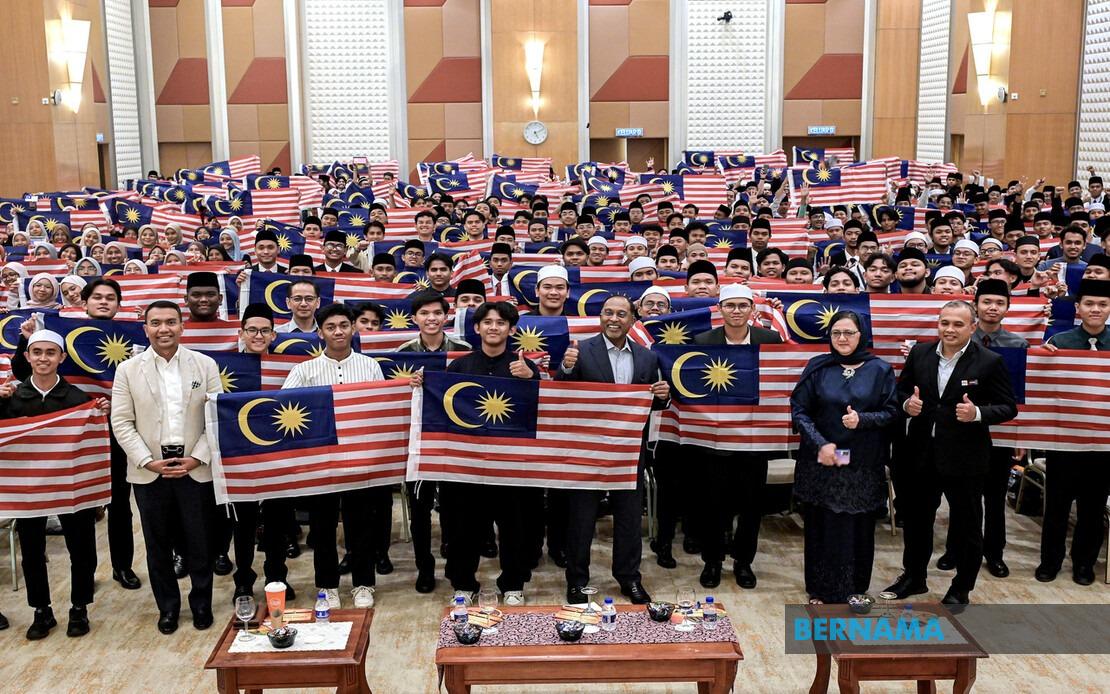
The Ministry of Higher Education has stepped up its protective oversight of Malaysian students studying throughout West Asia, drawing on coordinated guidance from Malaysia's Foreign Ministry as security dynamics across the region continue to shift in unpredictable ways. Higher Education Minister Datuk Seri Dr Zambry Abd Kadir outlined the ministry's multifaceted approach to safeguarding its student population during remarks following the conclusion of the International Charisma Programme held in Putrajaya on August 3. The heightened vigilance reflects growing international concern about regional stability, particularly following recent travel advisories issued by the United States encouraging its citizens to reconsider their presence in the area.
Zambry emphasized that the ministry has been tracking the evolving security landscape with considerable attention, including monitoring foreign policy announcements and travel guidance from major powers. He acknowledged the inherent unpredictability of geopolitical calculations, noting that strategic assessments that appear fixed today may shift substantially by tomorrow. Rather than adopt a reactive posture, MOHE has determined to maintain proactive engagement with Wisma Putra, the Foreign Ministry's secretariat, to ensure that decisions affecting Malaysian students rest on the most current intelligence and diplomatic assessment available. This collaborative framework allows the education ministry to make informed decisions about student movements, welfare provisions, and contingency protocols without operating in informational isolation.
The current cohort of Malaysian students scattered across West Asia represents a significant national investment in human capital development. Egypt hosts thousands of Malaysian scholars pursuing diverse fields including Islamic studies, medicine, dentistry, and pharmacy—professional disciplines that the government views as strategically essential for the country's ongoing development. Jordan, meanwhile, maintains an estimated student population ranging between 1,000 and 2,000 Malaysians, while Morocco's contingent, though more modest, demonstrates steady growth. This geographic distribution across multiple countries introduces both opportunities for educational diversity and administrative complexity when security situations deteriorate.
The ministry's institutional preparation reflects recognition that protecting student interests requires infrastructure beyond mere policy pronouncements. MOHE has positioned Education Malaysia offices in both Egypt and Jordan as operational hubs capable of rapid response and real-time communication with the student community. Morocco, lacking a dedicated Education Malaysia office, has been integrated into the coordination framework through the Egyptian office, establishing clear communication channels and responsibility protocols. This structured arrangement ensures that no Malaysian student cohort exists in an institutional blind spot, while acknowledging the practical realities of maintaining physical presence in multiple jurisdictions.
Zambry disclosed that 456 Malaysian students registered to commence studies in Egypt, Jordan, and Morocco from September 1 have participated in MOHE's International Charisma Programme, conducted jointly with the Malaysia Nationhood Academy. This preparatory initiative serves multiple strategic objectives simultaneously: it furnishes students with security briefings and welfare guidance, facilitates direct dialogue with ministry officials overseeing their destinations, and establishes psychological and administrative continuity between Malaysia and their chosen study locations. By exposing students to this coordinated preparation before departure, the ministry aims to embed awareness of safety protocols and support mechanisms into their transition experience.
Although no reports have yet indicated that current security tensions have directly harmed Malaysian students in the three destinations, the ministry has signaled its readiness to implement escalatory protective measures should circumstances deteriorate. Zambry stressed that this preparedness is not speculative but rooted in institutional capacity—Education Malaysia offices have been explicitly instructed to maintain operational readiness to execute evacuation, relocation, or welfare support directives on short notice. The threshold for such action would presumably be determined through consultation with Wisma Putra, ensuring that educational considerations align with broader foreign policy and diplomatic judgments.
The minister's comments regarding student character development reveal a broader philosophical orientation within MOHE's approach to higher education abroad. Zambry articulated that knowledge acquisition must be accompanied by development of moral character through the integrated concepts of ta'lim, tarbiah, and ta'dib—the imparting of knowledge, cultivation of personal development, and instillation of ethical values. This framework suggests that overseas study opportunities carry implicit obligations for students to internalize not merely technical expertise but also ethical responsibility toward national and global communities. The security discussions thus occur within a broader context emphasizing that Malaysian students abroad function as national representatives whose conduct and character reflect on the country itself.
Zambry positioned Malaysian students studying internationally as strategic national assets whose eventual return to Malaysia constitutes a critical dimension of national benefit. He expressed expectation that graduates would repatriate their acquired knowledge and professional expertise to contribute directly to Malaysia's ongoing development agenda. This framing transforms student safety from a purely humanitarian concern into an issue of national economic and intellectual capital preservation. The investments Malaysia makes in supporting its students overseas, including security monitoring and welfare provisions, can be understood as investments in domestic human capital accumulation.
The minister highlighted Malaysia's emerging role as an international education destination, noting that the country now attracts students from approximately 180 countries seeking higher education qualifications. This incoming student flow demonstrates international confidence in the quality and global competitiveness of Malaysia's higher education system, and Zambry emphasized that this recognition is not dependent on enrollment from any single jurisdiction. The diversification of Malaysia's international student base suggests that the country's institutions have achieved sufficient global standing to draw students across geopolitical and cultural boundaries. For context, this international dimension of Malaysia's higher education sector represents both an economic asset—through tuition revenue and associated spending—and a soft power vehicle for extending Malaysian influence and cultural engagement across diverse global regions.
The apparent calm currently surrounding Malaysian students in West Asian destinations should not obscure the real vulnerabilities that sudden security deterioration could introduce. The geographic scatter of students across Egypt, Jordan, and Morocco means that a significant policy failure or coordination breakdown could affect hundreds of individuals simultaneously. The ministry's emphasis on preparedness and close monitoring with Wisma Putra suggests institutional recognition that complacency during periods of relative stability would be imprudent. As international security architecture continues to recalibrate, Malaysia's approach of maintaining coordinated vigilance while preserving student mobility represents a pragmatic middle position between overreaction and dangerous passivity.
Regionally, Malaysia's experience managing student safety in West Asia during periods of tension may carry lessons for other Southeast Asian nations with comparable populations studying abroad. Thailand, Indonesia, and other regional partners maintain their own student cohorts across various international destinations and face analogous coordination challenges. The precedent MOHE is establishing—of interagency coordination between education and foreign ministries, pre-departure preparation programs emphasizing security awareness, and clear institutional protocols for crisis response—potentially offers a replicable framework for regional cooperation. As geopolitical volatility appears likely to remain a persistent feature of the international landscape, Southeast Asian governments may increasingly discover value in pooling intelligence, coordinating diplomatic messaging, and standardizing approaches to student welfare protection.

