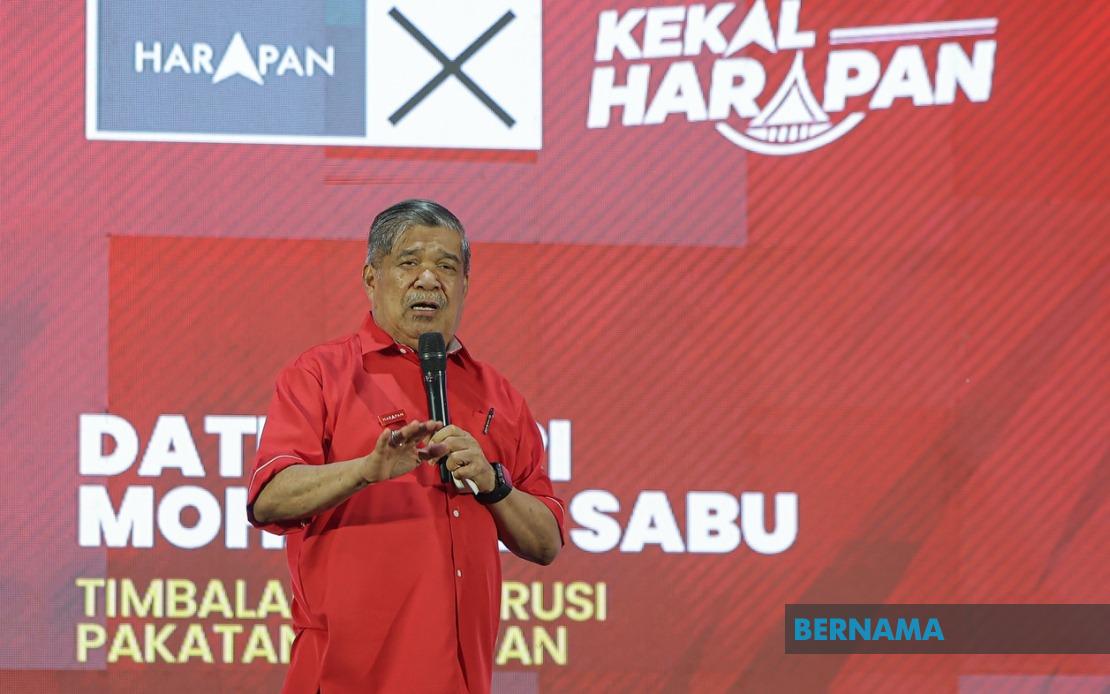
Datuk Seri Mohamad Sabu, president of Amanah, has launched a pointed critique of what he terms 'marriage-divorce' politics, urging voters in Negeri Sembilan to reject the pattern of rapid political realignments pursued by certain parties in their quest for electoral advantage. Speaking in Seremban on July 22, the senior opposition leader framed his warning as a call to protect Malaysia's democratic foundations from the corrosive effects of opportunistic coalition-building.
The practice under scrutiny involves political parties abandoning existing alliances and rapidly forming new partnerships based on shifting calculations of power. Mohamad Sabu characterised this as fundamentally destabilising, arguing that such behaviour corrodes public trust and normalises the notion that political commitments are merely temporary arrangements to be discarded when conditions change. By adopting the metaphorical language of marriage and divorce, he sought to convey to ordinary Malaysians the betrayal inherent in breaking political promises—relationships that citizens once thought were stable dissolving unexpectedly.
In his remarks, Mohamad Sabu traced a specific political trajectory to illustrate the problematic pattern. He outlined how certain parties had allied with Barisan Nasional, subsequently severed those ties, then joined Pakatan Rakyat before again breaking away in 2015. The sequence continued with a renewed embrace of UMNO-BN, followed within little more than a year by another divorce, succeeded by a marriage to Bersatu and yet another dissolution. Each realignment, he suggested, represented another moment when voters found their political calculations rendered obsolete by leadership decisions made without their consent.
For Malaysian observers, this critique carries particular resonance given the country's recent political turbulence. The period since 2018 has witnessed extraordinary volatility in coalition formations, with governments rising and falling through defections rather than elections. Perikatan Nasional's emergence as an alternative bloc, the subsequent collapse of the Pakatan Harapan administration in 2020, and the subsequent shifting alliances leading to Anwar Ibrahim's premiership in 2022 all reflect the instability that such frequent realignments produce. Each transition left segments of the electorate feeling deceived, having voted for parties that subsequently changed fundamental political directions.
Mohamad Sabu's intervention appears particularly timed, given that Negeri Sembilan represents a state where coalition dynamics remain fluid and where various political forces compete for voter allegiance. By framing the debate around the ethics of political commitment rather than specific policy positions, Amanah's president attempts to occupy moral high ground—positioning his party and its allies as principled forces resistant to expedient realignments. This rhetorical strategy aims to appeal to voters across the demographic spectrum who feel fatigued by constant political upheaval and yearn for stability.
The underlying concern articulated by Mohamad Sabu extends beyond mere electoral competition. Political scientists and democratic theorists have long identified frequent coalition-switching as corrosive to institutional stability and public confidence in democratic institutions. When voters cannot rely on parties to maintain consistent commitments, the social contract undergirding representative democracy weakens. Citizens become cynical about political promises, believing that all politicians are similarly willing to abandon principles for power. This erosion of faith in political institutions poses genuine risks to Malaysia's democratic health, particularly during periods of economic stress or social tension.
The specific naming of potential targets in Mohamad Sabu's critique, though implicit rather than explicit, clearly gestures toward parties that have engaged in multiple realignments during recent years. Without naming individuals or organisations directly, his recitation of the marriage-divorce sequence created a narrative framework that Negeri Sembilan voters could readily map onto contemporary political actors. This approach allows him to make his point forcefully while maintaining plausible deniability—a common rhetorical device in Malaysian political discourse where direct confrontation is often softened through analogy and metaphor.
The reference to ongoing efforts to 'woo' BN suggested that Mohamad Sabu anticipated further realignments, positioning his warning as a preventive intervention before yet another destabilising coalition shift could occur. His use of the domestic metaphor—suggesting BN as a 'wife' that various parties attempt to seduce—introduces a gendered dimension that may resonate differently across audiences. The implication that some parties are promiscuously pursuing multiple partners in rapid succession casts them as unreliable and unstable actors.
For Negeri Sembilan voters, Mohamad Sabu's intervention presents a choice frame: they can either perpetuate the cycle by supporting parties with inconsistent track records, or they can align with forces that claim to prioritise principle over opportunism. Whether voters ultimately find this argument persuasive depends partly on whether they perceive Amanah and its current allies as genuinely more principled, or whether they view all political formations as equally prone to expedient realignment.
The broader implications for Malaysian politics extend beyond Negeri Sembilan. The critique raises fundamental questions about how coalition politics should function in a Westminster-style democracy. Should parties be permitted to switch alliances whenever their calculations shift, or should stronger norms—perhaps even constitutional provisions—constrain such behaviour? Should voters factor coalition stability into their voting calculations, or should they focus primarily on policy platforms and individual candidate quality? These questions remain contested in Malaysian political discourse.
Moreover, Mohamad Sabu's intervention reflects growing concern among opposition and reform-minded figures about whether Malaysia's political system can achieve the stability necessary for effective governance. Constant coalition-building and realignment consumes political energy that might otherwise address pressing national issues—economic competitiveness, social cohesion, institutional reform, and service delivery. The psychological toll on voters who feel perpetually misled compounds these structural concerns, potentially eroding the civic engagement necessary for healthy democracy.
Moving forward, whether this warning influences voter behaviour in Negeri Sembilan will provide insights into public appetite for political stability versus openness to strategic realignment. The state election, whenever it occurs, may therefore serve as a referendum not just on policy and personalities, but on fundamental questions about the kind of political culture Malaysians desire. Mohamad Sabu's exhortation to reject 'marriage-divorce' politics represents an attempt to make these abstract concerns concrete and personally meaningful for ordinary voters navigating an increasingly complicated political landscape.

