Foreign Minister Datuk Seri Mohamad Hasan will represent Malaysia at an extraordinary gathering of the Organisation of Islamic Cooperation's Council of Foreign Ministers in Jeddah on August 27, with discussions expected to centre on recent developments affecting Palestine and efforts to forge a unified response from the 57-member bloc. The one-day session represents a continuation of ongoing diplomatic efforts aimed at strengthening coordination among OIC states on one of the most pressing geopolitical issues affecting the Muslim world and beyond.
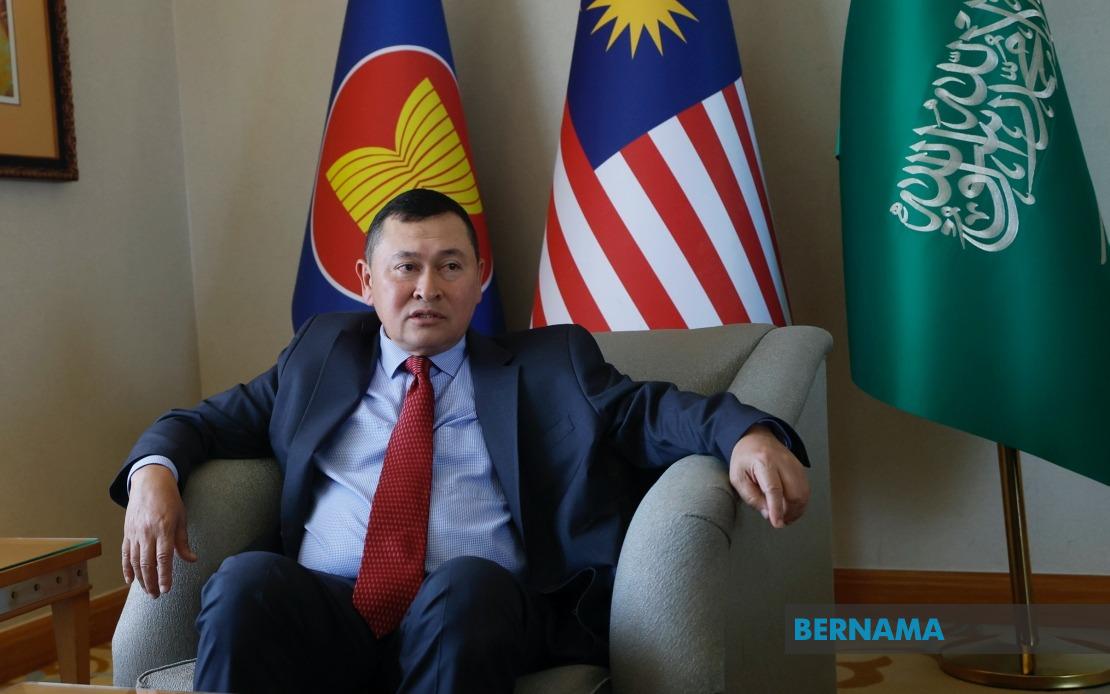
According to Malaysian Ambassador to Saudi Arabia Datuk Syed Bakri Syed Abdul Rahman, who is also Malaysia's Permanent Representative to the OIC, the meeting serves as a critical forum for member nations to align their positions on Palestinian affairs and chart collective action in response to evolving circumstances on the ground. The extraordinary nature of the gathering underscores the urgency with which the OIC views current developments and the perceived need for heightened diplomatic engagement and coordination among its constituent members.
During the session, Mohamad is scheduled to present Malaysia's National Statement, which will emphasise the country's consistent and principled commitment to the Palestinian cause and the Palestinian people's fundamental right to establish their own independent and sovereign state. This statement will be anchored in Malaysia's longstanding position that any future Palestinian state should be based on the pre-1967 borders, a position that reflects the international consensus regarding the territorial foundations for a viable Palestinian state and aligns Malaysia with mainstream international law and United Nations resolutions.
Malaysia's participation in this diplomatic forum carries significant symbolic and practical weight, as the country seeks to ensure that its perspective on Israeli military operations and what Kuala Lumpur characterises as aggression against Palestinian territories receives prominent hearing among the international community and particularly within the OIC framework. The Foreign Minister's delegation will directly address the humanitarian dimensions of the conflict, including the deteriorating conditions in Gaza and the complex situation in the West Bank, matters that increasingly dominate discussions regarding Palestinian affairs among Muslim-majority nations.
Syed Bakri emphasised that Malaysia intends to use the platform to advocate for stronger, more tangible measures from the international community and OIC member states in addressing the Palestinian situation. The nation's diplomatic approach reflects a belief that existing responses have been insufficient and that coordinated, concrete action remains necessary to safeguard Palestinian rights and interests. This stance reflects broader frustrations within the OIC about the gap between rhetorical support for Palestinian self-determination and the practical outcomes of international diplomatic efforts.
Beyond political messaging, Malaysia has committed itself to supporting Palestinians affected by the conflict through humanitarian channels. Syed Bakri reiterated Malaysia's dedication to facilitating the delivery of humanitarian assistance to Palestinian communities, ensuring that aid reaches vulnerable populations in need. This dual-track approach—combining high-level diplomatic advocacy with on-the-ground humanitarian support—characterises Malaysia's comprehensive engagement with Palestinian issues and reflects the country's self-positioning as an active stakeholder in regional and Muslim world affairs.
The extraordinary meeting is expected to deliberate on multiple substantive matters beyond the Palestinian question, including proceedings related to the election of the OIC secretary-general. This demonstrates that the organisation continues to manage its institutional structures and governance matters even during periods of heightened focus on specific crisis situations. The concurrent handling of institutional and issue-specific business reflects the OIC's need to maintain organisational functionality while responding to urgent geopolitical developments.
Among the anticipated outcomes of the gathering is the adoption of a resolution addressing the Palestinian question and the status of Al-Quds Al-Sharif, the Islamic designation for East Jerusalem. Such resolutions typically condemn what OIC states characterise as Israeli aggression and call for coordinated action among member nations. These formal declarations serve multiple purposes—they reaffirm collective principles, demonstrate solidarity to domestic constituencies, and establish reference points for future diplomatic initiatives and coordinated positions.
On the margins of the formal proceedings, Mohamad is expected to engage in bilateral meetings with foreign ministers from several nations. These conversations will focus on strengthening Malaysia's bilateral relationships and identifying new avenues for cooperation spanning business, trade, and investment sectors. For Malaysia, such peripheral diplomatic engagements often prove as valuable as formal meetings, offering opportunities to deepen relationships with key regional and international actors while advancing Malaysian economic and strategic interests across diverse portfolios.
The gathering takes place within a broader context of intensifying diplomatic activity around Palestinian affairs, reflecting the enduring salience of this issue within the Muslim world and the OIC's continued positioning of itself as a principal advocate for Palestinian rights. Malaysia's active participation, demonstrated through high-level representation and substantive contributions, underscores Kuala Lumpur's commitment to maintaining a visible and influential role within the OIC and broader Islamic diplomacy, while advancing what it perceives as the legitimate interests and rights of the Palestinian people within international forums.
For Malaysian observers and stakeholders monitoring the nation's foreign policy trajectory, the delegation's participation illustrates how Kuala Lumpur continues to balance its roles as an OIC member state with a significant Muslim population, a Southeast Asian regional player with diverse diplomatic relationships, and an aspirant middle power seeking to amplify its voice on global issues. The Foreign Minister's attendance at such summits reinforces Malaysia's institutional commitments and demonstrates the government's prioritisation of Palestinian affairs within its broader diplomatic agenda and resource allocation for foreign policy initiatives.

