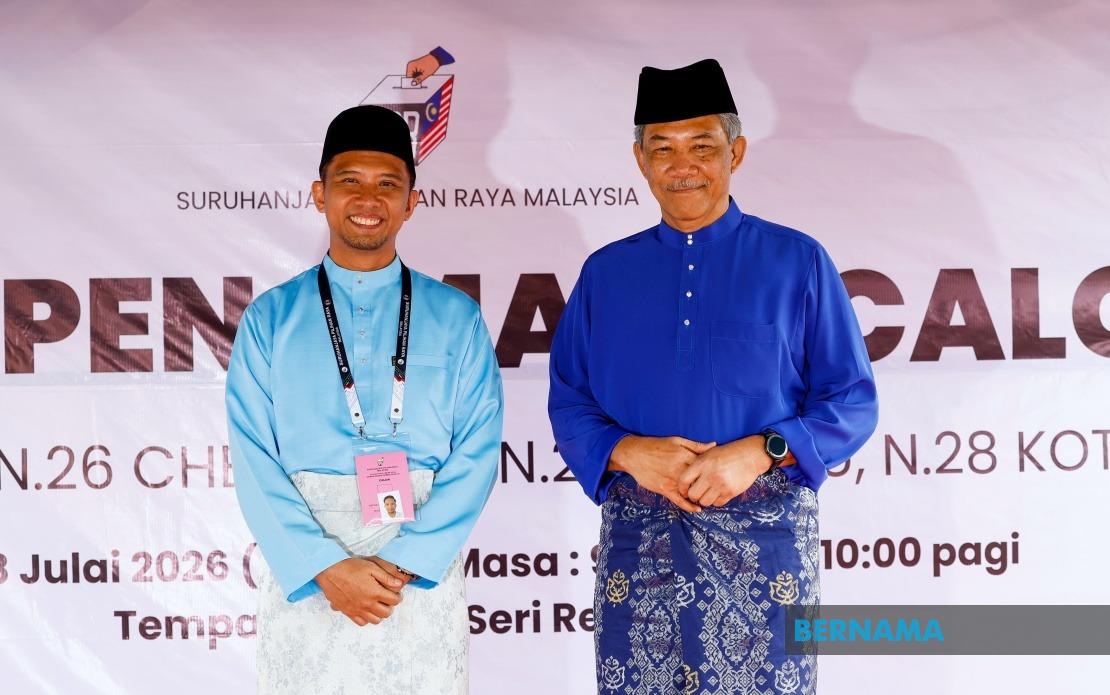
The Rantau state seat is set for a straight fight between two candidates with contrasting political profiles and experience levels. Barisan Nasional's Datuk Seri Mohamad Hasan, the coalition's state chairman and Malaysia's Foreign Minister, will defend his stronghold against Pakatan Harapan's Dr Azizul Hakim Mahdi following the conclusion of nominations at Dewan Sri Rembau. The contest marks a significant electoral battle in the 16th Negeri Sembilan state election, where the ruling coalition faces renewed pressure from the opposition alliance amid shifting political dynamics in the crucial central state.
Mohamad Hasan brings to the contest two decades of political tenure in the Rantau seat, having successfully retained the constituency across multiple electoral cycles since 2004. His incumbency advantage is substantial, particularly given his elevated national profile as both UMNO's deputy president and Foreign Minister, positions that grant him considerable political machinery and visibility. In the previous 2023 state election, he secured a commanding 10,280-vote majority over his predecessor, garnering 16,957 votes compared to Rozmal Malakan's 6,677 votes, indicating a well-consolidated voter base within the district.
The Returning Officer Mohd Zamri Mohd Esa confirmed that all nomination papers had been processed successfully, clearing the way for the official campaign period to commence. Mohamad addressed reporters with emphasis on the coalition's ground operations, stressing that systematic and well-organised campaigning would be essential to translating the BN manifesto into voter support. His remarks underscore the coalition's awareness that retaining traditional strongholds requires sustained effort, particularly as opposition parties intensify their outreach efforts across the state.
Dr Azizul Hakim, the 35-year-old PH candidate, is positioning himself as a fresh alternative by leveraging his professional credentials and community engagement through healthcare. His decade of experience as a medical practitioner, coupled with his ownership of three clinics across Senawang, Puncak Alam, and Melaka, provides him with a platform to articulate a healthcare-centric agenda for the constituency. This focus on a specific policy domain allows him to differentiate himself from the incumbent despite the latter's political seniority and national ministerial responsibilities. The candidate's youth and professional background appeal to voters seeking representation oriented toward tangible service delivery rather than traditional political establishment figures.
The healthcare emphasis is particularly resonant in constituencies like Rantau, where residents' daily concerns often centre on accessibility and affordability of medical services. Dr Azizul's articulation of this priority reflects strategic positioning by the opposition to contest seats on grounds of practical governance and constituent welfare rather than ideological platforms alone. His clinic ownership demonstrates investment in local community health infrastructure, a credential that may resonate with voters evaluating candidates on their demonstrated commitment to improving living standards.
However, the political context in Negeri Sembilan presents a mixed landscape for both coalitions. Beyond Rantau, the state's 36-seat assembly is contested across multiple constituencies with varying competitive dynamics. The Paroi seat features a three-way contest involving PH's Ahmad Shahir Mohd Shah, who serves as press secretary to the Menteri Besar, against challengers from Perikatan Nasional and Bersatu, reflecting fragmentation within the opposition space. Similarly, the Kota seat presents a three-cornered battle where BN's Suhaimi Aini confronts both PH and Bersatu candidates, suggesting that voter consolidation will be critical for any bloc seeking a clear mandate.
The Chembong constituency offers a starker contest, pitting BN incumbent Datuk Zaifulbahri Idris directly against PH's Danish Nazran Murad without splinter candidacies. These varied electoral configurations across the state indicate that aggregated results will depend substantially on voters' willingness to support unified opposition coalitions or whether Bersatu's presence as an alternative Malay-Muslim party will dilute PH's vote share in specific constituencies.
Negeri Sembilan holds strategic importance within Malaysia's broader political architecture. The state's voter composition and electoral results often signal broader trends affecting the federal political balance, particularly regarding Malay-Muslim voter sentiment and the sustainability of inter-coalition alliances. A strong BN showing would reinforce the coalition's consolidation of federal authority, while substantial opposition gains could indicate shifting electoral preferences that carry implications for future national contests.
The election logistics reveal a substantial electorate across the state. The Election Commission has registered 889,490 eligible voters, comprising 867,151 ordinary voters alongside military and police personnel designated as early voters on July 28. The two-stage voting process, with early voting preceding the general poll on August 1, follows procedures established in recent Malaysian elections to accommodate security force personnel and enhance participation rates. This administrative framework reflects efforts to balance inclusive voting access with security sector considerations.
Campaign dynamics in Rantau will likely concentrate on the contrast between Mohamad Hasan's ministerial credentials and political continuity against Dr Azizul Hakim's youth, professional expertise, and focus on healthcare delivery. Both candidates occupy distinct generational and professional positions, permitting voters to choose between experience and fresh perspectives or between maintaining coalition governance and exploring opposition alternatives. The result will meaningfully indicate whether Negeri Sembilan voters prioritise the political establishment's track record or seek renewal through younger professionals advocating sector-specific reforms.
For Malaysia's broader political observers, the Negeri Sembilan election represents a test of coalition stability in a state traditionally considered BN territory. Momentum shifts, voter realignments, and the viability of opposition coordination outside the federal coalition will all receive assessment through the state's aggregate results. Whether BN sustains its dominance or experiences erosion in support will inform expectations for subsequent electoral contests and the durability of political alliances heading into the second half of this parliamentary term.

