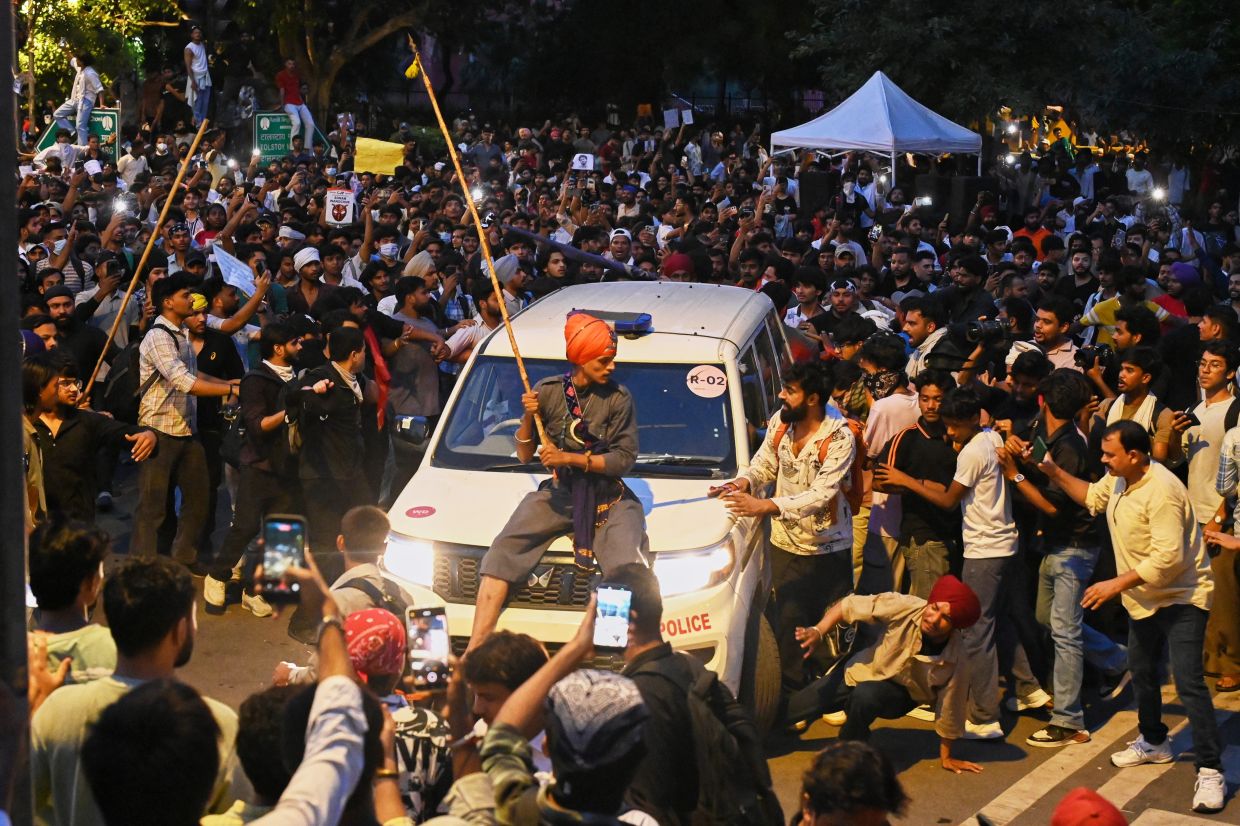
Indian Prime Minister Narendra Modi moved to address mounting public anger over systemic examination failures on Thursday, pledging swift and severe consequences for officials involved in question paper leaks that have ignited the country's most significant student-led movement in recent years. The unexpected intervention came after thousands of demonstrators converged on the capital on Wednesday, marking an escalation in protests that have stretched police resources and forced the government to confront accusations of negligence in managing the education sector.
Modi's statement, delivered through social media, represented his first substantive acknowledgement of the crisis that has emerged as a formidable challenge to his administration since his re-election for a third consecutive term in 2024. He committed to establishing expedited judicial processes to handle cases involving examination fraud, emphasising that protecting youth welfare constituted a paramount priority. The Prime Minister's language underscored the gravity with which his office now views the situation, with warnings that perpetrators would face consequences without exception.
The scale of unrest reflects deeper anxieties among India's youth population about education quality and employment prospects. The Cockroach Janta Party, a movement born from social media activism in May initially as satire following a chief justice's controversial remarks about young people, has crystallised broader grievances extending far beyond examination irregularities. The movement encompasses frustrations over persistent unemployment, scarcity of meaningful opportunities for graduates, and perceptions of increasingly authoritarian governance under Modi's administration. This broadening agenda has transformed what began as a narrow protest into a generational statement about systemic dysfunction.
Monday's confrontation between demonstrators and law enforcement set the tone for escalating tensions throughout the week. As students attempted to march toward parliament on the opening day of the monsoon legislative session, police deployed tear gas and used batons against crowds that reportedly numbered in the tens of thousands. The response triggered a cycle of confrontation in which protesters responded with stone-throwing, resulting in injuries across both civilian and security personnel. Authorities documented at least 178 injured individuals from these initial clashes, though independent estimates suggest higher figures.
The violence outside Jantar Mantar on Wednesday night intensified concerns about heavy-handed state responses to dissent. Movement spokesman Ashutosh Ranka characterised the police conduct as brutal, noting that internet services were deliberately suspended during the crackdown. Delhi Police countered these allegations by emphasising that officers faced attacks from demonstrators armed with stones and plastic bottles, claiming security personnel sustained serious wounds. This conflicting narrative around police conduct reflects broader anxieties about civilian-law enforcement relations in Indian cities.
Multiple examination controversies have compounded grievances and undermined institutional credibility. A leaked medical entrance examination question paper forced more than two million candidates to sit supplementary tests, disrupting educational timelines and creating fairness concerns. Separately, disputes surrounding online marking systems for nearly two million high school students have further corroded public trust in examination bodies. These successive failures suggest systemic vulnerabilities in oversight mechanisms that should protect examination integrity.
Opposition parties have capitalised on the government's apparent vulnerability, leveraging parliamentary disruptions to amplify criticisms of Modi's stewardship. Congress leader Rahul Gandhi seized the moment to hold the Prime Minister directly accountable, declaring on social media that Modi bore ultimate responsibility for education system collapse. Opposition members have demanded an apology for Monday's police response, transforming the examination fraud crisis into a broader political indictment of governance quality and institutional decline under the current administration.
Geographic expansion of demonstrations indicates that discontent transcends the capital and resonates across India's urban centres. Smaller protests materialised simultaneously in Mumbai, Bengaluru, and Patna on Wednesday, suggesting that examination anxiety and disenchantment with governance have achieved national salience among younger citizens. This dispersed activism complicates management for authorities and demonstrates that the movement possesses organic roots extending beyond Delhi's activist networks.
The protests have attracted international attention and sparked expressions of solidarity from neighbouring Bangladesh, where student-led movements toppled Prime Minister Sheikh Hasina's government in 2024. Bangladeshi students organised a torch rally on Thursday evening to demonstrate sympathy with Indian demonstrators, reflecting how educational grievances and youth frustrations transcend national boundaries across South Asia. This regional dimension elevates the significance of India's current turmoil beyond domestic politics, signalling shared generational anxieties about education quality, governance accountability, and opportunity distribution throughout the subcontinent.
Modi's pledge of fast-track courts and stringent penalties appears designed to contain the crisis by demonstrating responsiveness to legitimate grievances while deflecting responsibility toward lower-level officials. However, the movement's expanded agenda—encompassing unemployment, authoritarianism, and systemic dysfunction—suggests that examination reform alone will prove insufficient to satisfy demonstrators. The government now faces a critical juncture where tactical concessions on specific fraud cases must accompany broader policy responses addressing youth concerns about employment, governance legitimacy, and educational opportunity if it hopes to restore confidence among an increasingly restive younger population whose electoral voice will determine India's political future.

