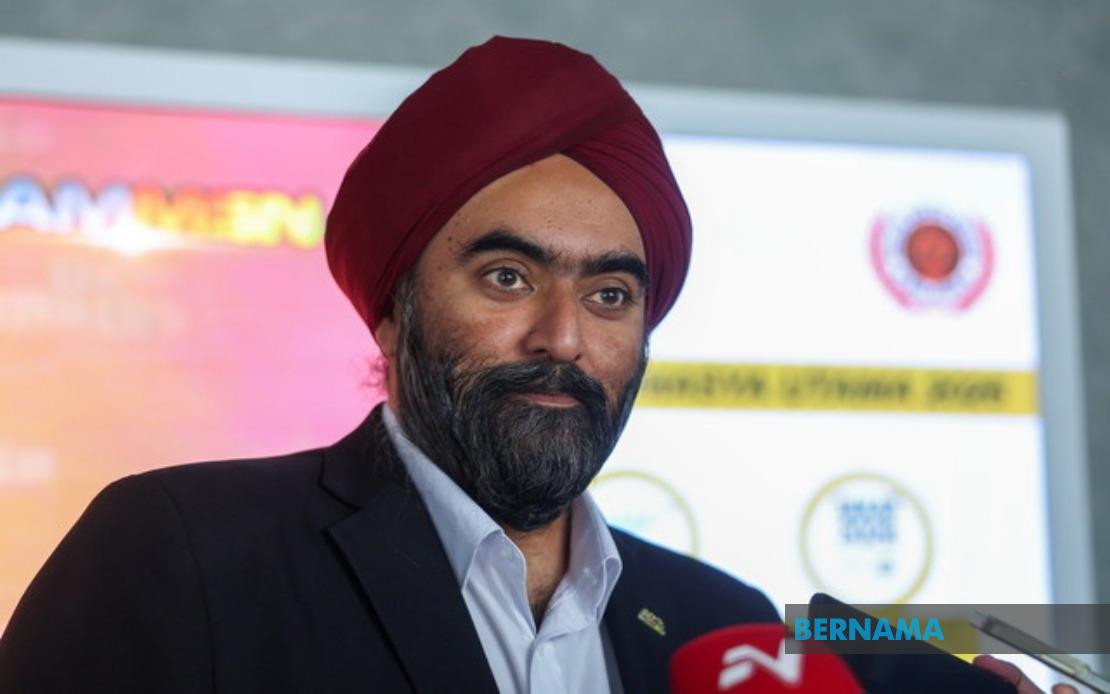
Malaysia's cycling fraternity faces a critical juncture as the Malaysian National Cycling Federation and Yayasan Sime Darby attempt to untangle a dispute that has derailed one of the nation's premier junior talent-development programmes. The postponement of the YSD Track Cycling and BMX Series 2026 has prompted MNCF president Datuk Amarjit Singh Gill to pursue direct negotiations with the foundation's leadership, signalling growing urgency around restoring momentum to a scheme integral to nurturing the next generation of Malaysian cyclists.
The underlying tensions surfaced publicly when YSD cited unspecified technical issues emanating from MNCF as justification for postponing the series—a decision that has rattled stakeholders invested in the sport's grassroots ecosystem. Rather than engage in public recriminations, Gill has chosen a diplomatic approach, framing the disagreement as a resolvable misalignment between two entities whose collaboration is vital to cycling's trajectory in Southeast Asia's most developed nation. His measured response reflects awareness that protracted conflict could inflict lasting damage on athlete pipelines and sponsor confidence.
Gill's characterisation of the situation as fundamentally uncomplicated yet requiring elevated dialogue suggests the crux lies not in insurmountable structural obstacles but in procedural friction and perceptions of unequal partnership standing. His repeated emphasis on mutual respect and recognition of both parties as strategic equals reveals a negotiating posture designed to restore dignity to discussions that may have deteriorated into blame-shifting at operational levels. This recalibration towards top-level engagement—involving MNCF's executive council and YSD's senior management—signals a reset of the conversation's tone and scope.
The symbolic importance of this standoff transcends the immediate crisis. Cycling in Malaysia has experienced sporadic bursts of international prominence, yet sustainable development depends on reliable domestic infrastructure and consistent funding pipelines. The YSD series, by concentrating on track and BMX disciplines, addresses gaps in Malaysia's competitive portfolio and provides structured pathways for young athletes who might otherwise lack competitive opportunities. Interruption of such programmes creates cascading effects across multiple seasons, as training schedules disintegrate and athlete cohorts fragment.
YSD's role as a principal corporate supporter of Malaysian cycling reflects the country's reliance on private-sector patronage to subsidise sports development—a reality that distinguishes Malaysia's approach from state-centric models in some neighbouring territories. This dependency creates inherent power dynamics that complicate negotiations when conflicts emerge. Gill's insistence on recognising YSD's contributions and respecting the foundation's commitment appears calculated to acknowledge this asymmetry while repositioning the relationship within a framework emphasising complementary rather than subordinate roles.
The timing of these developments, crystallising around the launch and route announcement of Le Tour de Langkawi 2026, underscores cycling's significance in Malaysia's sporting calendar. LTdL remains the nation's flagship cycling event and a fixture of regional racing consciousness. Against this backdrop, the administrative turbulence affecting the track and BMX series risks painting Malaysian cycling governance as fractious or unstable—an impression potentially affecting commercial partnerships and athlete recruitment at a time when regional competition for talent intensifies.
Gill's openness to characterising the disagreement as a technical matter, while simultaneously downplaying its complexity, represents strategic ambiguity that potentially creates space for face-saving compromise. By accepting YSD's framing without contention, he removes an obstacle to resumed dialogue. Simultaneously, by asserting that technical problems are resoluble through goodwill and mutual accommodation, he preserves MNCF's institutional credibility and suggests the federation possesses agency in the situation rather than occupying a supplicant position.
The broader context involves Malaysia's cycling ambitions within an increasingly competitive Southeast Asian landscape. Nations including Thailand and Indonesia have progressively elevated investment in track cycling infrastructure and talent identification systems. Series like the YSD Track Cycling and BMX Series represent Malaysia's mechanism for maintaining competitive depth in disciplines where Southeast Asian representation remains modest but growing. Derailment of such initiatives cumulatively erodes relative positioning and allows regional rivals to consolidate advantages.
Looking ahead, resolution will likely require clarity regarding operational responsibilities, resource allocation, decision-making protocols, and communication channels between MNCF and YSD. Whether these negotiations succeed in resurrecting the 2026 series or establish foundations for longer-term partnership architecture remains uncertain. Nevertheless, Gill's articulation of compromise and mutual respect signals that neither party desires protracted confrontation—a foundation upon which sustainable resolution might be constructed.

