The Malaysian Maritime Enforcement Agency (MMEA) has concluded the first half of 2024 with a substantial enforcement record, announcing RM2.29 billion in seized assets and the detention of 516 individuals implicated in various maritime offences. The results underscore the agency's ongoing battle against transnational smuggling networks and illegal maritime activities that threaten regional security and economic stability across Southeast Asia's critical shipping lanes.
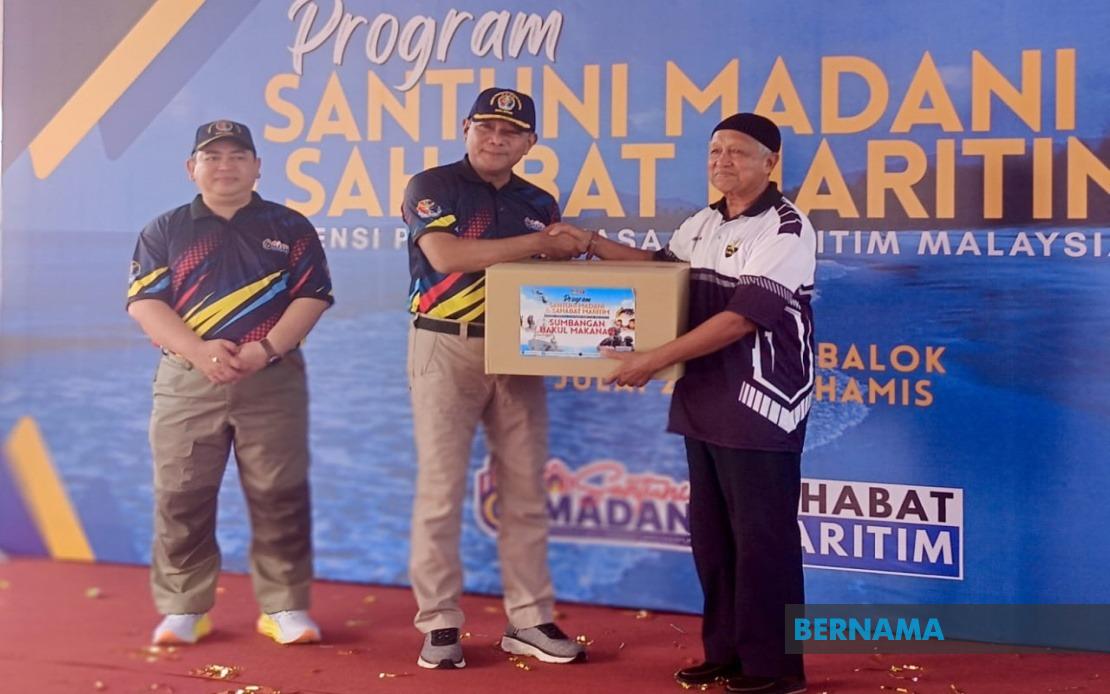
Maritime Admiral Datuk Mohd Rosli Abdullah, the MMEA's director-general, attributed the enforcement successes to the agency's unwavering dedication to protecting Malaysia's territorial waters and upholding national sovereignty. Speaking during a community engagement event in Kuantan, Mohd Rosli emphasised that the seizure figures represent more than mere statistics; they demonstrate concrete progress in dismantling criminal operations that exploit maritime routes for illicit gains. The MMEA's jurisdiction over Malaysia's extensive exclusive economic zone, stretching across both the Straits of Malacca and the South China Sea, places it at the frontline of regional security challenges.
The composition of seized materials reveals the breadth of maritime criminality confronting enforcement authorities. Local boats accounted for the overwhelming majority of the asset haul at RM2.11 billion, reflecting sophisticated vessel-trafficking networks that divert Malaysian-built or registered vessels to external criminal enterprises. Drug seizures totalled RM86.06 million, indicating persistent attempts to transit narcotics through Malaysian waters toward destinations in East Asia and beyond. Foreign fishing vessels worth RM66 million were impounded, addressing the chronic problem of illegal, unreported, and unregulated (IUU) fishing that depletes regional fish stocks and undercuts legitimate fishing communities. Contraband cigarettes seized amounted to RM25.16 million, highlighting the profitability of excise-duty evasion schemes that divert tax revenue from government coffers. Smaller but still significant seizures included prawns valued at RM5.2 million and subsidised diesel at RM3.33 million.
The MMEA's operational strategy increasingly focuses on preventing the outflow of controlled and price-subsidised commodities, a persistent challenge in Malaysia's maritime enforcement landscape. Governments subsidise essential goods such as fuel and food to maintain domestic affordability, but smugglers exploit these price differentials by shipping subsidised products to neighbouring jurisdictions where black-market premiums apply. Mohd Rosli identified this revenue leakage as a priority concern, noting that stricter controls would preserve state resources intended for citizen welfare and deter organised crime syndicates from targeting Malaysia's supply chains.
Tax evasion through maritime smuggling represents another significant enforcement objective. Organised criminal groups systematically undermine Malaysia's customs revenue by circumventing tariff regimes on high-value goods destined for international trade. The MMEA's intensified operations aim to close enforcement gaps that allow such schemes to operate, thereby protecting legitimate importers and manufacturers who comply with regulatory frameworks. This dimension of maritime law enforcement directly impacts government revenue streams essential for infrastructure development and social services across the country.
The agency has also prioritised maritime safety awareness and community engagement as complementary enforcement tools. The Santuni MADANI and Sahabat Maritim programmes conducted in Kuantan exemplify this approach, bringing maritime safety education and enforcement cooperation directly to coastal communities who possess valuable ground-level intelligence on suspicious vessel movements and illicit activities. By fostering stronger relationships between federal enforcement agencies and local fishermen and maritime workers, the MMEA cultivates a broader network of observers capable of identifying and reporting criminal operations.
Search and rescue (SAR) operations remain an integral component of MMEA's mandate, balancing law enforcement with humanitarian obligations to assist vessels and personnel in distress within Malaysian territorial waters and the extended continental shelf. The agency's expanded capacity in SAR reflects recognition that maritime security encompasses both criminal interdiction and disaster response capabilities. This dual-mandate approach positions Malaysia as a responsible steward of regional maritime safety standards.
Operation Tiris exemplifies the integrated enforcement approach increasingly adopted across Southeast Asian maritime agencies. This multi-agency operation pools resources and intelligence from customs, police, navy, and coast guard elements to target trafficking networks, smuggling operations, and transnational criminal activity at sea. The June 23 Tawau cigarette seizure, involving contraband valued at RM64 million and a vessel of equivalent worth, demonstrates the scale of criminal assets at stake when coordinated operations succeed. Such operations require weeks or months of intelligence collection, coordination across provincial boundaries, and careful timing to maximise disruption of criminal networks.
The Tawau seizure carries particular significance given Sabah's geography and proximity to international maritime corridors. The state's complex coastline, archipelagic waters, and established smuggling routes have historically attracted transnational criminal organisations seeking to exploit enforcement gaps. Success in Sabah waters signals the MMEA's capacity to project enforcement presence across Malaysia's extensive maritime territory, from the Straits of Malacca to the waters off Tawau.
Mohd Rosli's commitment to continuing integrated operations reflects awareness that maritime criminals adapt rapidly to enforcement strategies, necessitating persistent innovation and resource allocation. Cross-border criminal activities targeting Malaysian waters originate from diverse sources across Southeast Asia, requiring sustained regional cooperation and intelligence sharing among maritime agencies. The MMEA's emphasis on maintaining operational momentum throughout the second half of 2024 indicates preparations for intensified enforcement campaigns ahead.
For Malaysian policymakers and citizens, the MMEA's first-half performance carries implications for economic security and resource protection. Successful maritime interdiction prevents revenue leakage, protects legitimate commercial interests, and demonstrates effective state capacity in remote maritime zones where government presence remains inherently limited. These enforcement successes contribute to broader narratives of governance competence and national sovereignty assertion in contested regional waters.
The enforcement record also underscores vulnerabilities in Malaysia's maritime security architecture. Despite substantial seizures, the volume and value of smuggling attempts continuing to reach Malaysian waters suggest that criminal incentives remain compelling relative to perceived enforcement risks. Ongoing analysis of enforcement patterns may reveal specific geographic areas, vessel types, or commodity categories requiring enhanced resource allocation or tactical innovation to further improve interdiction rates and deter criminal activity.

