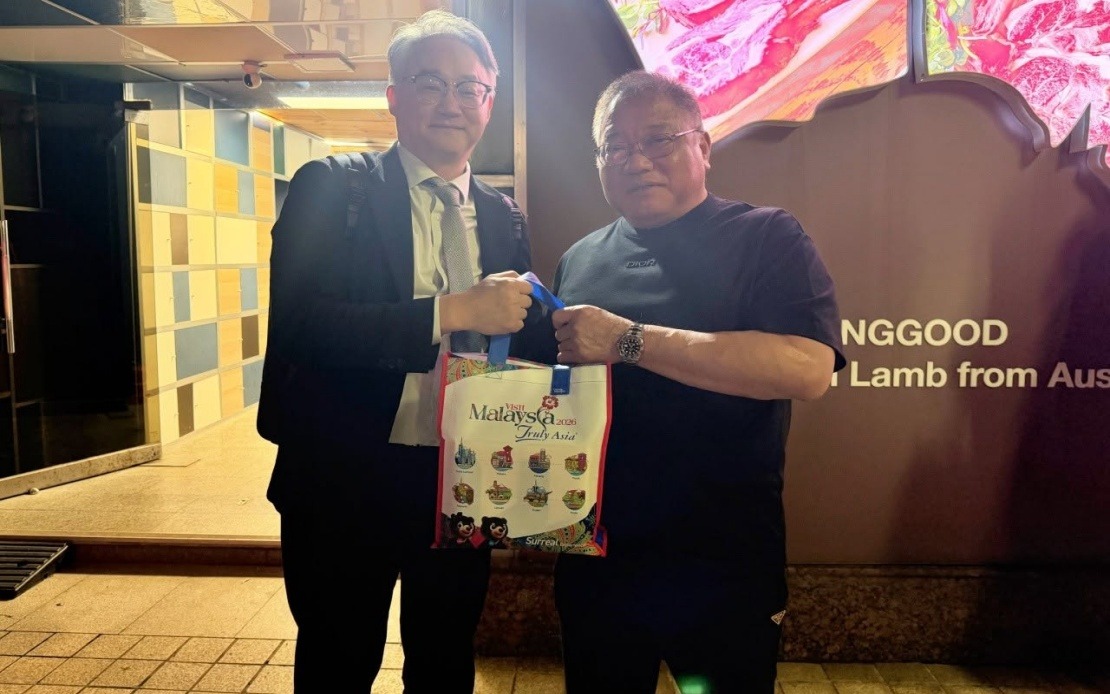
Tourism, Arts and Culture Minister Datuk Seri Tiong King Sing has issued a pointed reminder to Malaysia My Second Home (MM2H) Programme agents that holding a Malaysian license provides no exemption from regulatory compliance in the countries where they conduct business. Speaking following discussions with the Malaysian Association in the Republic of Korea, Tiong emphasised that agents must familiarise themselves with and respect the legal frameworks governing their operations abroad, particularly when recruiting applicants and promoting the scheme to local populations.
The minister's intervention reflects growing concerns about inconsistent practices among some MM2H agents operating across multiple jurisdictions. During his recent visit to South Korea, representatives from the Malaysian Association—including president Dr Aaron Kim Hong-Seok, secretary-general Kim Jun-Hyung, and other association officials—raised troubling patterns suggesting that certain agents may lack adequate understanding of local regulatory systems in key overseas markets. This knowledge gap has reportedly created fertile ground for confusion among potential applicants and has enabled unauthorised individuals to present themselves as qualified MM2H representatives.
The core issue centres on jurisdictional overreach. Malaysian MM2H agents who secure their credentials domestically have sometimes proceeded to operate in foreign markets without properly investigating or complying with the regulatory regimes governing visa-related services, financial transactions, or immigration-adjacent activities in those countries. This approach generates multiple problems: prospective applicants receive inconsistent information, fraudulent intermediaries proliferate, and the programme's reputation deteriorates across key source markets. Tiong's statement makes clear that the ministry will no longer tolerate such operational approaches.
According to feedback from Korean industry partners, the proliferation of competing claims from various individuals asserting MM2H expertise has muddied the waters considerably. Some agents in Malaysia have engaged directly with local individuals in overseas markets without establishing formal relationships or understanding how those jurisdictions regulate such intermediary activities. The result is a fragmented marketplace where applicants struggle to distinguish legitimate service providers from opportunistic fraudsters, deterring serious applicants from pursuing the programme altogether.
Tiong committed to issuing comprehensive reminders to all MM2H agent companies upon his return to Malaysia, emphasising that compliance with applicable rules and regulations takes absolute priority. The minister explicitly rejected a volume-driven approach to the scheme, stating that the number of applications secured matters far less than the quality and integrity of those applications. Protecting applicants from fraud and ensuring that the market operates transparently and lawfully represent the true measures of programme success.
Establishing clearer cooperative frameworks between Malaysian MM2H agents and local industry partners in target markets emerges as a critical priority. Such mechanisms would reduce ambiguity about who is authorised to represent the programme, prevent fraudulent activity more effectively, and build confidence among prospective foreign applicants. Rather than allowing a chaotic ecosystem of informal relationships and competing claims, the ministry now advocates for formalised, transparent partnerships that comply with local requirements while maintaining programme standards.
South Korea represents a particularly valuable market for MM2H expansion, given the substantial population of retired and semi-retired individuals seeking international relocation opportunities, particularly those drawn to Malaysia's warm climate as a seasonal escape during harsh Korean winters. The demographic profile of Korean retirees aligns well with MM2H's positioning as a premium residence programme offering cultural immersion and extended stays. However, realising this potential requires that agents maintain the highest standards of professionalism and legal compliance, building trust that cannot be rebuilt once damaged through fraud or misrepresentation.
The minister's intervention signals that the era of loose enforcement is ending. MM2H programme agents, particularly those operating across multiple borders, must now invest in understanding the specific regulatory contexts of each market where they conduct business. This includes researching local laws governing immigration services, financial intermediation, and client recruitment. Agents cannot simply assume that Malaysian authorisation confers universal operating rights or exempts them from overseas regulatory scrutiny.
For potential MM2H applicants in Malaysia, across Southeast Asia, and beyond, this development carries important implications. The ministry's tightened oversight should eventually reduce fraud and misrepresentation, making the programme more reliable and transparent. However, applicants must also exercise greater diligence in verifying agent credentials and asking critical questions about how those agents comply with local laws in Malaysia and in the applicant's home country. Legitimate agents should welcome such enquiries and be able to articulate their compliance frameworks clearly.
The broader context involves protecting Malaysia's image as a destination and maintaining the integrity of its visa schemes. As competition intensifies among countries offering retirement visas and second-home programmes globally, maintaining high standards becomes a competitive advantage. Programmes tainted by fraud develop poor reputations that circulate rapidly through online communities and influencer networks. Conversely, schemes known for transparency and professional standards attract higher-quality applicants who are better positioned to contribute to local economies and represent Malaysia favourably in their home countries.
Tiong's emphasis on cooperation between Malaysian agents and local partners also acknowledges that sustainable international business requires respecting host country sovereignty and regulatory authority. Local authorities in Korea, and indeed across Asia, have legitimate interests in understanding who is recruiting their citizens for overseas programmes and on what terms. Attempting to circumvent those interests through informal channels or regulatory arbitrage ultimately undermines the programmes themselves and provokes backlash that can be difficult to overcome.
Moving forward, MM2H agents should treat overseas compliance as integral to their business model rather than as an optional consideration. This means investing in legal advice within target markets, establishing transparent relationships with local partners, maintaining clear documentation of their authorisation and procedures, and welcoming regulatory enquiries from local authorities. Agents who embrace this approach will find themselves on the right side of the minister's renewed enforcement posture and better positioned to succeed in increasingly sophisticated and competitive international markets.

