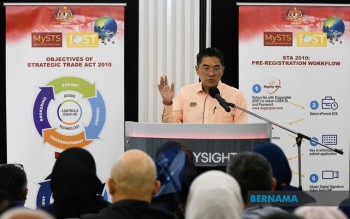
The Malaysian government is intensifying efforts to consolidate the country's standing within critical segments of the global technology supply chain, particularly in electrical and electronics manufacturing. Deputy Investment, Trade and Industry Minister Sim Tze Tzin has reiterated the ministry's commitment to nurturing this strategic sector, which underpins Malaysia's position as a reliable technology production hub in an increasingly competitive international landscape.
The E&E industry holds outsized importance for Malaysia's economy and international trade profile. Beyond simple assembly operations, the sector encompasses sophisticated activities including semiconductor packaging, precision testing procedures, and the manufacture of advanced sensing technologies. These are not commodity products but rather high-value components integral to global technology networks. Sim underscored that semiconductors and related technologies represent a cornerstone of Malaysia's export economy, with the industry generating substantial foreign exchange and employment across multiple regions.
Penang and the broader Northern Region have emerged as particularly significant concentrations of electronics manufacturing excellence. The peninsula's northern tier hosts hundreds of multinational technology firms alongside domestic enterprises, creating an ecosystem of technical expertise and manufacturing capability that took decades to develop. This geographic clustering provides logistical advantages, attracts talent, and facilitates knowledge transfer between competing firms. The region's prominence in this space represents a competitive asset that Malaysia must actively protect against erosion from lower-cost alternatives in neighbouring countries.
However, Malaysia's position in global supply chains cannot be taken for granted. The semiconductor industry landscape is undergoing profound structural changes driven by geopolitical tensions, supply chain diversification initiatives by major technology companies, and emerging competitors seeking to capture manufacturing share. Countries throughout Southeast Asia and beyond are aggressively pursuing electronics manufacturing investments. Malaysia's advantage rests not merely on cost considerations but increasingly on the accumulated technical knowledge, quality infrastructure, and regulatory frameworks that support complex manufacturing.
Export control compliance has become an increasingly salient concern for technology sector participants. As geopolitical competition intensifies between major powers, governments are implementing stricter controls on the movement and development of sensitive technologies. Malaysian companies operating in semiconductors and advanced electronics must navigate complex international regulatory requirements governing product classification, licensing, and permissible trade partners. MITI's emphasis on compliance reflects awareness that any lapses in these areas could jeopardise relationships with international customers or trigger punitive trade measures.
The ministry has initiated structural mechanisms to support industry participants in managing these compliance obligations effectively. The Strategic Trade Act Customer Day and the Northern Region Clinic programme represent government efforts to provide direct, accessible advisory services addressing practical concerns within the sector. With 86 participants attending the regional clinic session, the initiative demonstrates meaningful engagement between policymakers and industry practitioners. Such forums facilitate information dissemination regarding permit applications, licensing procedures, and internal audit requirements that companies must satisfy to operate legitimately within international trade frameworks.
Malaysia's robust trade performance in the opening half of this year creates a window of opportunity for strengthening relationships between employers and workers within the E&E sector. Strong export volumes and healthy order books ought to translate into tangible improvements in worker compensation and employment security. Deputy Minister Sim's appeal to profitable companies to share gains through salary increases and performance bonuses addresses a legitimate expectation that workforce contributions to industry success merit recognition and reward. This approach acknowledges that sustainable competitive advantage requires maintaining stable, motivated workforces rather than relying solely on cost minimisation.
The integration of labour welfare considerations into technology sector strategy reflects evolving understanding of what constitutes true competitiveness in knowledge-intensive industries. Countries seeking to attract and retain advanced manufacturing capabilities must offer workers reasonable living standards, career development prospects, and dignity. Conversely, enterprises that extract value from workers without sharing the rewards generated by their efforts face elevated risks of turnover, reduced productivity, and reputational damage that extends to government partners responsible for sector regulation.
Government-industry collaboration emerges as critical to Malaysia's ability to retain and expand its technology manufacturing footprint. The coordination required spans multiple dimensions: regulatory consistency that reduces business uncertainty, targeted infrastructure investment in regions hosting major manufacturing clusters, workforce development programmes aligned with industry skill requirements, and trade relationships that ensure Malaysian firms can access necessary inputs and reach international markets. No single actor can accomplish these objectives independently.
The broader context shaping Malaysia's electronics sector includes structural shifts in global manufacturing patterns, technological advancement that alters comparative advantages, and the strategic calculations of multinational corporations deciding where to locate operations. Malaysia must position itself not as a low-cost alternative but as a reliable, technologically sophisticated partner offering stability, quality, and compliance frameworks. This positioning requires sustained government commitment to sector development, continuous engagement with industry, and willingness to adapt policies as circumstances evolve.
Looking forward, MITI's strategy reflects realistic appraisal of both the opportunities and vulnerabilities inherent in technology sector participation. Malaysia possesses genuine strengths in electronics manufacturing, accumulated through years of focused development. Yet these advantages face mounting pressure from regional competitors and changing global dynamics. The ministry's emphasis on export control compliance, worker welfare, and government-industry partnership represents a comprehensive approach acknowledging that multiple factors determine whether Malaysia retains its position as an essential node within global technology supply networks or gradually loses share to competitors offering comparable capabilities at lower cost or closer proximity to emerging markets.

