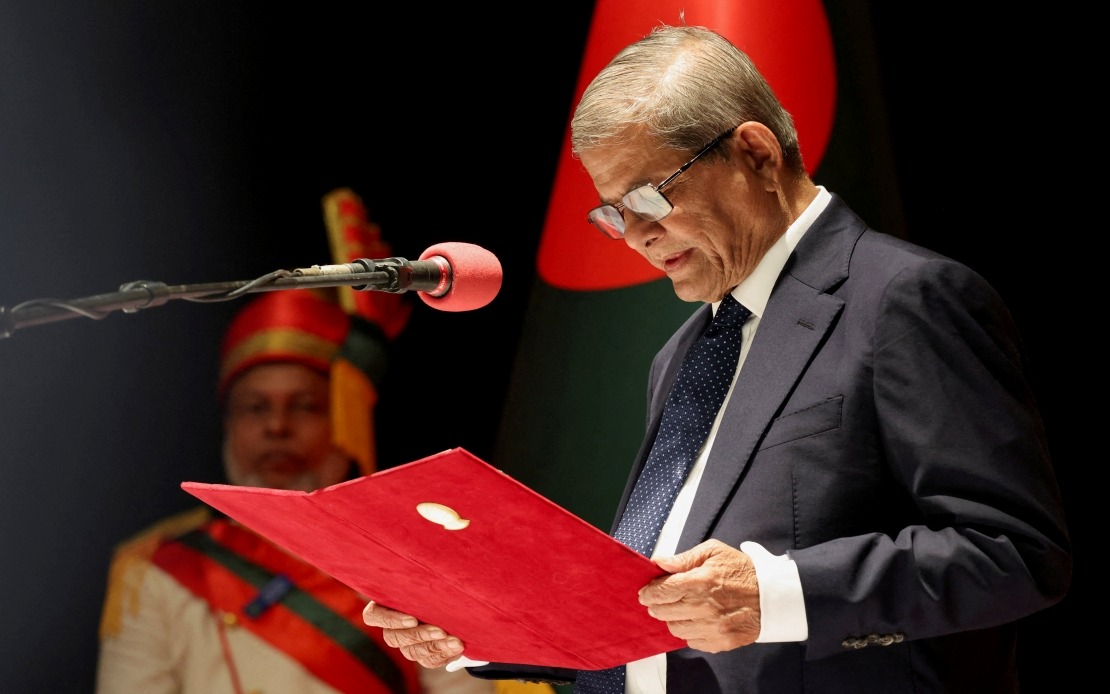
Mirza Fakhrul Islam Alamgir assumed the presidency of Bangladesh on Friday evening, completing a constitutional transition that brings one of the country's most established political figures to the nation's highest ceremonial office. The oath-taking ceremony unfolded at Bangabhaban's Darbar Hall at 7.30 pm local time, where Acting Speaker Barrister Kayser Kamal administered the presidential oath before an assembly of state dignitaries and international representatives.
The event marked a significant moment in Bangladesh's recent political trajectory, particularly given the circumstances surrounding the leadership transition. Prime Minister Tarique Rahman, the chief justice, members of the Cabinet, members of parliament, foreign diplomats, and senior civil and military officials gathered to witness the formal handover of executive authority. The ceremonial nature of the proceedings underscored the institutional importance Bangladesh places on orderly succession of office, even as the nation navigates broader constitutional changes.
Mirza Fakhrul's elevation to the presidency represents recognition of his extensive political credentials within the country's governance structures. His background as a former secretary-general of the Bangladesh Nationalist Party positions him as a figure deeply embedded within one of Bangladesh's two major political movements. The parliament's election of Fakhrul as the 23rd President followed constitutional procedures, reflecting the approval of elected representatives across the political spectrum for his candidacy.
The formal transfer of office involved symbolic gestures designed to emphasize institutional continuity and democratic legitimacy. Upon his arrival at Bangabhaban, senior state officials extended formal welcomes, and Acting President Hafiz Uddin Ahmad Bir Bikram received the president-elect before relinquishing his temporary authority. The exchange of seats between Fakhrul and the acting president provided visual representation of the power transition, a protocol element that reinforces the hierarchical nature of Bangladesh's constitutional arrangements.
Following the oath administration, Fakhrul completed additional constitutional requirements by signing both the oath of office and the oath of secrecy. These signatures formalize his legal obligations to uphold Bangladesh's constitution and maintain confidentiality regarding matters of state. The ceremony concluded with the national anthem, providing closure to proceedings that formalized the shift in presidential authority.
For Malaysian observers and Southeast Asian regional watchers, Bangladesh's orderly presidential transition carries broader implications for political stability in the subcontinent. The participation of Prime Minister Tarique Rahman in these ceremonies demonstrates the coordination between executive and ceremonial branches during periods of constitutional change. Bangladesh's presidential system reserves substantial power in the prime ministerial office, making the president's role predominantly ceremonial, yet the formal nature of succession procedures reflects institutional maturity.
The presence of international diplomats at the ceremony underscores Bangladesh's engagement with the global diplomatic community during moments of domestic political transition. Such international attendance serves multiple purposes: it signals international recognition of Bangladesh's constitutional processes, demonstrates the nation's integration within global governance networks, and provides diplomatic observers with insight into the character of Bangladesh's leadership transitions.
Mirza Fakhrul's appointment comes at a time when Bangladesh continues navigating complex political dynamics involving multiple stakeholders and competing interests. His lengthy tenure within BNP structures and rise to the presidency suggests broader political consensus around his suitability for the ceremonial role, even if partisan disagreements persist on substantive policy matters. The timing and manner of his assumption of office may carry implications for how Bangladesh's government manages public perception and diplomatic relations during subsequent months.
The constitutional framework governing Bangladesh's presidential elections ensures that parliamentary approval remains essential for presidential ascension. Fakhrul's election by members of parliament validates his candidacy through democratic institutions, even as questions about broader governance reforms and constitutional amendments continue circulating in Bangladesh's political discourse. The procedures followed demonstrate respect for established constitutional norms, providing baseline legitimacy to his presidency.
Regional neighbors and international observers will likely assess Bangladesh's presidential transition as an indicator of institutional stability and democratic functionality. The orderly nature of ceremonies, the participation of senior officials across civilian and military hierarchies, and adherence to constitutional procedures all suggest that Bangladesh's formal institutional structures continue operating according to established protocols. Such stability in constitutional procedures matters significantly for investor confidence, diplomatic relations, and the nation's regional standing.

