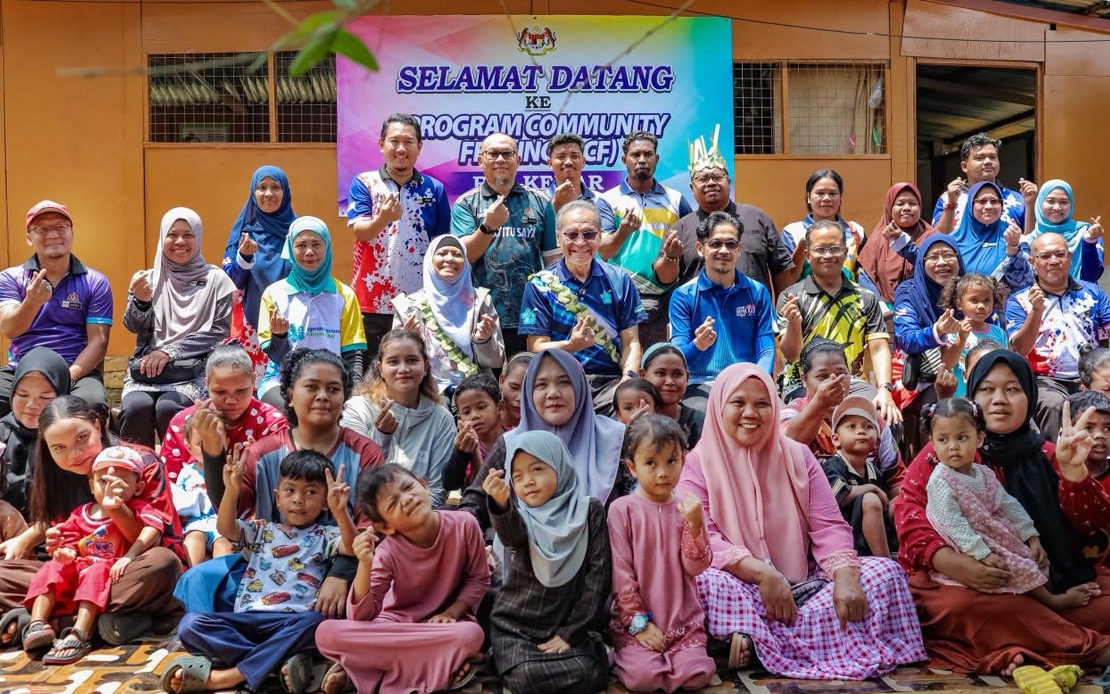
The Ministry of Health has greenlit an immediate RM500,000 investment to overhaul services at the Kemar Health Clinic in Gerik, signalling renewed government focus on healthcare equity for indigenous communities in Malaysia's interior. Health Minister Datuk Seri Dr Dzulkefly Ahmad announced the funding allocation following an inspection visit to Hulu Perak, where he reviewed the facility's operational challenges and assessed infrastructure gaps affecting the Orang Asli population dependent on the clinic.
The allocation reflects the persistent difficulties of delivering medical care across Malaysia's remote regions, where geography and transportation barriers have historically limited access to healthcare. The Kemar facility serves as a critical lifeline for more than 4,500 Orang Asli residents scattered across settlements near the RPS Kemar area, a region where water transport remains the primary means of moving people and supplies. A substantial portion of the funding will address one of the clinic's most pressing infrastructure needs: a deteriorating boat storage facility that has exceeded its operational lifespan and capacity constraints.
The existing storage structure, now over 11 years old, suffers from significant wear and can accommodate only a single vessel, severely hampering the clinic's ability to maintain its marine fleet and protect this essential asset. This limitation directly impairs emergency response capabilities in a region where waterways represent the only viable transportation network. The construction of a new, purpose-built storage facility represents a practical solution to a problem that has compounded logistical difficulties for years, allowing the clinic to maintain multiple boats in serviceable condition and respond more rapidly to medical emergencies across dispersed communities.
Beyond infrastructure repairs, the ministry's investment encompasses the acquisition of modern equipment critical to delivering advanced emergency care in a remote setting. Funding will support procurement of a new four-wheel-drive vehicle to replace ageing transport infrastructure that has become unreliable for ground-based medical missions and supplies. Equally significant, the allocation includes acquisition of a Video Laryngoscope, a specialised medical device essential for intubation procedures during acute respiratory emergencies. In isolated settings where patients may require airway management before transfer to larger facilities, possession of such equipment can determine survival outcomes.
Dr Dzulkefly simultaneously inaugurated a new Medik 8 multipurpose boat, a 12-passenger vessel costing RM350,000, designed specifically to accelerate emergency medical response times across the scattered Orang Asli settlements. This addition expands the ministry's existing aquatic fleet from six to seven operational boats, each capable of navigating the region's challenging river conditions to reach patients during time-critical situations. The boat represents tangible capability enhancement, enabling medical personnel to reach distressed individuals faster and transport them to higher-level facilities with greater efficiency than previously possible.
The health minister articulated the broader philosophical framework guiding these investments, rooting them within Malaysia MADANI principles emphasising universal healthcare access regardless of residential geography or terrain difficulty. He underscored that government resources remain hollow abstractions without frontline personnel willing to undertake extraordinary efforts in harsh conditions. The doctor's remarks highlighted the often-overlooked human dimension of healthcare delivery in remote areas, where medical professionals and boat operators regularly confront dangerous water conditions, unpredictable weather, and extended separation from support systems.
Complementing facility upgrades, the ministry highlighted achievements from the Community Feeding Programme at RPS Kemar, a nutritional intervention targeting Orang Asli children aged six months to six years. Over the decade spanning 2015 to 2025, the programme has delivered measurable health improvements through active feeding protocols, full-cream milk provision, multivitamin supplementation, and Ready-to-Use Therapeutic Food administered for malnutrition cases. These interventions have produced striking reductions in childhood malnutrition indicators across the population served.
The stunting rate—a critical indicator of chronic malnutrition affecting child development—declined substantially from 75.2 per cent to 50.8 per cent during the programme's implementation period. Simultaneously, the underweight prevalence dropped from 43.7 per cent to 25.2 per cent, demonstrating that sustained nutritional support generates meaningful long-term health gains. These percentage-point improvements represent hundreds of children whose growth trajectories have normalised and whose future health prospects have improved substantially.
For Malaysian policymakers and health administrators, the Kemar initiative illustrates the multifaceted approach required to address indigenous healthcare inequities. The challenge extends beyond clinic construction to encompass transportation infrastructure, emergency medical capacity, and preventative nutrition programmes operating in concert. The RM500,000 allocation, while significant, remains modest relative to the scale of health disparities affecting Malaysian indigenous populations, many of whom experience mortality and morbidity rates substantially exceeding national averages.
The investment in Kemar also carries broader implications for Malaysia's commitment to healthcare universality in the context of growing international development scrutiny. As Southeast Asian nations increasingly confront questions about equity in health outcomes, visible government investment in marginalised communities signals policy seriousness. Regional comparators likewise face similar challenges delivering services to dispersed indigenous and minority populations across difficult terrain, suggesting that Malaysia's Kemar experience may offer instructive lessons for neighbouring countries pursuing similar equity objectives.
Looking forward, the health minister announced plans to accelerate construction of a new Type 5 health clinic at Kemar, promising residents access to substantially upgraded facilities offering greater comfort and comprehensiveness than the current installation allows. This facility will presumably provide expanded bed capacity, enhanced diagnostic capabilities, and improved staff quarters—critical improvements for a clinic serving a geographically dispersed population requiring both emergency response capacity and ongoing disease management services. The timeline for this construction project remains unspecified, though Dr Dzulkefly's emphasis on urgency suggests prioritisation within ministry planning cycles.

