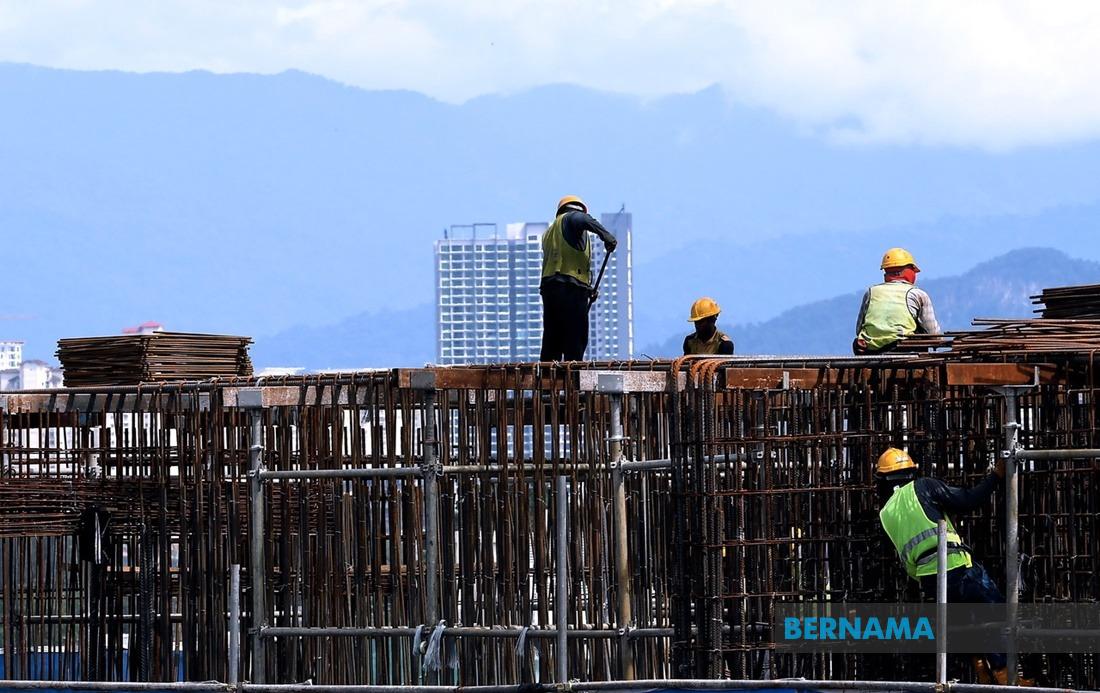
The government's current assessment of the Minimum Wages Order 2024 presents a critical opportunity to examine whether existing wage floors remain adequate for Malaysia's working population. Datuk Mohamed Shafie BP Mammal, president of the Union Network International - Malaysia Labour Centre (UNI-MLC), has emphasised that this periodic review is essential to gauge the continued relevance of wage rates given the evolving economic circumstances workers face across the country.
At the heart of this discussion lies a fundamental principle that extends well beyond simple numerical figures appearing on payslips. Rather, the conversation centres on purchasing power—the practical ability of workers to convert their wages into actual goods and services that sustain their families. The disconnect between nominal wages and real economic capacity has become increasingly pronounced as household expenses for rent, food, utilities, and transportation have climbed across Malaysia's urban and semi-urban centres. Without corresponding wage adjustments, workers find themselves in a precarious position where income growth fails to match cost inflation.
Mohamad Shafie's position reflects a broader recognition within labour circles that wage policy cannot be set in isolation from broader economic realities. When workers' earnings barely cover essential expenses, they face impossible choices: paying rent and utilities while sacrificing nutritional variety, or prioritising education costs while deferring medical check-ups. This financial tightness leaves virtually no room for the savings that buffer unexpected crises—a car breakdown, a child's emergency dental treatment, or temporary job loss. The dignity of work, he argues, demands more than mere subsistence.
Malaysia's labour movement has long advocated for periodic wage reviews rather than ad-hoc increases, as systematic assessment allows all parties—government, employers, and workers—to make decisions grounded in current economic data. The rhythm of regular reviews creates predictability in labour markets and prevents wages from drifting too far from economic reality. The challenge lies in calibrating these reviews with sufficient frequency to remain responsive while avoiding excessive volatility that could disrupt business planning or government budgeting.
Crucially, Mohamed Shafie clarified that reviewing minimum wage provisions does not automatically predetermine an increase in the statutory minimum. Instead, the review process itself serves as an evidence-gathering exercise that evaluates whether the existing rate—currently set by the 2024 order—remains justified. This nuanced distinction matters significantly for business stakeholders concerned about compliance costs and competitiveness. A review framework that permits honest assessment without presuming outcomes may prove more acceptable to employers who understand the methodology and reasoning behind any eventual decision.
The intersection of wage policy and worker welfare carries particular significance for Malaysia as the nation pursues higher-income development status. When workers cannot afford basic education for their children or must work multiple jobs simultaneously, the returns on human capital investment diminish. Conversely, when wages provide genuine security and opportunity for self-improvement, workers become more engaged, productive, and capable of contributing meaningfully to economic growth. The relationship between adequate compensation and economic productivity extends beyond immediate consumption patterns to influence workforce stability and skill development over longer horizons.
Regional context reinforces the importance of Malaysia's wage policy choices. Neighbouring countries including Singapore and Thailand have each pursued distinct approaches to minimum wage determination, with varying outcomes for worker welfare, business competitiveness, and economic inequality. Malaysia's decisions carry weight not only for its own working population but also as a reference point for regional labour standards and a signal regarding the nation's development priorities. A wage review that appears credible and equitable strengthens social consensus around labour market institutions.
UNI-MLC's willingness to engage constructively with government and employers throughout the review process suggests a pragmatic orientation toward labour advocacy in Malaysia. Rather than adopting purely adversarial positions, the organisation has committed to working within established institutional channels to ensure wage policy remains sensitive to economic conditions and worker circumstances. This collaborative stance potentially creates space for evidence-based deliberation that can accommodate legitimate business concerns while centring worker needs as integral to sustainable development.
The timing of this wage review also merits consideration given Malaysia's economic trajectory following pandemic disruptions. Inflation patterns, sectoral employment changes, and shifts in the geographic distribution of economic activity have all reshaped the landscape since the previous minimum wage determination. An assessment that captures these developments can provide a more accurate foundation for policy than applying static rates to a significantly altered economy. This adaptability reflects how developed labour markets function—with regular calibration rather than long periods of disconnection from underlying conditions.

