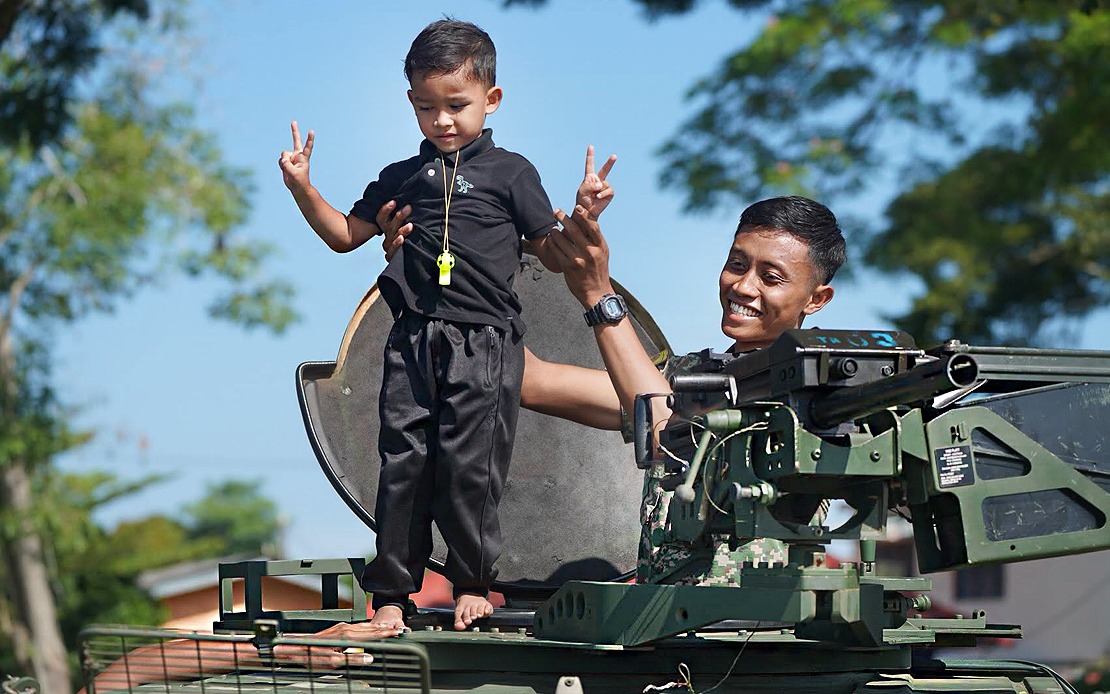
The Ministry of Defence continues to deepen its relationship with Malaysian communities through integrated social outreach, as demonstrated by the launch of its 'Program Jiwa Murni MADANI' in Alor Gajah on August 15. The initiative represents a strategic effort to bridge the gap between the armed forces and civilian populations by delivering tangible services and support directly to those who need it most. Through this programme, MINDEF and the Malaysian Armed Forces aim to reshape public perception of the military as an institution actively invested in community wellbeing rather than purely defence operations.
The Alor Gajah event showcased the breadth of services the defence establishment can mobilise for civilian benefit. Residents gained access to free medical screenings, allowing many to identify health concerns that might otherwise go undetected due to cost barriers. Career and entrepreneurship exhibitions provided pathways for young people to explore opportunities, while the RAHMAH sales initiative—part of the government's broader cost-of-living support measures—offered subsidised goods to lower-income households. Sports competitions fostered community bonding and healthy recreation, while mobile government service counters brought essential administrative services to neighbourhoods that might otherwise require travel to distant offices. This multifaceted approach acknowledges that community welfare extends beyond single-issue solutions.
Infrastructure improvement forms a crucial pillar of the engagement strategy. The 9th Squadron of the Royal Engineers Regiment undertook five distinct projects valued at RM179,200 across the Alor Gajah region, targeting both secular and religious community spaces. The repair of the Multi-Purpose Hall playground in Kampung Baru, Pondok Batang addresses recreational needs for youth, while the restoration of sports facilities at Taman Seri Kelemak demonstrates investment in public health through physical activity infrastructure. The fencing work at Sekolah Jenis Kebangsaan (Tamil) Durian Tunggal reflects recognition of education's importance to community development, particularly for minority language educational institutions. These projects indicate that the armed forces recognise infrastructure gaps that civilian authorities may have overlooked or lacked resources to address.
Religious and spiritual infrastructure received particular attention, with three separate repair and development projects focused on Islamic and Hindu places of worship. The renovation of the Madrasah Seri Kemuning roof and repairs to Surau Madrasah Khairiah demonstrate military willingness to support religious community spaces across different faith traditions. This approach carries strategic significance in a multicultural Malaysia, where military engagement with diverse religious institutions helps normalise armed forces presence within different community contexts and counters any perception that defence establishments favour particular religious groups. For religious communities that often operate with limited resources, such infrastructure support removes significant financial burdens.
Beyond construction work, the Service Centre Initiative channelled RM133,000 to eight recipients through Deputy Defence Minister Adly Zahari, targeting specific community projects and institutional needs. The distribution encompassed religious institutions, temples, a school, and veteran associations, reflecting deliberate effort to ensure resources reach diverse community segments. The funding for SJKT Batang Melaka's GreenLab development introduces environmental education into the military's welfare calculus, suggesting awareness that community benefit extends to environmental sustainability and climate adaptation. Such targeted financial support allows community organisations to implement projects they identify as priorities, rather than imposing military-designed solutions.
The veteran welfare component deserves specific attention, as the distribution of 500 RAHMAH baskets to the Malaysian Armed Forces veterans' association acknowledges that military community engagement must include those who have served. Veterans often face integration challenges following service, and direct support through subsidised goods programmes helps maintain social connection and provides practical assistance. This internal focus on veteran welfare demonstrates understanding that military-community relations must begin with proper care for former service members, who serve as crucial bridges between institutional military culture and civilian society.
Complementing the welfare programme, the Religious Corps of the Malaysian Armed Forces organised the 'Program Ilmu dan Muafakat MADANI' at Masjid Kelemak, combining religious observance with community engagement. The structured programme—featuring congregational prayers, lectures, charitable contributions, and mosque congregation engagement—demonstrates how spiritual practice can constitute legitimate military community involvement. This programming reflects Malaysia's constitutional recognition of Islam's special position while expanding the definition of civil-military cooperation beyond traditional security frameworks. For Muslim communities, military presence in religious spaces during congregational prayer times signals institutional respect for religious practices and institutional willingness to operate within Malaysia's Islamic framework.
The integration of these complementary programmes—combining welfare, infrastructure, religious engagement, and spiritual programming—reflects a sophisticated understanding of community needs as multidimensional. Rather than viewing civil-military cooperation as confined to security matters or emergency response, MINDEF's approach positions the armed forces as multi-purpose institutions capable of addressing diverse social challenges. This represents alignment with the National Defence Strategic Plan (PSPN) 2026-2030, specifically its Core 4 objectives regarding community engagement and social resilience. By grounding defence strategy in grassroots community wellbeing, the ministry positions military institutions as integral to national development rather than peripheral security apparatus.
For Malaysian communities in semi-urban areas like Alor Gajah, such programmes address real service delivery gaps. Local government often struggles with resource constraints, and federal agencies may prioritise urban centres. Military engineering corps, medical personnel, and logistics capabilities represent dormant resources that can address infrastructure deficits when properly mobilised for civilian purposes. The psychological impact also matters—residents experience direct military engagement as beneficial and responsive to their needs, potentially softening any suspicion toward defence institutions and building social cohesion that transcends military-civilian boundaries.
The scale and diversity of this initiative suggest expansion beyond single locations. The combined value of welfare assistance, infrastructure projects, and financial support exceeded RM300,000, representing substantial resource commitment to a single district. If replicated across Malaysia's administrative divisions, such programmes could generate significant cumulative community benefit while simultaneously achieving the stated objective of strengthening civil-military relations. However, sustainability questions remain about whether such initiatives can continue without dedicated funding streams, and whether community expectations, once elevated through such programmes, can be consistently met across different regions with varying resource availability.
The timing of these efforts carries political significance in Malaysia's contemporary context. As the nation navigates inflation pressures and cost-of-living challenges, visible government institutions—including the military—deploying resources for community benefit generates positive sentiment and demonstrates responsive governance. The explicitly MADANI branding links military welfare efforts to the government's broader policy framework, suggesting institutional alignment with national development priorities. For Malaysian residents experiencing economic strain, subsidised goods, free health services, and improved community infrastructure represent tangible government delivery that occurs in their neighbourhoods rather than in distant capital cities.
Looking forward, the success of such programmes depends on consistent execution, adequate resourcing, and genuine community responsiveness rather than performative engagement. The depth of infrastructure projects—involving structural repairs rather than merely symbolic gestures—and the targeted financial support suggest serious commitment rather than superficial public relations. However, for these initiatives to fundamentally transform civil-military relations in Malaysia, communities must perceive them as reliable, ongoing commitments rather than episodic events. The programmes also highlight broader questions about whether defence ministry resources should be deployed for civilian welfare when significant defence capability challenges persist, though the positioning as strategic community engagement rather than charity suggests this trade-off may represent acceptable policy choice.

