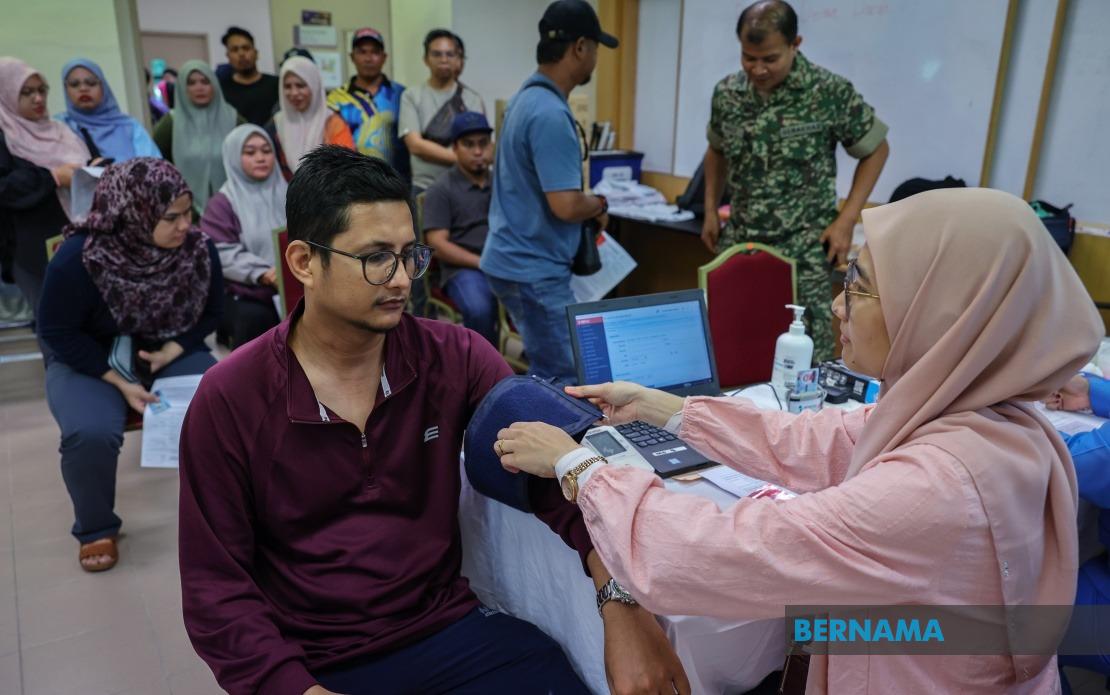
The Royal Malaysian Armed Forces demonstrated its commitment to public health outreach when it launched free dental and medical services in Baling, bringing clinical expertise typically found in urban centres directly to rural communities. The initiative, known as the Civil-Military Cooperation (CIMIC) programme and branded as "Military with the People," ran from July 9 to 11 at Sultan Abdul Halim Mu'adzam Shah International Islamic University (UniSHAMS) in Kuala Ketil, coinciding with the conclusion of the Basic Commando Course (Series AK/1/26). This convergence of military training and community service exemplifies how large-scale defence operations can be leveraged to address healthcare gaps in Malaysia's less-urbanised regions.
The healthcare delivery mechanism deployed two specialised components: the Medical Community Assistance Programme (MEDCAP) and Dental Community Assistance Programme (DENCAP). Together, these initiatives provided comprehensive coverage spanning preventive care, emergency response, and basic therapeutic interventions. The Royal Medical Corps (KKD) stationed trained personnel and equipment to handle everything from routine dental scaling and fillings to blood pressure monitoring, blood glucose testing, and body mass index assessments. By embedding these services within a community event rather than confining them to military installations, the armed forces significantly reduced access barriers that often deter rural populations from seeking preventive healthcare.
The practical impact on individual residents illustrates why such programmes matter in Malaysia's healthcare landscape. Siti Salmiah Said, a 28-year-old factory worker, seized the opportunity during her day off to bring her entire family for treatment, underscoring how free services can overcome financial constraints on healthcare utilisation. Her husband underwent dental scaling while her six-year-old child received a filling—interventions that might otherwise require multiple clinic visits, appointment delays, and out-of-pocket expenses. For workers juggling employment schedules with health maintenance, the one-stop provision of services eliminated bureaucratic friction and travel costs, making preventive care genuinely accessible rather than theoretically available.
Legal assistant Adam Ruzlan similarly benefited from the convenience and educational dimension of on-site treatment. Beyond receiving dental work, he gained personalized advice about oral health maintenance and decay prevention—knowledge transfer that transforms clinical encounters into opportunities for health literacy. This educational component reflects contemporary public health thinking, which recognises that treating acute problems without addressing underlying behaviours yields limited long-term improvements. Military medical officers used patient interactions to promote awareness of proper dental hygiene and the importance of regular check-ups, planting seeds for sustained behaviour change within the community.
The programme's responsiveness to medical emergencies also demonstrated professional preparedness. When Norhasliza Nayan's 12-year-old son experienced dizziness and nausea during the event, Civil Defence Force (APM) personnel immediately activated emergency protocols. The child received prompt assessment—temperature, blood pressure, and oxygen saturation monitoring—followed by medication for nausea. This capacity to handle unexpected medical complications without requiring transport to distant hospitals reinforces why defence forces maintain medical capabilities and why deploying them for community benefit serves national health security interests. Norhasliza's endorsement of the facility reflects public appreciation for healthcare provision that combines speed, professionalism, and accessibility.
Captain Dr Muhammad Afiq Ishak, a dental officer from the 2nd Medical Battalion, explained that DENCAP's scope centred on foundational treatments—fillings, scaling, and extractions—rather than complex restorative work. This calibration of service scope recognises that rural communities often lack access to even basic preventive dentistry, making scaling and simple restorations disproportionately valuable. The programme's screening protocols also identified individuals at risk of chronic conditions such as hypertension and diabetes, enabling referrals to nearby clinics for ongoing management. By functioning as a triage point rather than attempting comprehensive care delivery, DENCAP integrated efficiently into broader healthcare systems while remaining responsive to immediate community needs.
The collaboration between the military and civilian health authorities elevated the programme's impact. Lieutenant Dr Atiff Abdul Aziz, Medical Officer at the Special Warfare Training Centre, highlighted strategic cooperation between the Ministry of Health through the Baling District Health Office and the armed forces. The Baling District Health Office contributed general health screening services and mental health awareness initiatives, addressing not only physical ailments but also the persistent stigma surrounding psychological wellbeing in rural Malaysia. This inter-agency approach distributes workload, combines complementary expertise, and ensures that medical services remain embedded within the broader public health framework rather than existing as isolated military operations.
Beyond curative services, the programme integrated blood donation activities managed by Sultan Abdul Halim Hospital (HSAH) in Sungai Petani. Targeting collection of approximately 100 bags of blood daily, this component addresses chronic national blood supply challenges while fostering civic participation. Blood donation drives in community settings reach populations less likely to visit donation centres, expanding the donor base and strengthening transfusion services—a critical infrastructure for trauma care, surgery, and treatment of blood disorders. The donation activity transformed participants from passive recipients of healthcare into active contributors to the health security of their broader region.
For G. Devindran, a 37-year-old factory worker, the programme evoked memories of similar military health initiatives from nearly three decades earlier. His observation that current services operated with markedly faster delivery and superior facilities suggests meaningful improvements in military healthcare logistics and capacity over recent decades. His ability to access dental treatment, blood pressure screening, blood glucose testing, and BMI assessment within a single visit—all before reporting for his afternoon shift—demonstrates how well-organised service delivery can accommodate working populations' time constraints. Such efficiency gains matter particularly in developing regions where competing demands on time often force difficult trade-offs between income generation and health maintenance.
The CIMIC framework underlying this initiative reflects international best practice in civil-military cooperation, emphasising that armed forces possess resources and expertise that can address non-security governance challenges. By deploying medical personnel and equipment for community benefit, Malaysia's defence establishment cultivates public trust, demonstrates responsiveness to civilian needs, and models institutional accountability. Residents who experience military professionalism and competence in healthcare contexts develop more positive perceptions of defence forces, potentially yielding downstream benefits for recruitment, public support for security policies, and social cohesion.
The programme also illustrates creative solutions to Malaysia's persistent healthcare geography challenge—the concentration of specialist facilities and trained personnel in urban centres, leaving rural populations substantially underserved. While permanent infrastructure improvements require sustained investment, temporary mobile clinics can meaningfully reduce access gaps during transition periods. The CIMIC model suggests that defence forces could become routine partners in health system strengthening, particularly in underserved districts where mobility and temporary deployment align with actual community need patterns.
Looking forward, the success metrics evident in community testimonials—high uptake, positive reception, medical emergencies handled competently, and health education delivered—provide justification for institutionalising such programmes. The convergence of military training events with healthcare delivery creates opportunities for scaled-up initiatives without requiring dedicated peacetime resource allocation. Whether future "Military with the People" programmes expand to other regions and communities will depend on resource availability, military scheduling, and political will to sustain civil-military cooperation beyond ceremonial engagements. For residents of Baling, however, the July initiative demonstrated that healthcare access barriers are not inevitable but rather reflect institutional choices about resource deployment—a lesson with implications for how Malaysia approaches health equity across its disparate regions.

