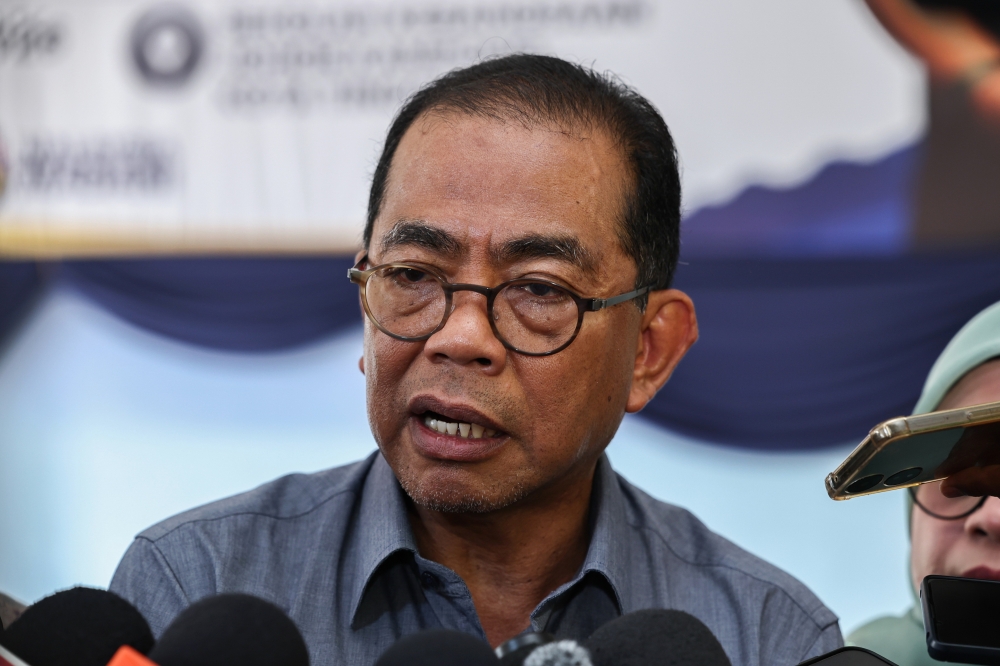
Defence Minister Datuk Seri Khaled Nordin has provided clarity on a constitutional question that touches on the delicate balance between federal military powers and state sovereignty, confirming in Parliament that the Armed Forces can proceed with exercises throughout Malaysian states without seeking explicit approval from royal institutions. This pronouncement addresses an ongoing area of potential friction between federal defence authorities and state governments, particularly regarding the coordination and notification protocols for military activities.
The minister's statement reflects a particular interpretation of Malaysia's constitutional framework, which vests command of the armed forces with the Yang di-Pertuan Agong and allocates defence as a federal matter under the jurisdiction of the Defence Ministry. This arrangement establishes the military as an instrument of federal governance, operating under national security protocols that supersede state-level administrative structures. However, the relationship between federal military operations and state prerogatives remains nuanced, as states retain certain residual powers over internal administration and land usage within their boundaries.
Khaled Nordin's clarification carries significance for how the Defence Ministry plans and executes its operational calendar. Military exercises form an essential component of force readiness and operational preparedness, encompassing live-fire drills, tactical manoeuvres, naval operations, and air force training missions. These activities often require access to designated training areas, airspace, and coastal regions distributed across multiple states. Without the ability to conduct such exercises autonomously, the military's capacity to maintain combat effectiveness would be substantially constrained, potentially affecting Malaysia's defence posture in a strategically important region where maritime and territorial security challenges persist.
The distinction between notification and permission becomes particularly important when examining the practical implications of the minister's stance. While the military may not require formal royal consent at the state level, the protocol typically involves informing state authorities of planned exercises to ensure public safety, manage civilian access to affected areas, and coordinate with state emergency services. This distinction between having the legal authority to act and maintaining cooperative relationships with state governments reflects the reality that effective governance requires both legal clarity and operational coordination, even when the law grants one party unilateral authority.
Regional military cooperation and joint exercises with friendly nations add another dimension to this question. The Malaysian military regularly participates in bilateral and multilateral training activities with allied forces from countries including Singapore, Thailand, Indonesia, the United States, and Japan. These collaborative exercises frequently occur across multiple locations within Malaysian territory and may involve foreign personnel and equipment. The clarity provided by the Defence Minister becomes particularly relevant when foreign military units are involved, as it establishes that such arrangements do not require state-by-state approvals beyond federal coordination.
The constitutional framework underpinning the minister's position derives from the Federal Constitution, which designates defence as an exclusive federal matter and grants the Yang di-Pertuan Agong supreme command of the armed forces. This arrangement reflects Malaysia's structure as a federal monarchy where powers are distributed between federal and state governments, with defence strategically positioned as a national concern rather than a devolved state responsibility. The logic behind this allocation recognizes that military operations, force development, and strategic planning require centralized direction to ensure coherence and national security effectiveness across the federation.
State governments, however, retain legitimate interests in activities occurring within their territories, particularly where such activities might affect civilian populations, environmental resources, or economic development. The practical tension between federal authority and state interests has occasionally surfaced when military training operations have impacted local communities or when questions arise about land access and usage rights. The Defence Ministry's position acknowledges federal supremacy while implicitly accepting that professional courtesy and coordination mechanisms remain important for operational effectiveness.
The timing and context of the minister's parliamentary statement may reflect specific incidents or recurring questions from legislators representing states where substantial military activities occur. Certain Malaysian states host major military installations, training grounds, and operational bases, making them particularly affected by the frequency and scope of defence activities. Johor, Sabah, Sarawak, and Pahang, among others, host significant military infrastructure, and their state governments naturally maintain interest in major activities affecting their populations and resources.
International precedent supports the principle that military exercises typically fall within exclusive federal jurisdiction in federal systems. Australia, Canada, and the United States all maintain centralized military command structures that operate independently of subnational approval for training activities, though coordination with local authorities remains standard practice. This international context provides additional support for Malaysia's constitutional interpretation, positioning the country within mainstream federal practice regarding military command authority.
Looking forward, the Defence Minister's clarification should facilitate more efficient military planning and exercise scheduling while maintaining the professional relationships necessary for effective governance. The statement provides legal certainty for defence planners while implicitly preserving the cooperative protocols that ensure military operations accommodate legitimate state-level concerns regarding public safety, environmental protection, and economic considerations. This balance between legal authority and practical coordination represents a mature approach to the federal-state dynamic in military matters.

