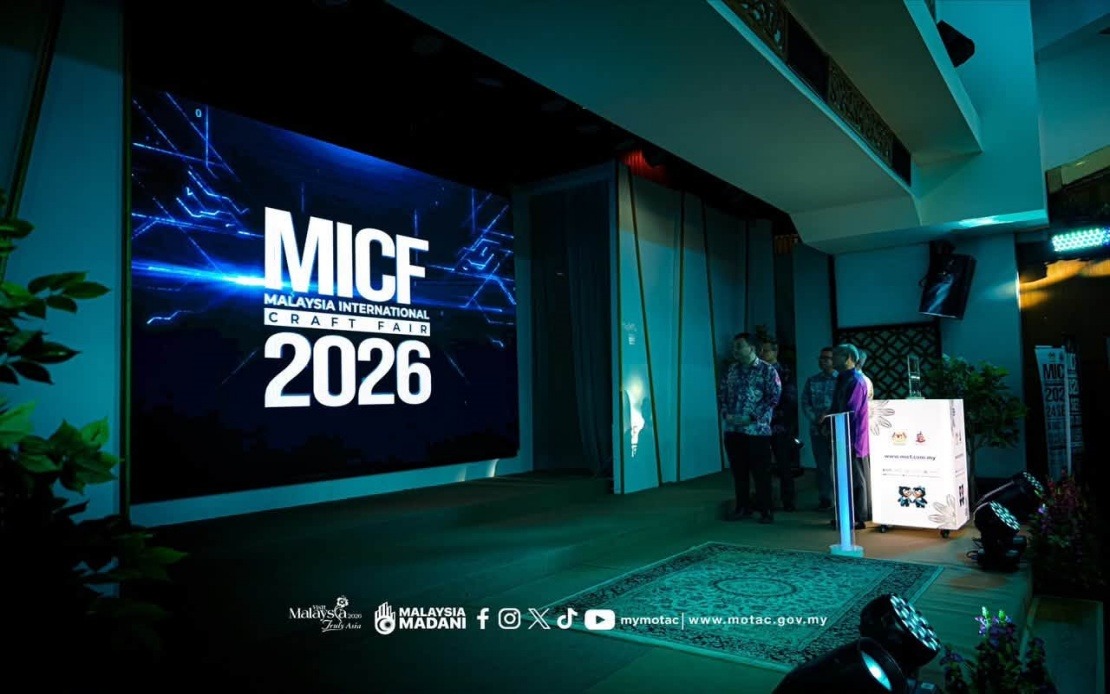
The Malaysia International Craft Fair (MICF) 2026 is positioning itself as a major cultural and commercial gathering for the global artisan community, with Kraftangan Malaysia organising the 12-day event at the Kuala Lumpur Craft Complex from September 24 to October 5. The fair aims to attract 400 participating craftspeople, with domestic artisans forming the bulk of the contingent at 300 participants while roughly 100 international craftspeople from more than 20 countries will travel to showcase their expertise and wares.
The fair represents a calculated effort to position Malaysia as a regional hub for craft heritage and contemporary artisanal production. Beyond the simple exhibition of products, organisers intend the event to function as a business platform, facilitating networking between local and international craftspeople whilst opening new sales channels and strategic partnerships. This dual focus on cultural celebration and commercial advancement reflects broader regional trends in how Southeast Asian nations leverage traditional crafts as economic and cultural assets in an increasingly globalised marketplace.
The international representation will be particularly instructive for Malaysian audiences and craft entrepreneurs. Six countries have committed to major craft demonstrations, each highlighting distinct cultural traditions. China will present jade carving techniques, while New Zealand's Maori artisans will demonstrate their traditional carving methods. Uzbekistan brings jewellery art expertise, Sri Lanka will showcase beeralu lace work—a centuries-old technique—Indonesia will present leather art forms, and India will feature tarkashi brass inlay work. This geographic and stylistic diversity underscores the universal language of handcraft and the varying approaches different cultures take towards similar mediums.
Malaysian craft mastery will be equally prominent within the programming. Ten local craft masters and entrepreneurs will conduct live demonstrations of traditional Malaysian crafts throughout the festival, allowing visitors direct exposure to techniques that form part of the nation's cultural fabric. The decision to feature both international and domestic artisans at comparable levels reflects a confidence in Malaysian craft traditions whilst acknowledging that exposure to global best practices strengthens rather than threatens local industries.
The festival's programming extends well beyond simple product displays or craft demonstrations. Interactive activities and exhibitions designed to explore various craft expressions will occupy substantial portions of the venue. An International Craft Talk series will provide platforms for artisans, entrepreneurs, and cultural commentators to discuss industry challenges, sustainability, market trends, and the preservation of traditional knowledge in contemporary contexts. This educational dimension is particularly valuable for younger craftspeople seeking to build viable careers in artisanal production.
Cultural performances will punctuate the festival experience, moving beyond the visual and tactile engagement with crafts to encompass broader cultural expression. An International Fashion Showcase will demonstrate how traditional craft techniques intersect with contemporary design, a growing trend that has helped revitalise interest in traditional crafts among younger demographic groups across Southeast Asia and beyond. This fusion approach acknowledges that craft heritage survives and flourishes when integrated into living cultural practices and modern consumer preferences rather than being preserved solely as historical artefacts.
Strategic partners have contributed substantively to the festival's scope, with traditional cooking demonstrations representing one significant addition to programming. These culinary elements situate craft within the broader context of intangible cultural heritage, recognising that traditional knowledge encompasses techniques spanning textile, metalwork, ceramics, and food preparation. The inclusion of cooking demonstrations suggests that organisers understand culture not as segmented disciplines but as interconnected systems of knowledge transmission and artistic expression.
Operational details indicate a festival designed for broad public accessibility. Running daily from 10 am to 10 pm throughout its 12-day span, MICF 2026 accommodates both weekday workers and weekend visitors. Extended evening hours reflect recognition that Malaysian audiences, particularly in urban areas like Kuala Lumpur, increasingly attend cultural events after work hours. The Kuala Lumpur Craft Complex as venue choice is particularly apt, providing a dedicated space with appropriate infrastructure whilst reinforcing the complex's role as Malaysia's primary institutional venue for craft heritage.
The festival's pre-launch ceremony, officiated by Deputy Minister of Tourism, Arts and Culture Chiew Choon Man, signals government backing and positioning within Malaysia's cultural development agenda. This ministerial involvement indicates that MICF 2026 aligns with national policies prioritising cultural tourism, creative economy development, and international soft power. For Malaysian craftspeople, such official endorsement can translate into increased media attention, potential export opportunities, and validation of craft-based livelihoods as economically and culturally significant pursuits.
The targeting of 400 participants across 12 days suggests organisers anticipate sustained rather than concentrated attendance patterns. Averaging roughly 33 artisans and entrepreneurs on-site daily, the festival maintains sufficient activity density to generate visitor interest whilst allowing individual craftspeople adequate space and attention. For Southeast Asian craft sectors struggling with market access and international visibility, MICF 2026 offers a rare opportunity to reach diverse audiences and establish connections that transcend traditional trade channels.
The emphasis on diversity—geographic, stylistic, and technical—carries implications for Malaysian craft development strategies. Exposure to international techniques and market approaches provides local artisans with comparative perspectives on their own practices. Simultaneously, international participants gain insight into Malaysia's craft heritage and potential distribution networks within Southeast Asia. This bidirectional knowledge and market exchange constitutes the fair's deepest value proposition beyond simple commercial transaction.

