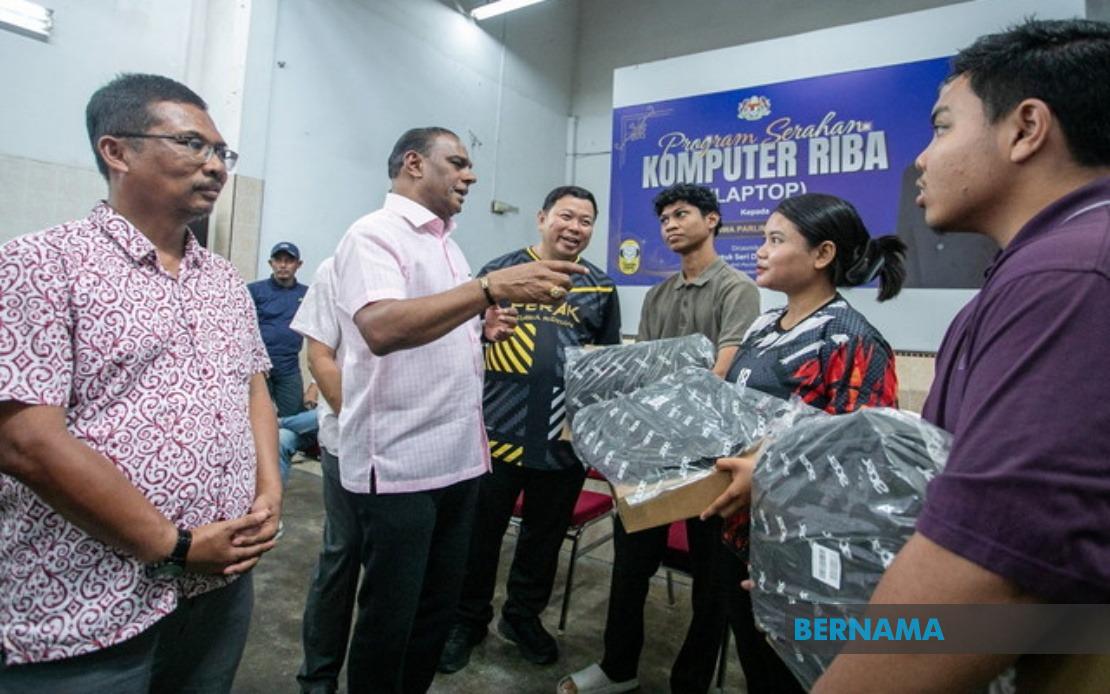
The Malaysian Indian Congress has committed to defending its single Melaka state seat while simultaneously examining opportunities to broaden its electoral presence in the poll, according to party deputy president Datuk Seri M. Saravanan. The decision to retain the Gadek constituency represents a consolidation of the party's existing position in the southern state, though MIC leadership is actively weighing whether an expansion into additional constituencies would be strategically viable. Speaking after attending the 2026 Tapah Parliamentary Students Laptop Handover Programme in Tapah, Saravanan indicated that the party has not yet finalised any decision on contesting supplementary seats and remains in the assessment phase.
The evaluation process underway at MIC headquarters involves multiple strategic considerations beyond simple ambition to contest more constituencies. Party leadership is conducting a thorough appraisal of which constituencies would present the strongest electoral prospects, factoring in demographic composition, historical voting patterns, and the existing organisational capacity to mount competitive campaigns. This methodical approach reflects lessons learned from previous electoral cycles where overextension without adequate preparation has weakened smaller coalition partners. Saravanan emphasised that the party is not rushing into announcements, preferring instead to allow sufficient time for comprehensive analysis before committing resources to additional contests.
The calibre of prospective candidates represents another critical factor shaping MIC's strategic calculations. Party president Tan Sri S A Vigneswaran is currently engaged in detailed evaluation of potential candidates across various constituencies, seeking individuals who possess both the personal stature and grassroots credibility necessary to succeed in competitive three-cornered or multi-cornered contests. The identification and vetting of suitable candidates typically demands considerable time, as the party seeks to balance factors including professional background, community standing, ability to fundraise, and organisational experience. Saravanan indicated that candidate decisions are expected within a reasonable timeframe, suggesting that the party's internal deliberations are progressing rather than stalled.
MIC's cautious approach to expansion contrasts sharply with the more aggressive posturing sometimes adopted by larger parties. As a component member of Barisan Nasional, MIC must navigate the delicate politics of coalition seat allocation, where assertiveness in claiming constituencies could generate tensions with partner parties. The party's focus on consolidating its existing position while selectively exploring expansion opportunities demonstrates a pragmatic understanding of its relative electoral strength and the importance of maintaining coalition cohesion. This positioning allows MIC to demonstrate vitality and growth ambitions to its supporters while avoiding overcommitment that could backfire if the party lacks the organisational machinery to deliver victories.
The 2021 Melaka state election provides recent evidence of MIC's ability to hold contested seats through effective ground organisation and candidate appeal. VP Shanmugam's victory in Gadek was secured with a 559-vote majority despite facing six competing candidates in a fractious six-cornered contest. This outcome suggests that the party possesses functional organisational capacity in at least one constituency and that Indian voters remain responsive to well-executed MIC campaigns. The relatively slender margin of victory, however, also underscores the competitive nature of contemporary Melaka politics, where voter volatility and strong opposition presence require constant mobilisation effort.
MIC's expanded election preparations now encompassing voter identification and issue assessment indicate a party investing in conventional grassroots political work rather than relying on institutional advantages. The emphasis on identifying core supporters speaks to the party's understanding that Indian Malaysian voters cannot be taken for granted and require persistent engagement. The simultaneous focus on understanding current local issues demonstrates that MIC recognises electoral success depends on demonstrating responsiveness to community concerns, whether related to education, employment, business licensing, or religious affairs affecting the Hindu majority among Indian Malaysians.
For Malaysian political observers, MIC's measured approach offers insights into how minority-based parties navigate electoral mathematics within coalition frameworks. Unlike dominant parties that can afford to contest in numerous constituencies simultaneously, smaller partners must make strategic choices about resource deployment and candidate availability. MIC's willingness to consider expansion suggests growing organisational confidence and perhaps stronger candidate pipelines, yet the party's caution indicates realistic assessment of competitive constraints. This balancing act will likely characterise MIC's campaign strategy across multiple upcoming electoral contests at both state and federal levels.
The broader context of Melaka politics adds another dimension to MIC's strategic calculations. The southern state has experienced significant political volatility over recent years, with shifting coalitions and voter realignment creating fluid competitive environments. MIC's position within Barisan Nasional provides institutional support and campaign resources unavailable to independent candidates or smaller unaligned parties, yet also constrains MIC's freedom to pursue aggressive expansion strategies that might provoke intra-coalition friction. The party must therefore calibrate its ambitions carefully, seeking growth opportunities that enhance coalition prospects without generating damaging conflicts among partners.
The impact of MIC's electoral performance extends beyond the party's own organisational fortunes to influence broader Indian Malaysian political representation and coalition stability. Indian Malaysians comprise approximately seven percent of the national population but are concentrated in certain urban constituencies and particular states including Selangor and Perak alongside Melaka. MIC's success in defending and potentially expanding its electoral footprint directly affects the party's capacity to champion community interests within government frameworks. Conversely, significant setbacks could weaken MIC's bargaining position within Barisan Nasional and reduce the party's influence over policies affecting Indian Malaysian concerns.

