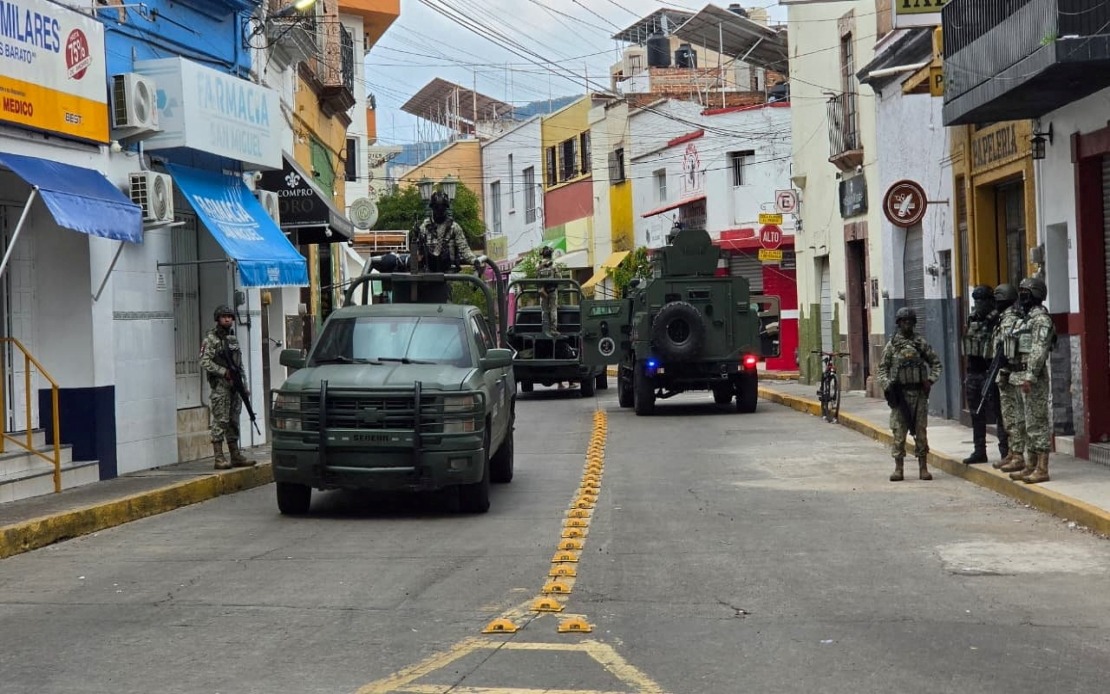
Mexican Security Minister Omar Garcia announced on Thursday the capture of Ramon Angel, alleged leader of a criminal cell affiliated with the Jalisco New Generation Cartel (CJNG), who authorities accuse of ordering the assassination of Uruapan Mayor Carlos Manzo. The arrest followed a coordinated operation involving police units, special forces personnel and military assets working in tandem to locate and apprehend the suspect after months of intelligence gathering and investigative groundwork.
Angle, widely known by his alias "El R1," occupies a significant position within the CJNG's operational hierarchy as a senior enforcer and head of an armed criminal cell. His capture represents a notable tactical victory in Mexico's ongoing battle against organised crime, which continues to destabilise municipalities across multiple states. The Security Minister disclosed on the X social media platform that the suspect had been identified as the principal architect behind what he characterised as the "cowardly murder" of Mayor Manzo, underscoring the gravity with which authorities viewed both the crime and its political dimensions.
The assassination of Manzo on November 1, 2025, during Mexico's Day of the Dead celebrations, provoked widespread national outrage and crystallised growing public concern about political violence ravaging the country. The incident ignited a comprehensive investigation that ultimately led to the detention of 31 individuals, encompassing both cartel members and members of Manzo's own security apparatus, suggesting possible infiltration or corruption within the mayor's protective detail. These revelations deepened public anxiety about the pervasiveness of criminal influence even within state institutions entrusted with protecting elected officials.
According to Garcia's statement, El R1 commands "Los Rs," one of the most notoriously violent criminal cells operating under CJNG direction. This group maintains an active presence across multiple municipalities in Michoacan state—specifically Apatzingan, Uruapan and Morelia—while also conducting operations in neighbouring Jalisco state. The criminal cell specialises in extortion rackets, contract killings and narcotics trafficking, representing a comprehensive threat to civilian security and governmental authority across the regions where it operates. The group's diversified criminal portfolio indicates substantial operational sophistication and resource availability.
Manzo's death transformed the slain mayor into a powerful emblem of Mexico's escalating political violence crisis, triggering nationwide demonstrations and reinforcing public perception that elected officials remain vulnerable to cartel retaliation. During his tenure as Uruapan's chief executive, Manzo had campaigned aggressively on an anti-organised crime platform, pledging to expunge cartel influence from the municipality and restore state control over areas previously dominated by criminal organisations. His assassination appeared designed to send a chilling message to other officials contemplating similar law-and-order initiatives.
Michoacan state occupies particular significance in Mexico's cartel landscape as a historical stronghold of organised crime organisations and a persistent flashpoint for violence between rival criminal syndicates competing for territorial dominance and drug trafficking routes. The state has long represented contested territory where cartel power frequently supersedes governmental authority, and where local officials navigate an extraordinarily perilous political environment. Manzo's election on a hardline crime-fighting platform suggested potential momentum toward challenging entrenched criminal control, making his assassination especially symbolically significant as a potential attempt to forestall such reform efforts.
The arrest of El R1 demonstrates sustained investigative capacity within Mexico's security apparatus despite the challenging operational environment. The identification and apprehension of the suspect occurred through protracted intelligence work that required coordination across multiple institutional actors and substantial resource commitment. Yet the broader context remains troubling: while individual high-level arrests generate positive headlines and suggest progress, Mexico's cartel ecosystem demonstrates remarkable organisational resilience, with successor operatives typically assuming leadership positions relatively rapidly following the removal of senior figures.
For Malaysia and Southeast Asian observers monitoring Mexican security developments, the case illuminates several consequential dynamics relevant to regional concerns. The degree to which cartels penetrate state institutions—evidenced here by potential security detail involvement in the mayoral assassination—demonstrates how organised crime undermines governmental legitimacy and institutional integrity across jurisdictional lines. This pattern resonates with Southeast Asian security challenges where transnational criminal networks similarly exploit state corruption and institutional vulnerabilities. The CJNG's cross-state operational reach further underscores how organised crime transcends administrative boundaries when state capacity proves insufficient for enforcement and territorial control.
The timing of Manzo's killing during Day of the Dead celebrations conveyed deliberate symbolic messaging about cartel power to transcend even culturally significant moments, reflecting operational boldness that suggests criminal organisations perceive limited constraint from state institutions. Such psychological messaging functions extend beyond the immediate victim to create broader deterrent effects among other officials, journalists and citizens considering opposition to cartel activities. Understanding these dynamics proves essential for policymakers in any jurisdiction confronting organised crime threats to state authority and institutional functionality.
Michoacan's particular vulnerability to cartel dominance reflects long-term failure to establish effective state presence and institutional capacity, allowing criminal organisations to consolidate power through violence, corruption and provision of alternative governance structures. The election of reform-minded officials like Manzo represented potential inflection points, yet his assassination demonstrated cartel determination to suppress such challenges. Whether El R1's arrest and the broader investigation into Manzo's death catalyse genuine institutional reform or represent merely tactical adjustments by authorities remains unclear, but the case certainly exposes the extraordinary risks that Mexican officials accepting law-and-order mandates continue facing across vast portions of the national territory.

