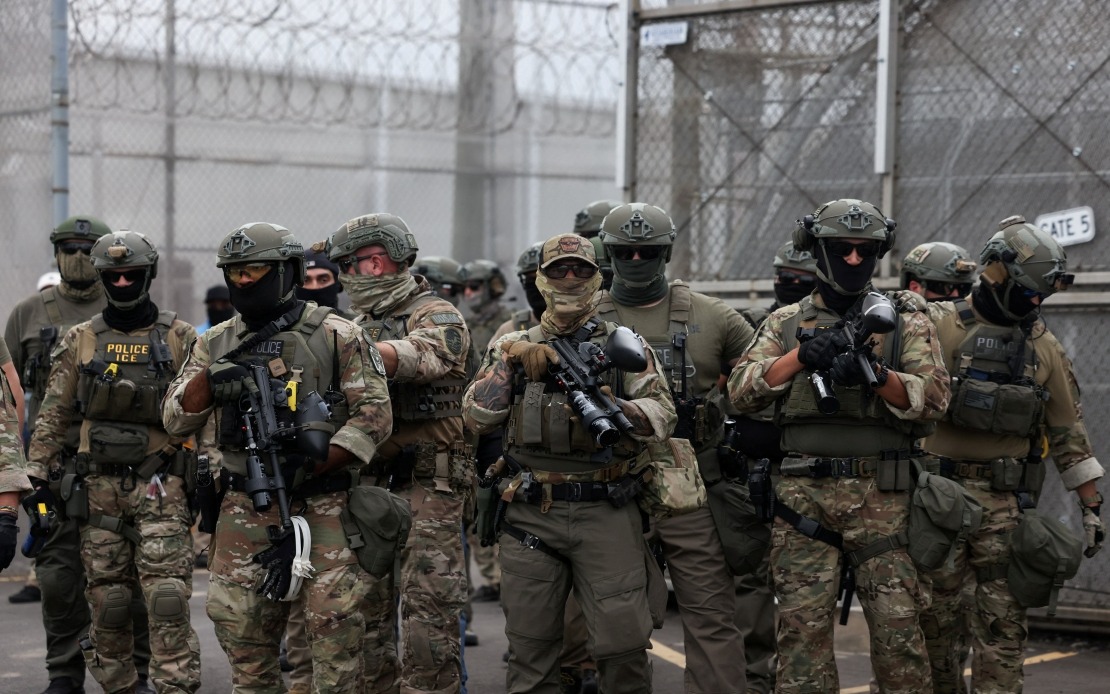
A Mexican national was fatally shot by a United States Immigration and Customs Enforcement (ICE) officer during a confrontation with federal agents in what authorities describe as a defensive response to an aggressive vehicle attack. The incident, which unfolded during early morning hours, has triggered parallel investigations by the US Department of Homeland Security and the Federal Bureau of Investigation's Houston office, underscoring the sensitivity surrounding use-of-force cases involving immigration enforcement personnel.
According to the Department of Homeland Security's account, the driver refused to comply with officers' commands while remaining inside his vehicle. The situation escalated when he allegedly operated his car as a weapon, first striking an agent's vehicle before attempting to hit an officer directly. Faced with this imminent threat, the officer discharged his firearm, mortally wounding the driver, who was subsequently transported to hospital where he succumbed to his injuries.
The Homeland Security statement characterized the deceased as being in the United States illegally, though the agency provided no explanation for how he entered the country or his legal status at the time of the incident. The identification of the driver as connected to immigration violations came through the department's social media announcement, which served as the primary mechanism for disseminating information about the shooting.
The death has renewed scrutiny of law enforcement protocols during immigration enforcement operations, particularly given the documented pattern of discrepancies between official narratives and video evidence in similar cases. According to reporting from NBC News, multiple witnesses present at the scene captured photographic and video recordings of the encounter, a detail that carries significant weight given that independent documentation has previously contradicted government accounts.
Historical precedent looms large in the context of this incident. In January of this year, federal agents employed lethal force against Renée Good and Alex Pretti, both United States citizens, in circumstances that generated considerable national controversy and public outcry. Those deaths intensified the broader debate surrounding the proportionality and necessity of deadly force deployment during federal law enforcement operations.
The parallel investigation structure reflects institutional attempts to manage accountability while maintaining operational independence. The Homeland Security department's internal review mechanism will examine the officer's conduct through an administrative lens, while the FBI's involvement introduces an independent criminal investigation framework. This dual-track approach is standard in federal shooting cases but has sometimes been criticized as potentially limiting the scope or rigor of external scrutiny.
For Malaysian and Southeast Asian observers, this incident illustrates ongoing tensions within the United States immigration enforcement system, where operational pressures and legal authority intersect with questions of proportionate use of force. The incident carries implications for how bilateral relationships are managed, particularly given the deceased's Mexican nationality and the sensitivity surrounding cross-border incidents in North America.
The reliance on government statements as the initial source of information, combined with the presence of independent video evidence, sets the stage for potential evidentiary disputes as investigations progress. The detail that multiple witnesses recorded the encounter suggests that the coming weeks and months will likely see competing interpretations of what occurred, depending on what video footage reveals about the sequence of events and the threat assessment made by the officer.
The broader context of immigration enforcement in the United States has become increasingly fraught following several high-profile incidents in which law enforcement actions have proven controversial. The political dimensions of immigration policy, combined with the inherent dangers and tensions of enforcement operations, create an environment where such incidents generate rapid mobilization by advocacy groups and public commentators across the ideological spectrum.
The Department of Homeland Security's decision to announce the incident through social media rather than through traditional press channels reflects contemporary communication strategies within federal agencies. This approach allows rapid information dissemination but also enables the agency to frame the narrative in real time, potentially influencing early public and media reception before independent verification occurs.
Investigators will need to examine multiple dimensions of the encounter, including whether the driver's initial refusal to comply stemmed from language barriers, fear of immigration enforcement, or other factors. The early morning timing of the operation may also be relevant to understanding the circumstances and the lighting conditions under which the officer made his critical decision.
As these investigations unfold, they will contribute to the broader record of federal law enforcement use-of-force incidents and may inform policy discussions regarding training, de-escalation protocols, and the circumstances under which deadly force is deemed justified during immigration enforcement activities. The outcome will likely generate significant interest among immigration advocacy organizations and policy makers who monitor such developments closely.

