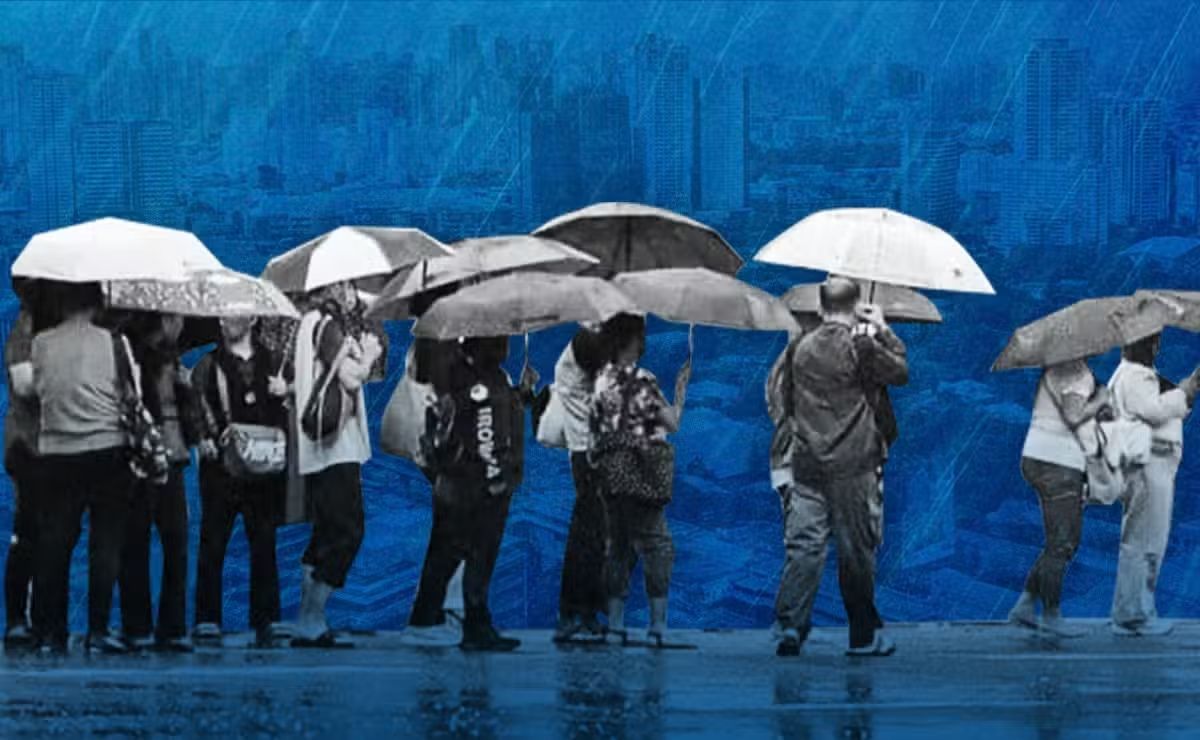
The intensity and concentration of rainfall that battered Metro Manila between August 5 and 14 has reignited scrutiny over the capital region's preparedness for extreme weather events and the adequacy of its flood management systems. Data scientist Dr Alicor Panao from the University of the Philippines examined rainfall patterns across 23 Philippine Atmospheric, Geophysical and Astronomical Services Administration (Pagasa) monitoring stations, finding that the 10-day deluge deposited an average of 483.4 millimeters of water across the metropolitan area—a volume that underscores both the ferocity of nature's assault and the fragility of urban infrastructure designed to protect a sprawling megacity of millions.
The rainfall distribution was far from uniform, reflecting the chaotic nature of tropical weather systems and presenting complications for city planners tasked with protecting dispersed populations. Converting these measurements into tangible perspective helps explain the infrastructure strain: the average daily accumulation reached approximately 48.3 millimeters, but this conceals a critical concentration phenomenon. Nearly half of the entire 10-day precipitation fell during just two consecutive days, August 9 and 10, when the southwest monsoon known locally as Habagat and successive tropical cyclones merged to create meteorological conditions of extraordinary intensity. Pagasa's Airport station recorded a staggering 226.5 millimeters on August 9 alone, demonstrating the kind of localized extreme rainfall that overwhelms conventional drainage systems within hours.
When scaled across Metro Manila's approximately 620 square kilometers, this accumulated rainfall volume becomes almost incomprehensible in human terms. The equivalent of 483.4 million liters of water fell across each square kilometer of the metropolitan region over the 10-day period. Extrapolated across the entire city, this translates to roughly 120,000 Olympic-sized swimming pools worth of water—or approximately 193 such pools for every square kilometer of urban landscape. Certain areas experienced substantially more severe inundation, with Sitio Wawa recording 708.0 millimeters and San Mateo-2 registering 701.0 millimeters of cumulative rainfall during the same window, while the La Mesa Dam catchment area absorbed 645.5 millimeters.
These figures warrant context within Metro Manila's historical rainfall records. While the current episode represents a formidable precipitation event, it remains overshadowed by the devastating Tropical Storm Ondoy of 2009, which dropped 455 millimeters in a single day at Pagasa's Science Garden station—itself a record that had stood since surpassing the previous benchmark of 334 millimeters recorded in June 1967. Yet Panao emphasizes that the distinction between a single catastrophic day and 10 consecutive days of intense rainfall carries profound implications for urban resilience. The cumulative burden of repeated heavy precipitation leaves drainage infrastructure, riverine systems, and watershed catchments with inadequate recovery intervals, transforming what might have been manageable discrete events into a sustained assault that exposes systemic vulnerabilities.
The data scientist's analysis moves beyond mere meteorological observation to interrogate fundamental governance questions that resonate throughout Southeast Asia's rapidly urbanizing regions. The challenge facing Metro Manila is not simply a matter of engineering grander dikes, deeper canals, or more numerous retention basins, though infrastructure investment remains necessary. Rather, the critical deficiency lies in the design, construction quality, and maintenance regimes applied to existing systems. Panao pointedly references ongoing investigations into alleged ghost projects, substandard construction, and inflated costs within the flood-control portfolio, matters now generating criminal prosecutions. These findings suggest that resources earmarked for protective infrastructure have been diverted, misused, or deployed inefficiently—a governance failure that compounds the physical vulnerability to extreme weather.
For Malaysian readers observing Southeast Asia's urban development patterns, Metro Manila's experience offers cautionary lessons. As cities across the region expand and intensify, the intersection of rapid urbanization with climate variability creates escalating flood risk. Drainage systems designed for historical precipitation patterns face obsolescence as atmospheric conditions shift. Yet equally troubling than infrastructure degradation itself is institutional mismanagement that prevents available resources from translating into effective protection. The Philippine investigations into corrupt or substandard flood projects highlight how political economy failures can render infrastructure investments hollow, leaving populations exposed despite nominal budget allocations.
The spatial distribution of rainfall during this 10-day episode further illustrates complications for city management. Heavy precipitation concentrated in particular zones creates localized flooding that demands coordinated response across municipal boundaries, yet administrative fragmentation often impedes such coordination. La Mesa Dam and its surrounding catchment experienced some of the season's most intense rainfall, potentially influencing water release decisions that reverberate downstream through tributaries and into urban waterways. The concentration of nearly half the rainfall in two days compressed into the system an overwhelming volume that even well-maintained infrastructure would struggle to accommodate, yet any gaps in drainage or retention capacity multiplied the consequences.
Panao's analysis implicitly challenges policymakers to recognize flood protection as fundamentally a governance and resource-allocation question rather than purely an engineering problem. This distinction matters tremendously. It suggests that expanded budgets directed toward flood control projects offer little benefit if oversight mechanisms prove insufficient to prevent leakage, if construction standards remain unmonitored, or if maintenance responsibilities devolve to underfunded agencies. The southwest monsoon and cyclone season will return with certainty; what remains uncertain is whether Metro Manila—and by extension, other regional megacities—will have addressed the institutional capacity deficits that render physical infrastructure inadequate regardless of specifications.
For Southeast Asia broadly, the implications extend beyond the Philippines. Major cities from Bangkok to Jakarta to Kuala Lumpur face comparable challenges as climate patterns become more erratic and urban densification concentrates populations in flood-prone areas. The Metro Manila experience suggests that upgrading stormwater systems must be accompanied by strengthening institutional oversight, establishing transparent procurement processes, and ensuring that maintenance budgets flow reliably to responsible agencies. Without these governance improvements, infrastructure investments risk becoming monuments to corruption rather than safeguards for citizens.

