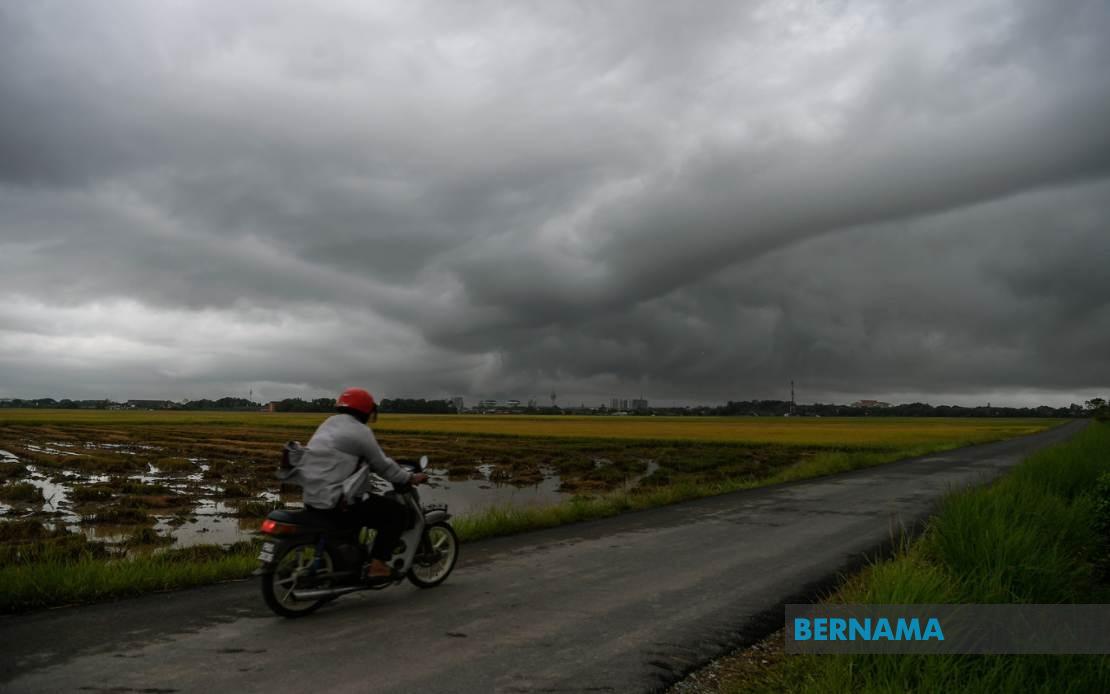
The Malaysian Meteorological Department has activated a nationwide weather alert as unstable atmospheric conditions sweep across the country, bringing the combined threat of thunderstorms, torrential rainfall and gusty winds to a broad swathe of populated areas. The advisory, effective until 9 pm on July 15, encompasses regions spanning from the northern reaches of Peninsular Malaysia down through the southern territories, while also affecting both Sarawak and Sabah on the island of Borneo, as well as the federal territory positioned on Labuan.
On the peninsula's western coast, the northern state of Kedah faces particularly volatile conditions, with MetMalaysia specifically naming Kuala Muda, Baling, Kulim and Bandar Baharu as zones expecting severe weather development. Penang, despite its smaller geographic footprint, witnesses the warning applying to virtually all its administrative subdivisions—the Northeast district, Seberang Perai Utara, Seberang Perai Tengah and Seberang Perai Selatan—suggesting meteorologists have identified concentrated instability across the state.
Perak, Malaysia's second-largest state by area, experiences an extensive impact zone encompassing both its mining-rich northern corridor and agricultural heartland. The weather system threatens to disrupt activity across Kerian, Larut, Matang and Selama, Hulu Perak, Kuala Kangsar, Kinta, Kampar and Batang Padang. The sheer geographic spread of the warning underscores the scale of the atmospheric disturbance, which appears capable of generating multiple thunderstorm cells rather than isolated convective events.
Kelantan, located on the peninsula's eastern coast, faces the prospect of experiencing the weather phenomenon across all its constituent districts—a blanket warning indicating meteorologists' confidence that no corner of the state will escape the system's effects. This type of universal alert is issued only when atmospheric conditions display particularly widespread instability, suggesting low-level moisture convergence and sufficient upper-level support for organized convection.
On the east coast, Terengganu's exposure is confined to specific districts including Besut, Hulu Terengganu, Kuala Terengganu, Marang, Dungun and Kemaman, while neighbouring Pahang's coastal and interior highland regions—encompassing Cameron Highlands, Lipis, Jerantut, Kuantan, Pekan and Rompin—remain vulnerable to severe convective activity. These areas, comprising both developed urban centres and remote highland communities, may experience localized flooding and landslide risks given the mountainous terrain in several zones.
Johor, Malaysia's southern bastion, confronts disruptions across a dispersed collection of districts stretching from the western reaches through to the eastern peninsula. Tangkak, Segamat, Muar, Kluang, Mersing, Kulai, Kota Tinggi and Johor Bahru all fall within the warning zone, reflecting the system's capacity to influence weather patterns across significant longitudinal distances. For the nation's economic hub and gateway to Singapore, such disruptions carry implications for transport networks and commercial activity.
Across the South China Sea, Sarawak—Malaysia's largest state—grapples with thunderstorm potential concentrated in its central and coastal municipalities. Sibu, Mukah (encompassing Matu, Dalat and Mukah), Kapit (Song), Bintulu (Tatau) and Miri (Beluru, Miri and Marudi) face atmospheric instability during the specified timeframe. These regions, which serve as vital commercial and transportation hubs for Sarawak's resource-based economy, may experience operational delays should convective activity intensify.
Sabah's warning extends across both the Interior Division and West Coast administrative areas, covering Sipitang, Kuala Penyu, Beaufort and Tambunan in the interior, as well as Papar, Penampang and Ranau along the western coastal corridor. The federal territory of Labuan, despite its relatively compact geographic area, also falls within the alert zone. These Sabahan regions represent crucial agricultural, mining and tourism zones, meaning severe weather carries tangible economic consequences for local communities and businesses operating within these districts.
Thunderstorm warnings of this magnitude across multiple states warrant heightened public vigilance, particularly given the potential for flash flooding in low-lying areas and landslides in hilly terrain. Residents in affected zones are typically advised to secure loose outdoor items, avoid venturing near coastal areas during the advisory period, and exercise caution on roads where reduced visibility and wet conditions may compromise driving safety. For Southeast Asian nations like Malaysia positioned within the equatorial and tropical belt, such convective systems represent recurring seasonal phenomena, yet their unpredictable intensification requires constant meteorological monitoring and public awareness.

