Meta is defending itself against claims from 29 United States jurisdictions that it intentionally engineered products to captivate young users and harvest their personal information, whilst simultaneously deceiving the public about safety protections. The company's defence is crumbling as the litigation progresses through its second week, with internal documents and employee testimony revealing a significant gap between what executives promoted publicly and what the platform's own data demonstrated privately.
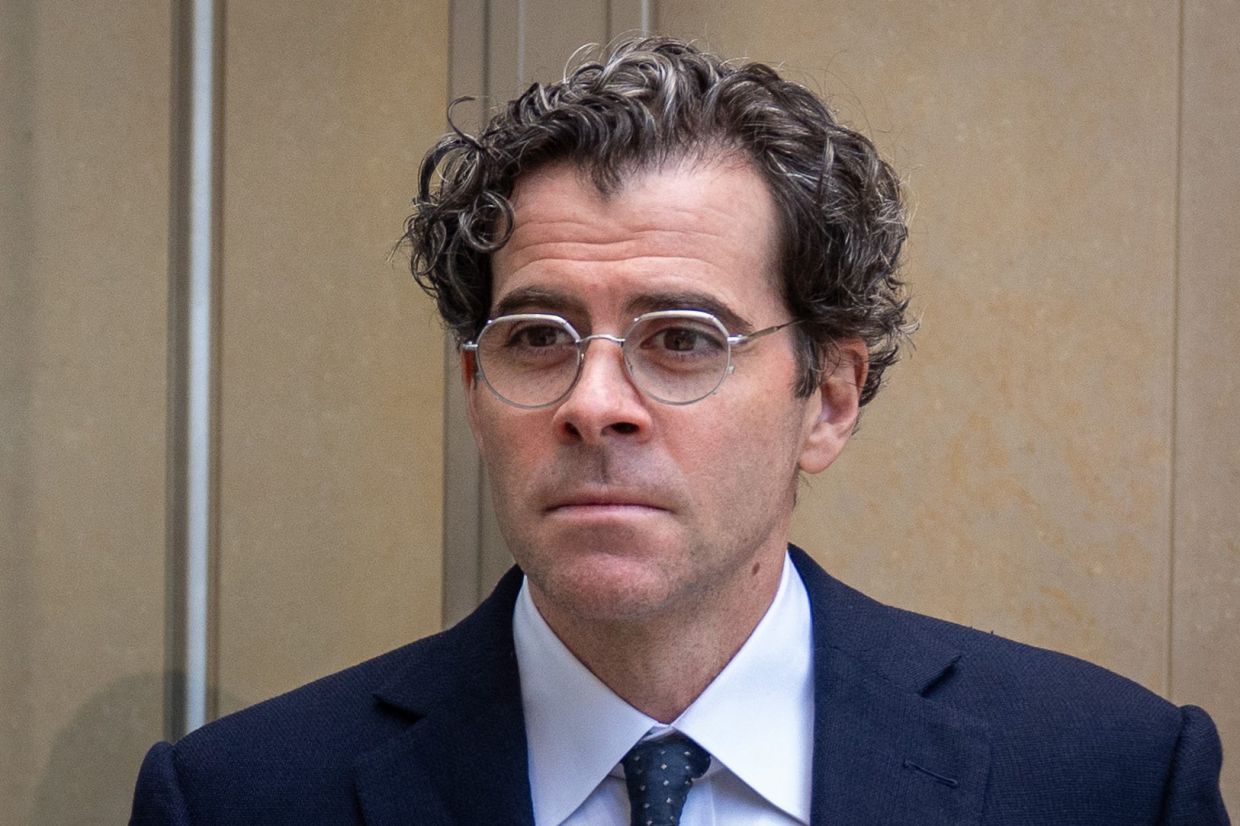
Instagram's head Adam Mosseri found himself under intense scrutiny when lawyers questioned him about the tepid reception to two flagship safety initiatives launched in recent years. Take a Break, introduced in 2021, enables users to set interval reminders to stop their scrolling sessions, whilst Quiet Mode, rolled out in 2023, suppresses late-night notifications. Despite being championed as solutions to combat excessive screen time amongst teenagers, court evidence indicates that fewer than two per cent of eligible users ever activated these features voluntarily.
The disconnect between public statements and internal data became starkly apparent during examination by Colorado's legal team. When Mosseri appeared before Congress on December 8, 2021, Meta simultaneously published a promotional blog post under his name touting the new safeguards. That post claimed that over ninety per cent of teenagers who activated reminders maintained them, a statistic that proved deliberately misleading. The figure measured only the retention amongst those who had already chosen to turn on the feature, not the overwhelming majority who never bothered to use it at all.
Mosseri initially resisted suggestions that adoption remained disappointingly low, insisting that one tool had since improved its uptake substantially. Yet when directly questioned whether Meta had disclosed the one to two per cent activation rates to the public or regulators, he conceded the company had not. This admission underscores a pattern of selective transparency that prosecutors allege forms the crux of Meta's deceptive practices toward both young users and their parents.
The company subsequently claimed that making these safety features automatic defaults in Teen Accounts, a new service tier launched in 2024 that includes parental oversight, resolved the adoption problem. However, Mosseri could not specify what percentage of teenage Instagram accounts actually have parental controls activated, suggesting that the supposed solution may itself remain largely unused by the demographic it supposedly protects.
Internal Meta documents presented to the jury on August 25 painted an even more damning picture. Take a Break achieved a mere 1.8 per cent adoption rate, whilst Quiet Mode managed only 8.7 per cent, figures that shocked even the presiding judge. Francesco Fogu, Meta's director of product design for Instagram, testified that he was unaware of these specific numbers despite holding a senior position overseeing the features. More problematically, he acknowledged that Meta's engineers anticipated that adoption would plummet unless the tools were enabled by default, a prediction that proved accurate.
Former employees provided testimony that corroborated the internal data and revealed deliberate decisions to minimize feature effectiveness. Arturo Bejar, who previously worked as an engineering director at Meta, characterised Take a Break as fundamentally flawed, stating it was designed to underperform. George Volichenko, a data scientist who spent 2022 and 2023 developing safety mechanisms for Instagram, described both features as disappointingly underused and mere drops in an ocean of user activity. Most significantly, Volichenko disclosed that Meta's leadership consciously declined to enable Quiet Mode as a default setting for younger teenagers because doing so would noticeably reduce how long they remained engaged with the platform.
This revelation exposes the central tension driving Meta's behaviour. The company's entire financial model depends on advertising revenue, which correlates directly with user engagement metrics. Every minute scrolling generates more data for targeting advertisements and more opportunities to display promotional content. Enabling robust digital wellbeing tools by default would inevitably suppress these engagement figures, directly impacting shareholder returns. In choosing not to implement obvious protective measures, Meta executives calculated that profit preservation outweighed potential harm to children.
The legal stakes are extraordinary. If convicted, Meta faces potential penalties of approximately two hundred billion US dollars, a sum that would fundamentally restructure the company's operations and send reverberations throughout the entire technology sector. The trial, expected to conclude in late September, will determine whether courts will force tech companies to prioritise user welfare over engagement-driven business models. For Malaysian technology investors and regulators watching from the region, the outcome could influence how Southeast Asia approaches domestic social media regulation and corporate accountability.
Mosseri continues his testimony on August 26, whilst founder and chief executive Mark Zuckerberg is anticipated to appear, though no specific date has been scheduled. Judge Yvonne Gonzalez Rogers will ultimately decide the case with guidance from the jury's verdict. The proceedings demonstrate how corporate strategy documents, employee testimony, and mathematical evidence of low adoption rates can systematically demolish the carefully curated public personas that technology executives present to Congress and the media.

