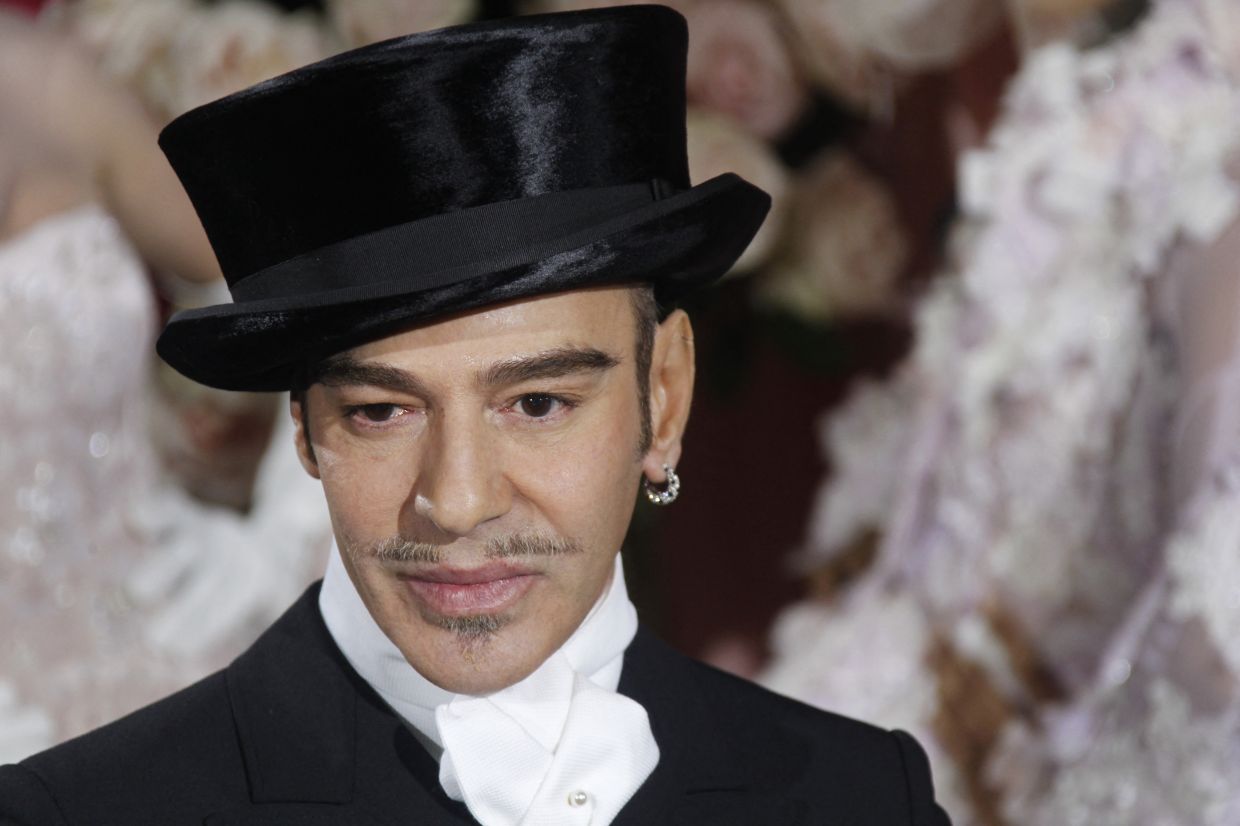
The Metropolitan Museum of Art's Costume Institute has chosen an unusually complex subject for its 2025 exhibition: British designer John Galliano, a figure whose career trajectory encapsulates both the heights of creative achievement in high fashion and the consequences of serious misconduct. Galliano will become only the third living designer to receive a solo exhibition at this prestigious institution, an honour typically reserved for those whose legacies stand uncontested. Yet the museum's decision to feature him reflects a broader cultural reckoning with how we evaluate artists whose personal failings have profoundly compromised their public standing.
Galliano's rise to prominence was meteoric. As creative director of Christian Dior for nearly fifteen years, he occupied one of fashion's most coveted positions, orchestrating collections that set global trends and established the house as an arbiter of luxury and elegance. His vision was distinctive—dramatic, theatrical, and uncompromising—qualities that made him a favourite among fashion editors, celebrities, and the industry's tastemakers. His influence extended beyond the runway; Dior's resurgence under his stewardship restored the house to pre-eminence after years of creative uncertainty.
That trajectory came to a devastating halt in 2010 and 2011 when Galliano made a series of deeply offensive comments that were recorded and circulated online. Among the most damaging was a video of him saying "I love Hitler" in a bar, remarks that sparked immediate and widespread condemnation. These statements were not isolated slips; they reflected a pattern of antisemitic, racist, and anti-Asian remarks that prompted a formal prosecution in Paris. A French court found him guilty of public insults based on race, religion, ethnicity, and origin—a legal verdict that underscored the severity of his misconduct. Dior terminated his position immediately, and his eponymous label also severed ties with him. The designer faced professional exile and public vilification.
What distinguished Galliano's situation from typical celebrity scandals was what followed. Rather than retreating entirely or issuing perfunctory apologies, he underwent treatment for substance addiction, acknowledging that his behaviour had been destructive and unacceptable. He engaged in what the fashion industry termed "rehabilitation"—a period of relative obscurity during which he reportedly worked on personal reflection and recovery. This phase lasted several years, a notably long interval for an industry accustomed to rapid cycles of disgrace and redemption.
In 2014, Galliano received an opportunity to rebuild his career when the Paris fashion house Maison Margiela appointed him as creative director. The appointment surprised many observers, yet it signalled a willingness within parts of the fashion world to extend a second chance to someone who appeared genuinely remorseful. Over the subsequent decade, Galliano produced collections for Margiela that demonstrated undiminished technical skill and creative vision, suggesting that his artistic capabilities remained intact even as his personal reputation carried the permanent mark of his transgressions.
The Met's decision to mount this exhibition reflects a deeper question facing cultural institutions: how should museums and galleries engage with the work of artists whose personal conduct contradicts their professional accomplishments? The Costume Institute has not attempted to sidestep this tension. In its official statement, the museum explicitly stated that the exhibition "will address the derogatory conduct that fundamentally altered his career and public reception" alongside examining his "extraordinary creative accomplishments." This dual focus signals an institutional commitment to historical honesty rather than biographical sanitisation.
The preparation of this exhibition involved consultations with Jewish community leaders in New York, a process that underscored the stakes involved. Andrew Bolton, the curator primarily responsible for the Met's major fashion exhibitions, worked alongside Galliano himself and Vogue's influential editor-in-chief Anna Wintour to develop an approach that could accommodate both acknowledgment and examination. These conversations were not merely perfunctory; they represented a genuine attempt to ensure that the exhibition would not be perceived as rehabilitating or whitewashing Galliano's misconduct.
The exhibition's three-part structure reflects this nuanced approach. The opening section, titled "Bearings," will directly confront the rupture created by his 2010-2011 comments, his legal conviction, his dismissal from Dior, and his subsequent treatment for addiction. This placement is deliberate—rather than burying the scandal or addressing it tangentially, the museum fronts the narrative with the very conduct that destroyed his career. The second section, "Horizons," will explore Galliano's creative influences, tracing how history, geography, art, storytelling, and performance shaped his design philosophy. The final section, "Atlas Of Transformation," will focus on his technical mastery, experimental approach, and innovative craftsmanship—the qualities that legitimate his claim to being a significant figure in fashion history.
For Malaysian and Southeast Asian observers, this exhibition raises questions about how our region's cultural institutions approach similar tensions between artistic merit and personal conduct. The fashion industry itself operates as a genuinely global enterprise, with Southeast Asian cities increasingly central to luxury consumption and fashion weeks. Thai, Vietnamese, and Indonesian designers have gained international prominence, while Singapore and Kuala Lumpur host significant fashion events. As our region's creative industries mature, the question of how to engage with complicated legacies—both imported and homegrown—becomes increasingly pressing.
The May 2025 Met Gala will inevitably generate intense scrutiny regarding which celebrities choose to wear Galliano designs and how the fashion world itself engages with this complex retrospective. The exhibition will serve as a test case for whether cultural institutions can mount exhibitions that simultaneously celebrate artistic achievement and maintain ethical accountability. Galliano's redemption arc, incomplete though it remains, offers a template—imperfect but earnest—for how a career irrevocably damaged by serious misconduct might be addressed with intellectual honesty rather than either wholesale condemnation or convenient amnesia.

