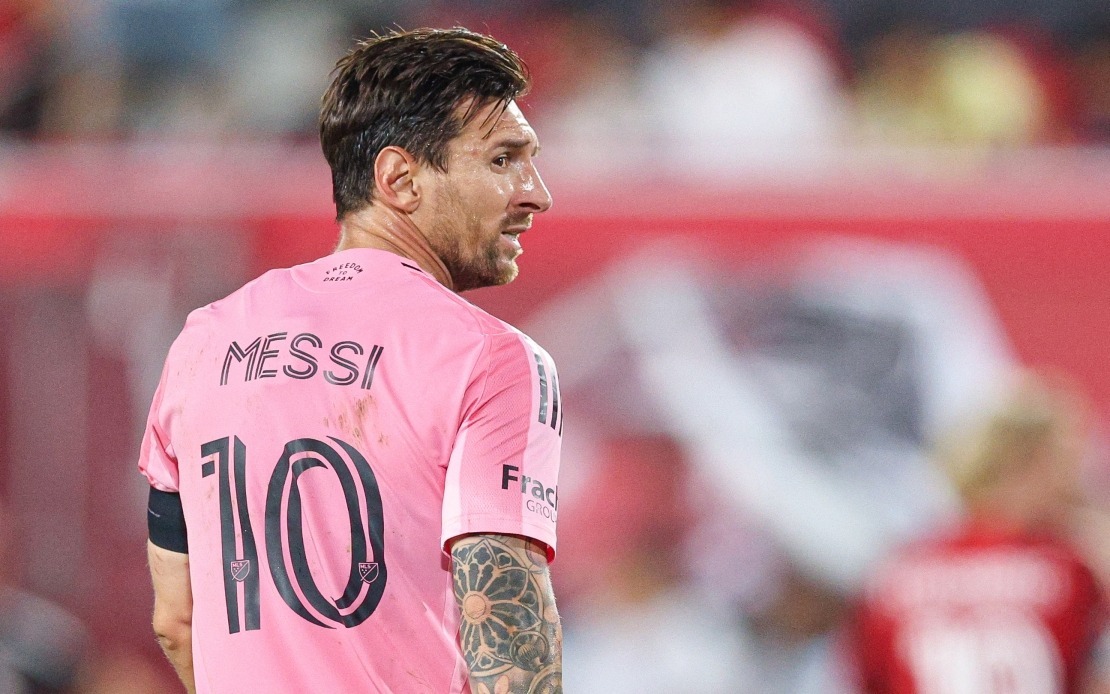
Lionel Messi took to the field for Inter Miami on Wednesday in the Leagues Cup group finale against Leon, marking his first appearance for the club since revealing profound uncertainty about his future in professional football. The Argentina captain entered the match as a second-half substitute in what proved a 3-2 defeat, a comeback that carries significant emotional weight given the circumstances surrounding his absence from recent fixtures.
The timing of Messi's reappearance comes just days after the death of his father, Jorge, whose influence shaped not only his football career but his entire life trajectory. Jorge passed away last week, prompting Messi to withdraw from Inter Miami's previous encounter, a 2-1 loss to Monterrey on Saturday. The 37-year-old travelled to Argentina to attend a private funeral service held Sunday at a cemetery in Perez, a municipality near his hometown of Rosario, where he spent time honouring his father's memory away from the glare of public scrutiny.
In an emotionally candid social media statement, Messi laid bare the existential crisis he now faces without the man who had been his constant companion throughout his sporting journey. "You were by my side from the beginning; there was so little left until the end. Why couldn't you hold on just a little longer so we could finish it together?" he wrote, his words reflecting both gratitude and devastating loss. The footballer questioned whether he possesses the will to continue his career, acknowledging that football had always provided structure and purpose to his life but expressing uncertainty about whether he can sustain that commitment moving forward.
The magnitude of Jorge's role in Messi's career cannot be overstated. From the age of fourteen, when most adolescents are still discovering their path in life, Jorge served as his son's agent and guiding force, navigating the complex landscape of professional football whilst watching him ascend to the pantheon of sporting legends. Beyond the contractual negotiations and career decisions that typically define an agent's function, Jorge represented something far more fundamental: he was present as witness to his son's evolution from talented youngster to multiple-time Ballon d'Or recipient and World Cup champion.
The recent Copa América tournament provided Jorge a bittersweet final chapter in this shared narrative. Despite deteriorating health, he encouraged Messi to participate in what he saw as a final opportunity to add another continental championship to his collection. Though Argentina fell short in that pursuit, losing 1-0 to Spain in the final after extra time, the competition represented a poignant bookend to their partnership. Jorge had similarly been present for Messi's greatest triumph two years earlier, when Argentina's victory in the Qatar World Cup 2022 seemed to complete his life's work as his son's mentor and protector.
Inter Miami's head coach Guillermo Hoyos acknowledged the profound nature of Messi's loss in comments following Wednesday's match, drawing parallels to his own experience of paternal bereavement. Hoyos reflected that losing a father represents a transformative and destabilizing moment in any man's life, but particularly for someone of Messi's stature whose entire adult existence has been defined by achievement and excellence. He described his own period following his father's death as a time of disorientation, noting how the loss of parental guidance created a void that takes considerable time to process and navigate.
The opposition's perspective further illuminates the broader significance of the moment. Javier Gandolfi, the coach of Leon, offered unprompted tribute to Messi as not merely the finest player in football's history but as an individual whose character extends beyond athletic prowess. Gandolfi's observations suggest that Messi's decision to return to competition, despite profound personal anguish, reflected something essential about his character—a capacity to channel grief into performance rather than retreat entirely from the demands of elite sport.
For Malaysian and Southeast Asian supporters of football, Messi's situation carries particular resonance given the region's own emphasis on familial obligation and filial respect. The image of a global sporting icon struggling openly with questions about continuing his career without paternal guidance resonates across cultures that place significant value on parental influence and intergenerational bonds. His transparency about mental and emotional turmoil surrounding this loss contrasts sharply with the stoicism traditionally expected of elite athletes, offering a more authentic portrait of grief's impact on even the most accomplished individuals.
The question of whether Messi will ultimately continue his career or step away remains genuinely unresolved. His appearance on Wednesday suggests he has chosen, for now, to keep competing, though his emotional statement indicates this decision came without certainty or conviction. The trajectory of his remaining years at Inter Miami may well depend not only on his physical capabilities but on his capacity to reconstruct meaning and purpose in football now that the foundational relationship that guided his entire professional life has ended. For fans across Asia-Pacific and beyond, watching him navigate this transition will be as significant as any trophy he might win.

