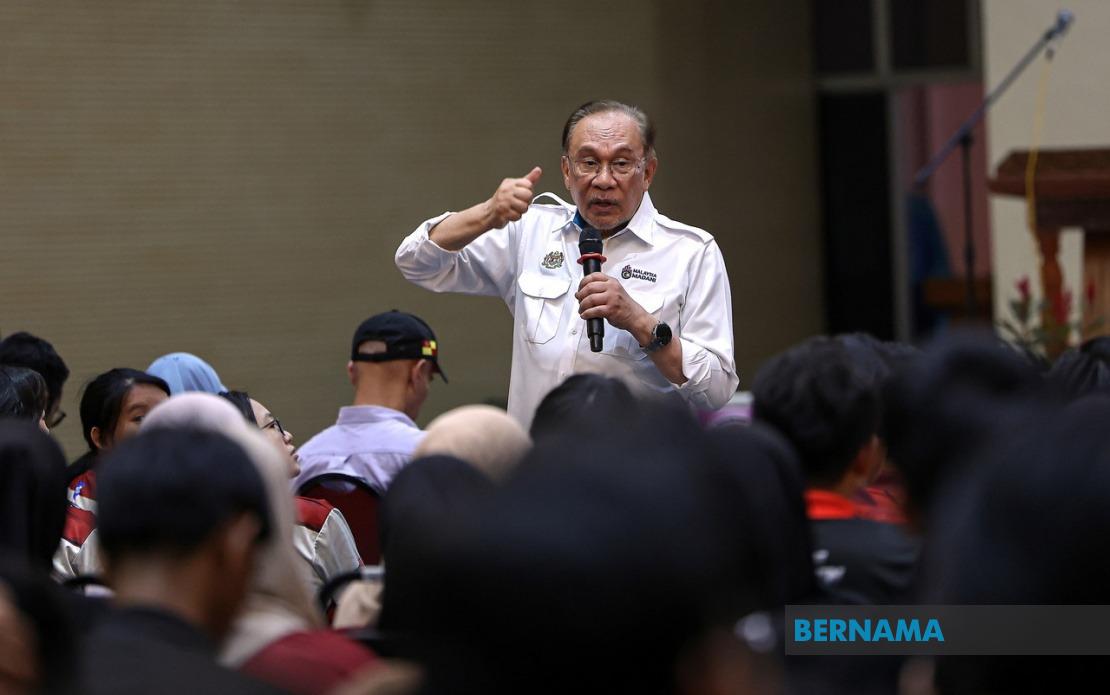
Prime Minister Datuk Seri Anwar Ibrahim has reaffirmed the government's commitment to a balanced admissions framework for Malaysia's matriculation programme, one that simultaneously rewards academic achievement and provides pathways for students from disadvantaged backgrounds. Speaking at the Youth and Sports Complex in Paroi during a "Jelajah Rakan Muda" engagement on July 22, Anwar outlined how the system aims to broaden educational access across socioeconomic and geographic divides without compromising standards of excellence.
At the heart of the government's policy lies recognition that top academic performers deserve guaranteed entry to further education regardless of ethnic background. Students who achieve the highest distinction in their Sijil Pelajaran Malaysia examinations—specifically those securing 10As—will receive automatic admission to matriculation, a pathway that Anwar emphasized would apply equally to Malaysian students of all communities. This merit-based threshold acknowledges that academic excellence is a shared pursuit across Malaysia's diverse student population and removes potential barriers for high-achievers from minority ethnic groups who might otherwise face unnecessary delays in securing places.
Yet the policy framework extends beyond a simple meritocratic model. Anwar stressed that the Bumiputera quota system remains integral to the government's approach, serving as a counterbalance to ensure that students from communities historically underrepresented in higher education continue to receive targeted support. Rather than framing quotas as obstacles to fairness, the Prime Minister positioned them as tools for addressing structural inequities. The quota system takes demographic realities into account—the concentration of Malay-Muslim and indigenous populations in rural and interior regions, including the states of Sabah and Sarawak, where educational infrastructure and preparatory resources often lag behind urban centres.
This dual-track approach reflects a nuanced understanding of educational equity in the Malaysian context. The automatic admission for 10A students removes one barrier; the maintained Bumiputera provisions address another. For rural and remote communities, particularly in East Malaysia, the policy acknowledges that systemic disadvantages—limited access to quality coaching, fewer secondary schools offering advanced curricula, geographical isolation—cannot be overcome through merit-based selection alone. By preserving quota protections, the government signals that equality of opportunity requires accounting for unequal starting conditions.
The matriculation system itself has long been central to Malaysia's higher education pathway. As a two-year pre-university programme, matriculation serves approximately 70,000 students annually and feeds into public university undergraduate programmes. Historically, it has been dominated by Bumiputera students, a demographic reality that reflects both population composition and the accessibility of the programme to different communities. Any adjustment to intake criteria thus carries significant implications for university enrolment patterns, workforce composition, and social mobility across ethnic and regional lines.
Anwar's statement comes amid broader public discourse about meritocracy, equity, and affirmative action in Malaysian education. The tension between these values is longstanding. Critics of quota systems argue they disadvantage talented non-Bumiputera students; defenders contend that quotas correct historical exclusions and address ongoing disparities. The Prime Minister's formulation—guaranteeing entry to the highest academic achievers while maintaining quota protections for designated groups—attempts to navigate this divide, though it may not satisfy those seeking either pure meritocracy or significantly expanded preferential policies.
The policy also reflects demographic and political realities. The Bumiputera population, particularly in Peninsular Malaysia, represents the majority, and maintenance of quotas carries deep constitutional significance rooted in Malaysia's founding social contract. Simultaneously, Anwar's government has emphasized inclusive governance and has sought to appeal to voters across ethnic lines. By ensuring that top performers from all communities gain entry, the policy projects an image of openness while respecting established frameworks.
For students and families, the practical implications are substantial. A student achieving 10As faces no uncertainty regarding matriculation admission, removing stress from the application process. Conversely, students falling short of this threshold—even those with strong but not exceptional grades—must navigate a more competitive landscape where quotas shape available places. This structure may incentivize academic excellence among high-achieving students while potentially creating bottlenecks for middle-achieving candidates from non-Bumiputera backgrounds.
Regionally, Malaysia's approach differs from some neighbouring countries. Singapore's education system, for instance, employs a purely meritocratic streaming model without ethnic quotas, while Indonesia's policies vary by institution and programme. The Malaysian model occupies a middle ground, combining market-like competition at the top with protective quotas for designated groups—a pragmatic compromise between competing principles.
The statement was delivered alongside Youth and Sports Minister Dr Mohammed Taufiq Johari, underlining the government's commitment to youth engagement on educational matters. Youth policies, educational access, and career pathways have become increasingly salient political issues as Malaysia grapples with post-pandemic economic recovery and evolving labour market demands.
Moving forward, the effectiveness of this policy will depend on implementation transparency, equitable enforcement, and genuine opportunity for both merit-based and quota-protected cohorts to succeed. If the system reliably identifies and advances the highest achievers while genuinely expanding access for disadvantaged students, it may serve as a model for balancing competing educational values. If instead it creates perverse incentives or maintains barriers despite official policies, public trust will erode.
The matriculation intake approach thus reflects Malaysia's ongoing effort to construct educational institutions that are simultaneously excellent and inclusive—a challenge that no policy document alone can solve, but one that shapes the life trajectories of hundreds of thousands of young Malaysians each year.

