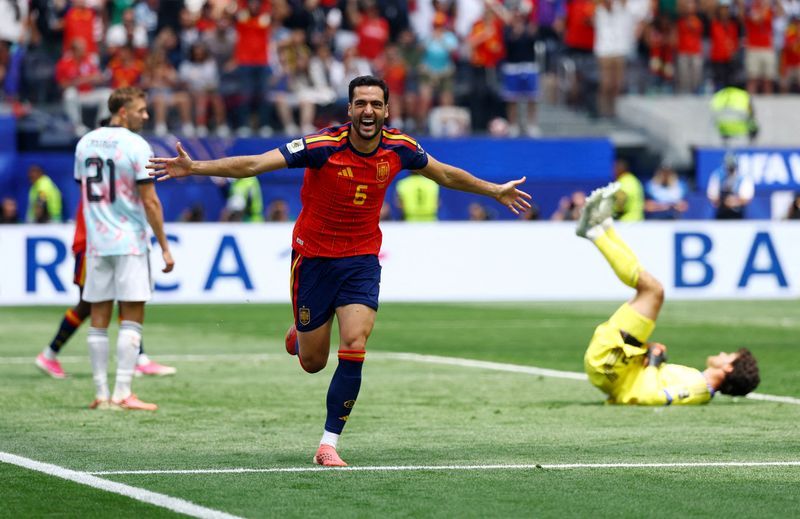
Spain's march toward World Cup glory continued with a crucial 2-1 quarter-final triumph over Belgium at a sold-out Los Angeles Stadium on Friday, with substitute Mikel Merino proving to be the decisive figure in sweltering conditions. The Spanish side's clinical finishing and tactical superiority ultimately overcame Belgium's resilience, despite the visitors operating under significant disadvantages due to a mounting injury crisis that undermined their challenge throughout the encounter.
The match unfolded with Spain establishing early dominance, translating their superior possession into a deserved opening goal through Fabian Ruiz at the thirty-minute mark. The Paris Saint-Germain midfielder's alertness proved pivotal when Belgian goalkeeper Thibaut Courtois produced a spectacular diving save, only for Ruiz to capitalise on the loose ball by threading a precise shot between Timothy Castagne's legs. Coach Luis de la Fuente's bold selection to start Ruiz ahead of Pedri in midfield appeared vindicated, demonstrating the tactical flexibility that has characterised Spain's tournament campaign thus far.
Belgium's response came with surprising swiftness and efficiency eleven minutes later when Charles De Ketelaere demonstrated textbook positioning to head home Castagne's cross, registering the first goal Spain had conceded throughout their World Cup campaign. The equaliser indicated that despite their injuries, Belgium possessed sufficient technical quality to trouble the Spanish backline, and the teams headed into the interval locked at one goal apiece. The oppressive Los Angeles heat appeared to affect both sides equally, with tactical discipline and concentration becoming paramount factors in determining the outcome.
Spain emerged from halftime with considerably greater intensity and control of possession, methodically dissecting Belgium's increasingly fragile defence through sustained periods of attacking pressure. The emergence of eighteen-year-old Lamine Yamal as a genuine attacking threat on the flank provided Spain with an additional creative dimension that Belgium struggled to contain. As the match progressed deeper into the second half, Spanish superiority became increasingly apparent, with Belgium reduced to occasional counter-attacking opportunities rather than sustained phases of constructive play.
The decisive breakthrough arrived in the eighty-sixth minute when substitute Mikel Merino, introduced merely minutes earlier, capitalised on a critical error by Belgian backup goalkeeper Senne Lammens. The goalkeeper, thrust into action after Courtois succumbed to injury, failed to secure Pau Cubarsi's low-struck effort, allowing the ball to spill forward and presenting Merino with a straightforward finishing opportunity. The roar from the predominantly Spanish-supporting crowd underscored the significance of the moment, with the stadium erupting as the winning goal secured Spain's passage to the semi-finals.
Merino's match-winning contribution carries particular historical significance, as he becomes the first player in World Cup history to score the decisive goal in two separate knockout-stage matches while operating as a substitute. His previous such contribution came against Portugal in the round-of-sixteen, where he similarly converted a late opportunity to secure a 1-0 victory. This pattern of impact off the bench suggests a valuable asset for Spain's remaining ambitions, combining technical proficiency with the tactical intelligence required to exploit tired opposition defences.
Belgium's path to this quarter-final was severely compromised even before the match commenced, with captain Youri Tielemans sustaining a warm-up injury that necessitated his replacement by Hans Vanaken in the starting eleven. These difficulties compounded an already challenging injury situation, with midfielder Amadou Onana unavailable following a serious anterior cruciate ligament injury sustained during the round-of-sixteen victory over the United States. Such absences stripped Belgium of crucial midfield protection and control, limitations that became progressively apparent as the match developed and Spanish dominance intensified.
Despite the impressive pedigree of their remaining senior players, with Kevin De Bruyne and Romelu Lukaku leading their offensive efforts, Belgium could not manufacture sufficient opportunities to genuinely threaten another equaliser. Their veteran quality occasionally generated promising moments, yet the coordinated Spanish press and superior fitness levels prevented Belgium from establishing the rhythm necessary for a meaningful comeback. The match illustrated how injury-depleted squads struggle to sustain competitive intensity across ninety minutes at the World Cup's highest level.
Spain now turns attention toward an eagerly anticipated semi-final clash against tournament favourites France in Dallas on Tuesday, a fixture that will test their consistency against the tournament's highest-quality opposition. Coach Luis de la Fuente's recent comments acknowledging France's credentials while simultaneously expressing confidence in his team's capabilities suggest a Spanish outfit approaching the encounter with both respect and genuine belief. Merino himself articulated the opportunity clearly, noting that Spain stands merely two victories away from claiming World Cup glory, a prospect that seemed distant merely weeks ago when qualification doubts persisted.
The latest development extends Spain's remarkable trajectory through this World Cup, demonstrating the tactical sophistication and clinical finishing capacity that emerged following their earlier group-stage struggles. Their progression rewards a more patient, possession-based approach than many international teams favour, with the development of younger talents like Yamal complementing the technical excellence of established stars. Spain's last semi-final appearance occurred in 2010, when they ultimately triumphed in the tournament, a historical parallel that provides additional context to their current championship ambitions.
Spain's advancement represents the emergence of a genuinely competitive European presence at the tournament's knockout stages, with the continent potentially claiming multiple semi-finalists should other qualified nations navigate their respective challenges. For Malaysian and Southeast Asian readers, Spain's success illustrates the enduring importance of tactical discipline, possession mastery, and youth development in modern international football. The quarter-final victory demonstrates how technical excellence and tactical flexibility can overcome physical challenges and individual absences, principles equally applicable to regional football development programmes seeking to elevate competitive standards across the Association of Southeast Asian Nations.

