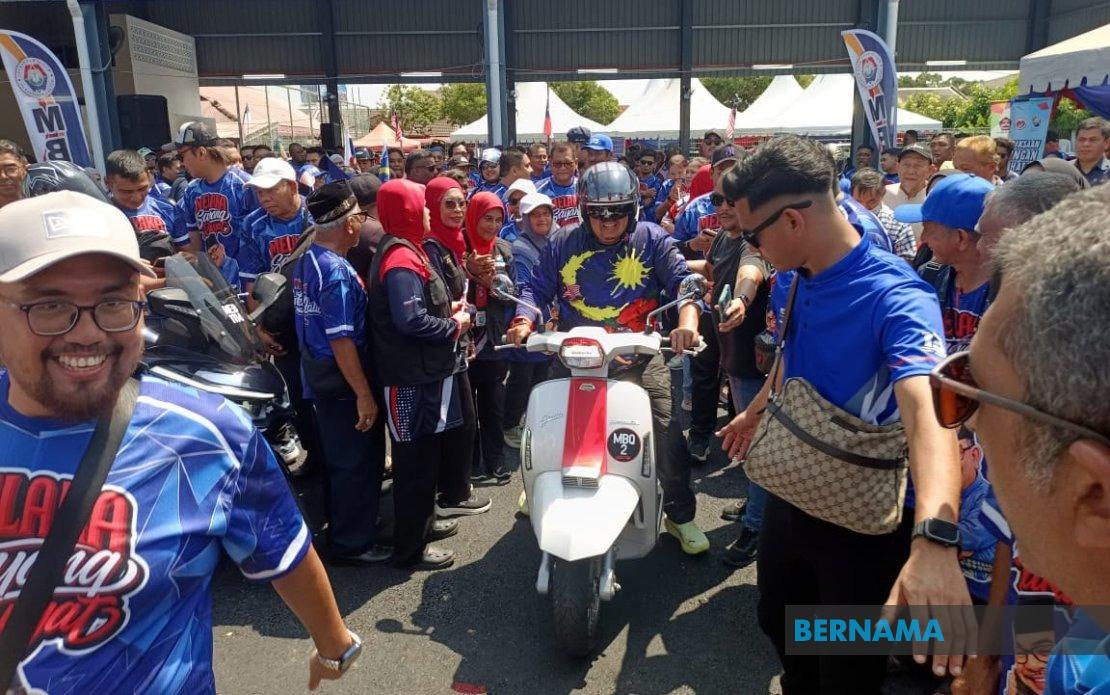
Melaka Chief Minister Datuk Seri Ab Rauf Yusoh has underscored that the state's ongoing 'Jelajah Ketua Menteri Sayang Rakyat' tour represents far more than a seasonal outreach programme or electoral positioning exercise. Rather, the initiative functions as a continuation of the broader 'Wakil Rakyat Untuk Rakyat' (WRUR) framework launched two years prior, designed specifically to provide elected officials direct access to community concerns whilst facilitating timely resolutions. Speaking following the 10th iteration of the Sayang Rakyat tour in the Pengkalan Batu state constituency within Taman Cempaka, the Chief Minister characterised the approach as foundational to the state administration's commitment to tangible welfare improvements rather than symbolic political gestures.
The strategic value of this hands-on methodology, as articulated by Ab Rauf, extends beyond simple complaint registration. By positioning representatives within communities and maintaining open channels for grievance resolution, the state government can differentiate between issues requiring extended administrative processes and those amenable to immediate intervention. This distinction proves particularly important in state-level governance, where resource constraints and bureaucratic timelines often create frustration among residents seeking rapid solutions to localized problems. The Chief Minister's framing suggests that the WRUR and subsequent Sayang Rakyat initiatives represent a deliberate rejection of the traditional model wherein constituent concerns accumulate unaddressed during inter-election periods.
The chronology bears significance for Malaysian political observers. The original WRUR programme commenced two years before the current tour iterations, meaning its genesis predated any discernible electoral campaign machinery. This timing provides contextual insulation against the criticism commonly levelled at state-level outreach programmes of being cynically timed to electoral cycles. By establishing the initiative's longevity and pre-campaign origins, Ab Rauf positions the approach as policy orthodoxy rather than opportunistic engagement, a rhetorical positioning that carries weight in constituencies where voter scepticism towards performative political tourism remains high.
Specific outcomes documented during the Pengkalan Batu iteration illustrate the tangible focus of these programmes. Eight outstanding issues derived from earlier WRUR and 'Hari Exco Bersama Rakyat' (HEBAT) sessions received resolution through this tour. Among these, the acquisition of land designated for a Muslim burial ground exemplifies the programme's capacity to address community infrastructure needs. The contributing Chinese landowner's offer of a fifty percent discount from market valuation represents the kind of inter-community goodwill gesture that, whilst not unprecedented in Malaysian civic engagement, benefits from state-level amplification and formalization through official channels.
Housing interventions documented during the tour extend the programme's reach into essential welfare concerns. The state government supervised repairs to five deteriorated residential structures whilst simultaneously distributing a RM100,000 housing unit through the 'Baiti Jannati' programme administered by Tenaga Nasional Berhad (TNB). These housing interventions directly address one of Malaysia's persistent equity concerns: the concentration of inadequate residential conditions amongst lower-income demographic cohorts, particularly within urban and semi-urban constituencies. The Melaka approach of coupling repair assistance with new unit provision demonstrates a diversified intervention strategy rather than reliance upon singular policy instruments.
Infrastructure development constituting shared community assets formed another component of the tour's visible outcomes. The handover of a newly constructed communal hall, developed by the Melaka Historic City Council (MBMB), provides congregational and event space for Pengkalan Batu residents. Such multipurpose facilities, though modest in isolation, accumulate significance within neighbourhoods where public gathering spaces remain limited. The deliberate documentation and formal handover of such facilities, rather than their quiet completion and deployment, reflects understanding of the political and social value of visible state investment in local-level infrastructure.
Ab Rauf's emphasis on representative understanding of constituent needs speaks to a broader governance philosophy sometimes underemphasised in Malaysian state administration. The notion that elected officials require sustained, direct exposure to community conditions to genuinely comprehend constituency challenges—rather than encountering summarized briefing documents prepared by administrative staff—represents a potentially significant departure from more insulated governance models. This perspective, if genuinely implemented across the state administration, suggests openness to grassroots input in policy formulation and resource allocation decisions.
The WRUR programme's progression to its 25th iteration, with only five state constituencies remaining uncovered, indicates substantial geographic penetration across Melaka's assembly districts. This coverage comprehensiveness suggests sustained institutional commitment rather than selective engagement concentrated within politically marginal or highly competitive constituencies. Malaysian electoral dynamics frequently reward such systematic approaches, as voters in overlooked constituencies become acutely aware of neglect whilst those receiving consistent attention develop increased receptivity to governing party messaging.
For Malaysian readers observing state-level governance patterns, the Melaka approach offers instructive comparison points. State governments across Peninsular Malaysia, Sabah, and Sarawak employ varying degrees of direct constituent engagement, from ceremonial visits to substantive problem-solving initiatives. The Melaka model's explicit focus on issue resolution rather than mere visibility generates measurable outputs—resolved grievances, constructed facilities, distributed assistance—that extend beyond public relations value. Such demonstrable outcomes matter particularly in constituencies where voter trust in political institutions remains attenuated by historical experiences of unmet promises or unaddressed grievances.
The long-term institutional embedding of the WRUR and Sayang Rakyat frameworks indicates intention to maintain these mechanisms across electoral cycles. Sustained commitment to community-level governance engagement, particularly when coupled with resource allocation for tangible improvements, can gradually shift local political cultures toward expectations of continuous responsive administration rather than episodic electoral outreach. This cultural shift, if successfully implemented, potentially strengthens democratic accountability mechanisms by normalizing direct constituent-representative interaction and problem resolution as standard governance practice.
Moving forward, the completion of WRUR coverage across all remaining constituencies will provide opportunity to assess programme impact systematically. Questions regarding whether resolved issues remain resolved, whether constructed facilities receive adequate maintenance, and whether community satisfaction correlates with programme participation would offer empirical grounding for evaluating the initiative's effectiveness. Additionally, comparative analysis of Melaka's approach against neighbouring state governments' outreach mechanisms would illuminate whether this model achieves demonstrably superior constituent satisfaction or electoral outcomes.
The presence of state Science, Technology, Innovation and Digital Communications Committee chairman Datuk Fairul Nizam Roslan and Pengkalan Batu assemblyman Datuk Kalsom Noordin at the tour event underscores multi-level administrative engagement in these initiatives. Such coordination across state executive, state assembly, and constituency-level representatives suggests institutionalized rather than ad-hoc programming, potentially increasing programme sustainability and consistency across different administrative jurisdictions. For Malaysian observers, the Melaka administration's framing of constituent engagement as continuous governance obligation rather than campaign-season activity represents a potentially significant model worthy of sustained attention as other state governments consider their own outreach frameworks.

