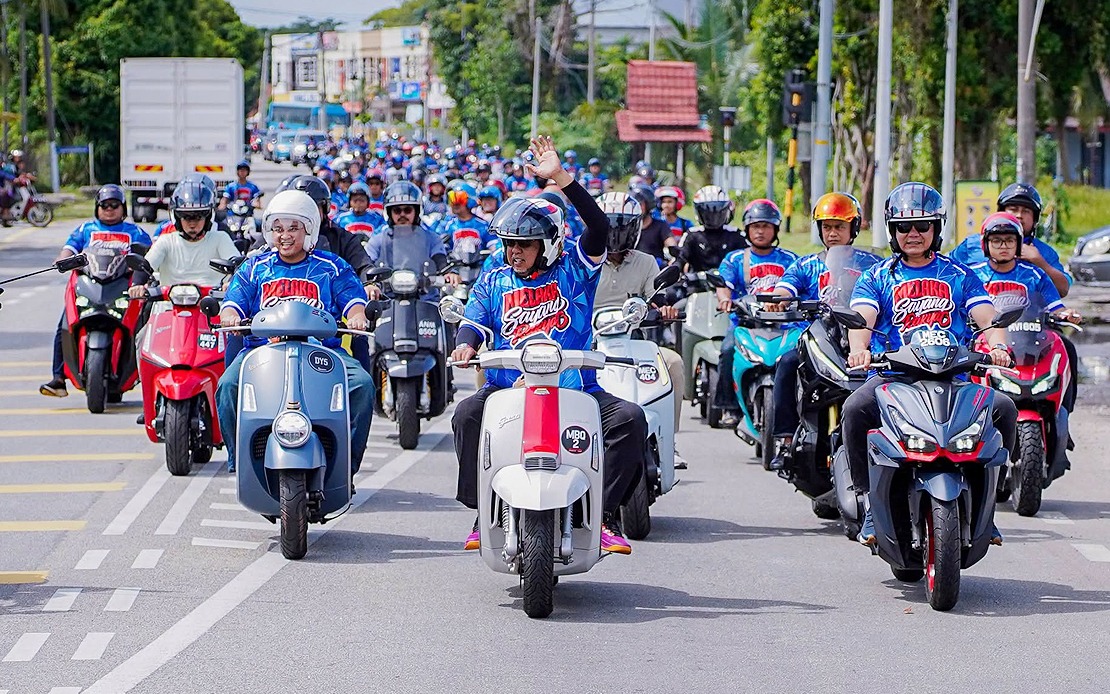
Melaka's administration is intensifying its ground-level engagement efforts through a major expansion of the WRUR initiative, a systematic programme designed to bridge government services with community concerns at the grassroots level. Datuk Seri Ab Rauf Yusoh, the state's Chief Minister, formally launched the Tangga Batu parliamentary WRUR programme—branded as Kampung Kita—signalling the state government's commitment to sustained dialogue with constituents across two targeted state constituencies: Pantai Kundor and Paya Rumput.
The scope of this expanded initiative is substantial. Over 200 distinct programmes will be rolled out, spanning multiple policy domains including welfare provision, community infrastructure, educational support, youth development, business entrepreneurship, and the resolution of persistent local grievances. Rather than presenting WRUR as a novel initiative, Ab Rauf positioned it as a continuation of an established two-year engagement strategy, suggesting institutional maturity and consistency in implementation. This framing is significant for Southeast Asian governance contexts, where sustained rather than episodic community engagement often determines the effectiveness of government programmes.
The track record provides measurable evidence of the programme's operational effectiveness. Across 23 previous implementation series, the WRUR initiative has accumulated over 4,000 individual complaints from residents, with nearly 70 per cent achieving successful resolution. This resolution rate is noteworthy when considering the diversity of issues that typically emerge from community feedback mechanisms, which often involve multiple government agencies and require coordinated bureaucratic action.
Within the Tangga Batu parliamentary constituency specifically, prior WRUR iterations had been conducted across the Sungai Udang and Kelebang state constituencies. Those earlier phases generated 359 complaints, of which 328 were resolved, with 31 remaining under active follow-up. This localized data allows residents to assess whether the programme is genuinely responsive to their concerns or whether significant bottlenecks persist in the complaint resolution pipeline.
Concrete financial commitments underscore the state's material investment in constituent support. During the sixth phase of implementation, over 20 categories of aid totalling RM150,000 were distributed. The assistance was strategically targeted: fishermen received RM22,000 across 220 individuals, addressing vulnerabilities in a traditional livelihood sector; boat owners affected by recent maritime incidents received RM1,500 for five claims; and small and medium enterprise entrepreneurs benefited from RM14,000 in distributed business equipment to support economic diversification. Additional support reached religious education institutions, places of worship, students requiring educational assistance, and homeowners facing housing hardship. This granular approach to aid distribution reflects attention to diverse community segments rather than broad-brush welfare provision.
Recent environmental disasters have prompted complementary infrastructure investment. Flash flooding in Pantai Kundor affected 73 households, prompting the Department of Irrigation and Drainage to undertake RM50,000 in cleaning and river maintenance works at Sungai Seberang Gajah, with completion expected within a week of the announcement. The rapidity of this response suggests that the WRUR platform serves as an early warning mechanism for infrastructure failures, enabling proactive bureaucratic mobilization rather than purely reactive disaster response.
Future infrastructure improvements are also in pipeline stages. The Department of Irrigation and Drainage initiated procurement procedures for RM100,000 in enhancement works at Sungai Lereh, addressing flood vulnerability through structural intervention. More substantially, the Public Works Department has sought federal approval for a RM16 million project to upgrade the crossing culvert structure on Jalan Tangga Batu-Tanjung Minyak, indicating recognition that local flooding concerns require investment at regional transportation infrastructure levels.
For Malaysian readers, this programme demonstrates the institutional mechanisms through which state governments can systematize community feedback and translate grievances into budgetary allocations. The WRUR model, if effectively replicated across other Malaysian states, could establish standardized expectations for government responsiveness while creating documented baselines for programme performance. The emphasis on resolution rates rather than complaint volume alone suggests a maturing approach to community governance in the country.
The implications extend beyond Melaka's administrative boundaries. As Southeast Asian governments increasingly face pressure to demonstrate tangible improvements in service delivery and government responsiveness, the WRUR template offers a replicable framework. By institutionalizing complaint mechanisms, publishing resolution metrics, and allocating dedicated financial resources, state administrations can address the legitimacy challenges that emerge when citizens perceive government as unresponsive to local concerns. For Tangga Batu residents, the expanded programme represents an opportunity to articulate concerns with documented follow-up, though success ultimately depends on whether the remaining 31 previously unresolved complaints receive genuine closure and whether new complaints submitted during this phase achieve timely resolution.

