Melaka's Chief Minister Datuk Seri Ab Rauf Yusoh has made an appeal to the state's property developers to prioritise installing lift facilities in newly constructed commercial shoplots and residential buildings that exceed two storeys in height. His remarks came as part of broader efforts to enhance buyer accessibility and strengthen market competitiveness for these properties across the state.
Ab Rauf characterised lift provision not as an optional luxury feature but as a fundamental requirement, particularly for elderly residents navigating multi-level structures. This positioning signals a policy shift toward treating vertical transportation as essential infrastructure within residential and commercial developments, mirroring approaches already adopted in more developed property markets.
The state administration is contemplating the introduction of fresh regulations that would mandate lift installations in proposed shoplots and three-storey residential developments. During remarks to journalists, the Chief Minister highlighted specific examples of struggled sales in established areas including Kota Laksamana, Banda Hilir, and Melaka Raya, where the absence of lift infrastructure has reportedly been a significant deterrent to potential purchasers.
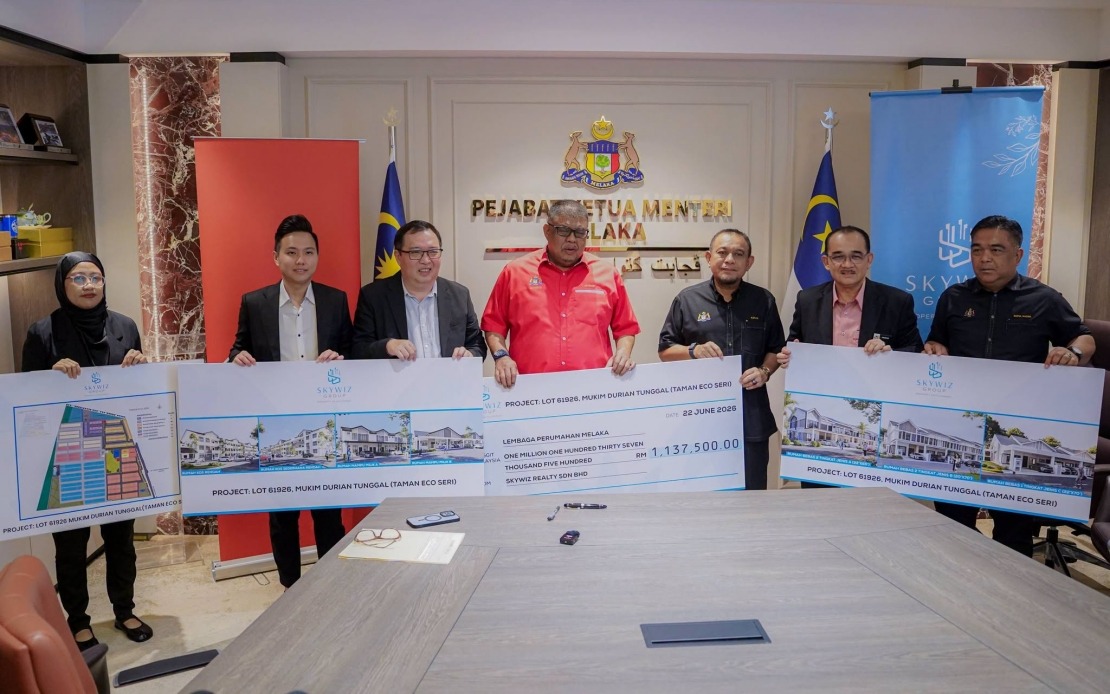
These comments emerged during a formal ceremony where the Melaka Housing Board (LPM) and developer Skywiz Reality Sdn Bhd inked an Affordable Housing Development Agreement, with LPM executive director Datuk Murad Husin present at the event. The initiative reflects growing recognition within Malaysian state governments that accessibility features directly influence property marketability and demographic inclusivity.
Melaka's broader housing ambitions extend considerably beyond lift mandates. The state government targets construction of more than 38,440 affordable housing units in coming years, representing a substantial commitment to homeownership accessibility for residents. To date, 23,514 affordable units have reached completion, demonstrating sustained progress under the state's housing development framework.
These targets operate within the Melaka Sayang Rakyat (MeSRa) initiative, which frames property ownership as foundational to family stability, community cohesion, and inclusive long-term state advancement. This philosophical approach suggests that housing policy in Melaka now encompasses social development considerations beyond conventional market metrics.
The Skywiz Reality project exemplifies the scale of current developments. Spanning 26.56 hectares in Mukim Durian Tunggal, Alor Gajah, the developer will construct 903 housing units across three years. The breakdown includes 453 affordable units—comprising 61 low-cost houses, 54 low-medium cost units, 200 Type A affordable homes, and 138 Type B affordable homes—alongside 450 open-market properties serving broader income segments.
Financially, the project is projected to generate RM2.38 million in returns for the Melaka Housing Board, with contractual obligations requiring the developer to commence building within 90 days of Form B issuance by the Hang Tuah Jaya Municipal Council (MPHTJ). This timeline structure ensures accountability while balancing developer feasibility requirements.
The state government has positioned itself as an active monitoring entity throughout implementation, with supervisory responsibilities centred on schedule adherence, specification compliance, and quality assurance. This hands-on governance approach reflects lessons learned from previous development cycles and demonstrates commitment to protecting buyer interests through contractual enforcement.
Malaysian property markets have increasingly recognised accessibility as a competitive differentiator, particularly as demographic ageing accelerates across the nation. Melaka's policy direction may establish precedent for other states seeking to address similar challenges of unsold inventory and demographic inclusion. For elderly residents and mobility-impaired individuals, lift access remains a critical factor determining property viability, yet many developments built during Malaysia's rapid urbanisation phases predated such considerations.
The mandate under consideration could reshape developer cost structures and project feasibility assessments, particularly for mid-rise residential and commercial properties. Developers may need to recalibrate construction budgets to incorporate vertical transportation infrastructure, potentially influencing unit pricing and profit margins unless offset by improved sales velocity and premium positioning.
For potential buyers in Melaka, particularly senior citizens and families with elderly members, the prospective lift mandate represents tangible policy responsiveness to accessibility concerns that have historically limited property choices. Enhanced accessibility may correlate with improved property retention, stronger intergenerational family arrangements, and expanded market participation among demographics previously disadvantaged by multi-storey layouts.
The convergence of affordable housing expansion, accessibility mandates, and active government oversight suggests Melaka is transitioning toward more sophisticated, demographically-conscious property development governance. This approach recognises that market sustainability requires addressing not merely quantity of housing stock but suitability of design features for diverse resident populations, establishing a model with potential implications for housing policy discussions throughout Southeast Asia's rapidly urbanising regions.

