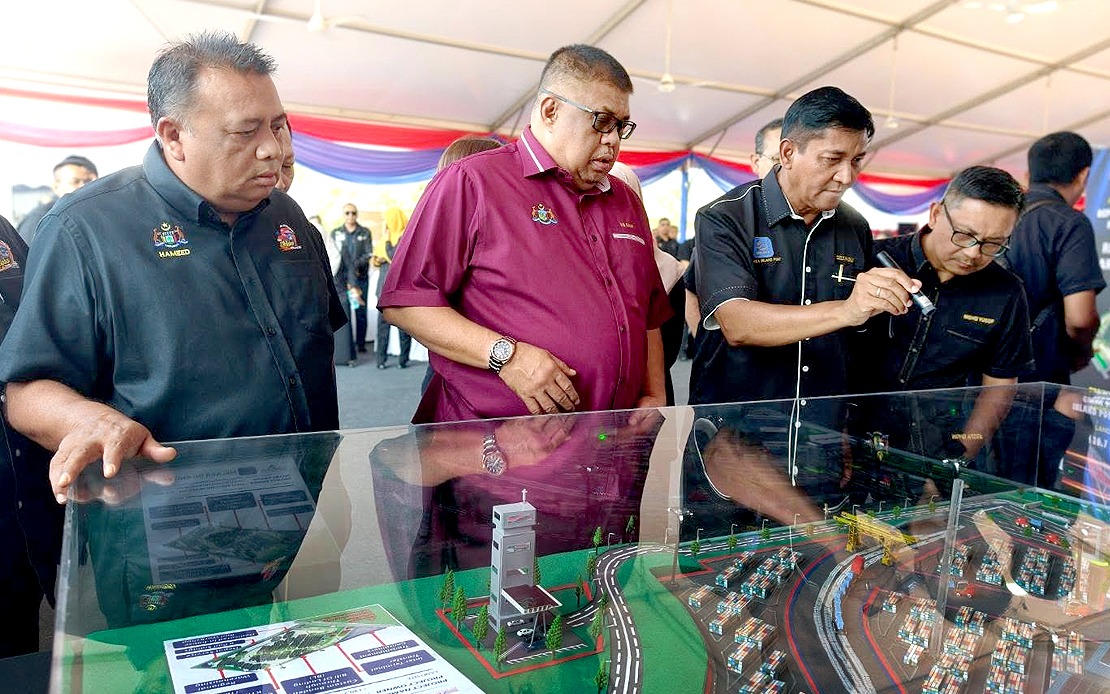
The Melaka state government has unveiled ambitious plans to construct a RM129 million road project that will reshape the state's port connectivity and logistics infrastructure. The 12-kilometre thoroughfare will link Kuala Linggi International Port with Ayer Molek and Kuala Sungai Baru, passing strategically through the Melaka Inland Port area to create a cohesive network of maritime and logistics hubs across the region. Datuk Hameed Mytheen Kunju Basheer, the state's Public Works, Infrastructure, Public Facilities and Transport Committee chairman, revealed the initiative following a groundbreaking ceremony at the Melaka Inland Port conducted by Chief Minister Datuk Seri Ab Rauf Yusoh.
The project reflects Melaka's recognition that port infrastructure alone cannot realise its potential without complementary road networks. Currently, logistics operators moving cargo between Kuala Linggi International Port and connecting routes must traverse 28 kilometres of existing roads, a significant inefficiency when multiplied across thousands of daily vehicle movements. The new road will compress this distance to approximately 12 kilometres, fundamentally reshaping how cargo flows through the state's supply chains. For the logistics and manufacturing sectors operating in southern Malaysia, this reduction translates directly into lower operational costs, faster delivery cycles, and enhanced competitiveness in regional markets.
The timing of this announcement positions Melaka within the broader context of Southeast Asian infrastructure competition. As neighbouring ports in Thailand, Vietnam, and Indonesia expand their facilities and connectivity networks, Malaysian states must equally enhance their inland linkages to remain attractive to international shippers and logistics operators. A shorter, more direct route between ports and inland distribution centres will draw regional cargo flows toward Melaka's facilities, potentially capturing market share from competing hubs across the region.
The Works Ministry is currently managing the design phase, with the project anticipated to progress through quotation and tender processes during the coming year. This timeline indicates a realistic implementation pathway, though the state government has not publicly committed to a specific groundbreaking date. Typically, such infrastructure projects involving multiple stakeholders experience delays as technical, environmental, and regulatory assessments conclude. The design phase is crucial for optimising the route's alignment with existing urban areas and minimising impacts on established communities.
Beyond the primary 12-kilometre route, the Melaka government is pursuing an integrated approach to port accessibility through multiple complementary projects. Plans exist to upgrade road networks connecting various port facilities with the Melaka Inland Port itself, including road widening from Tangga Batu to Sungai Udang, which provides access to Tanjung Bruas Port. These supporting improvements demonstrate that the state government recognises port efficiency depends on multiple entry and exit points rather than a single bottleneck.
Another substantial project involves constructing a six-kilometre road from Telok Gong to Kampung Pulau and Paya Lebar, estimated at RM49 million. This route will establish a direct link between the port area and the Melaka Inland Port without routing through traditional villages, addressing both efficiency and community concerns simultaneously. The Paya Lebar to Kampung Pulau segment is currently undergoing the quotation process, while the Kampung Pulau to Telok Gong section remains in design phase, suggesting staggered completion timelines for different segments.
The state government projects completion of these integrated road projects by approximately 2028 or 2029, providing a five to seven year implementation window. This extended timeframe reflects the scale and complexity of coordinating multiple projects across different jurisdictions and stakeholder groups. For businesses planning logistics facility investments in Melaka, this timeline offers visibility into future infrastructure capacity, though supply chain professionals typically require confirmed completion dates rather than aspirational targets.
From a regional perspective, these infrastructure investments carry implications beyond Melaka's borders. Improved port-to-inland connectivity in one state influences traffic patterns, modal choices, and competitiveness across the broader Malaysian peninsula. If Melaka successfully executes these road projects while maintaining port service quality, the state could establish itself as a preferred gateway for goods destined for central Malaysian markets, potentially diverting volumes from Port Klang in Selangor or Port Tanjung Pelepas in Johor.
The logistics sector's specific focus in these announcements reflects evolving supply chain patterns. Modern supply chain management increasingly prioritises total journey time and cost rather than port handling efficiency alone. A road network that reduces inland travel time by 16 kilometres creates measurable cost savings for trucking operators, particularly given fuel costs and driver wages. When aggregated across thousands of shipments annually, such efficiency gains accumulate into substantial competitive advantages for ports and their hinterland regions.
The Melaka Inland Port itself features prominently in these connectivity plans, indicating the state government views it as increasingly central to regional logistics operations. Inland ports serve as consolidation points where cargo from multiple origins is combined for efficient ocean-going shipment, or conversely, where incoming cargo is disaggregated for regional distribution. Creating efficient connections between maritime ports and inland facilities allows Melaka's ports to capture value-added services beyond traditional container handling.
Financial planning and funding mechanisms remain undisclosed in the announcements. Infrastructure projects of this scale typically require collaborations between federal, state, and potentially private sector funding sources. The absence of funding details suggests negotiations between the Melaka government and federal authorities may still be progressing, though the public announcement itself represents a political commitment that ultimately constrains the state government's flexibility to deprioritise the project.
For Malaysian readers and businesses operating in the logistics sector, these road projects merit close attention despite their multi-year timelines. Infrastructure investments of this magnitude reshape regional competitive dynamics over decades, influencing site selection decisions for warehousing facilities, distribution centres, and manufacturing plants. The effective implementation of Melaka's port connectivity strategy could establish the state as Southeast Asia's preferred transhipment hub for regional trade flows, with lasting implications for employment, economic growth, and Malaysia's position within global supply networks.

