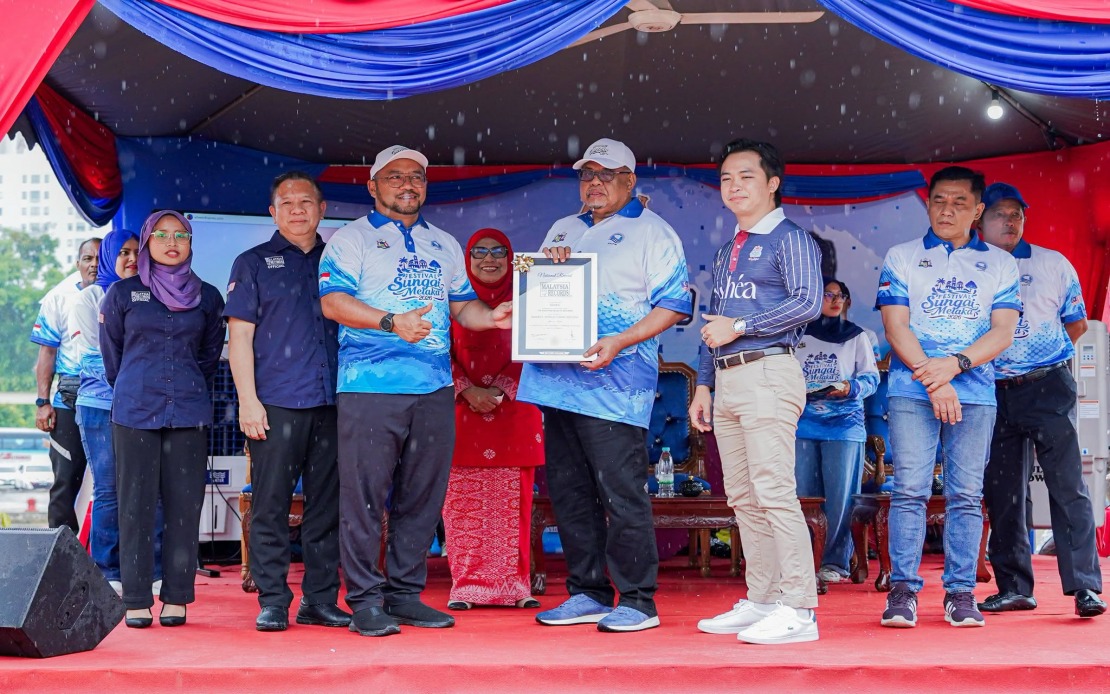
Melaka has consolidated its position as a tourism innovator by securing four Malaysia Book of Records (MBOR) citations within the span of just three years, signalling the state's commitment to developing distinctive and competitive attractions in a crowded regional tourism landscape. The latest addition to this tally was formally acknowledged at the MBOR Certificate Presentation and Prize Giving Ceremony held at Dataran Pengkalan Rama, where Chief Minister Ab Rauf Yusoh underscored the strategic importance of translating record-breaking achievements into sustainable economic dividends for residents.
The timing of these recognitions reflects a deliberate state strategy to position Melaka as more than a heritage destination. By pursuing record-breaking initiatives across diverse tourism categories, the state government has effectively demonstrated that contemporary, experiential attractions can coexist with and complement its established historical offerings. This diversification approach is particularly relevant for Southeast Asian destinations increasingly competing for limited tourist spending and attention spans in an era where travellers seek novel, Instagram-worthy experiences alongside cultural immersion.
Speaking at the ceremony, Ab Rauf Yusoh rejected the notion that record certificates should serve merely as decorative wall hangings in government offices. Instead, he articulated a vision where each recognition catalyses further innovation, spurring the creation of new tourism products and programmes designed to deepen visitor engagement with Melaka. This philosophy suggests an understanding that records themselves hold limited intrinsic value; rather, their true worth lies in the competitive advantages and revenue opportunities they unlock for the state economy.
The state's investment in the Sungai Melaka (Melaka River) redevelopment initiative exemplifies this strategic thinking. By transforming a historically significant waterway into a dynamic community and tourism hub, the Melaka River and Beach Development Corporation (PPSPM), led by chief executive officer Shaharul Azuar Idris, has created a platform for multiple tourism experiences and local engagement. The river now serves as the focal point for the biennial Sungai Melaka Festival, which has evolved into a substantial event drawing participation from across and beyond state borders.
The 2026 iteration of the festival demonstrates impressive scale, featuring over 30 distinct programmes distributed across Melaka's three districts. This geographical dispersal ensures that tourism benefits and community participation extend beyond the capital, Melaka City, potentially spreading economic activity to more peripheral areas. Such distribution models are increasingly viewed as best practice in sustainable tourism development, as they reduce concentration of visitor impact and revenue in single urban centres.
Particularly noteworthy is the festival's freshwater fishing competition, which attracted 1,123 registered anglers competing for a total prize purse of RM30,000, with the champion claiming RM10,000. The substantial prize money reflects serious investment in attracting competitive participation, and the geographic diversity of participants—both local and interstate—validates the competition's appeal. This participation level indicates a viable market for niche sporting tourism experiences, a segment often overlooked by destination marketers focused primarily on cultural and heritage attractions.
Ab Rauf Yusoh explicitly identified the fishing competition as possessing untapped potential for transformation into a signature tourism product. His comments suggest intentions to expand the event's scale, elevate its competitive prestige, and increase financial prizes in future editions. This trajectory would position Melaka alongside other regional destinations that have successfully monetized fishing tournaments as premium sporting tourism experiences, potentially attracting affluent anglers and associated spending.
From a broader economic perspective, Melaka's record-chasing strategy reflects recognition that heritage tourism alone cannot sustain long-term destination competitiveness or generate sufficient employment and tax revenue. The state competes not only with other Malaysian destinations like Penang and Johor but also with established Southeast Asian tourism hubs across Thailand, Vietnam, and Indonesia. Differentiation through contemporary records—whether architectural replicas, sporting events, or cultural festivals—provides marketing angles that appeal to diverse traveller segments and extend average length of stay.
The state government's commitment to breathing sustained life into the Sungai Melaka project through recurring, community-centred activities reflects lessons learned from successful tourism transformation cases elsewhere. Rivers have proven valuable as urban tourism catalysts when paired with consistent programming and investment, as demonstrated by the Chao Phraya in Bangkok and the Hoi An waterfront in Vietnam. Melaka's approach of embedding community participation within tourism programming also addresses concerns about destination authenticity and resident buy-in, critical factors for long-term tourism sustainability.
For Malaysian tourism stakeholders, Melaka's achievements carry instructive value regarding innovation in a market saturated with heritage destinations. The state has demonstrated that MBOR recognitions, often dismissed as vanity metrics, can function as credible marketing anchors when tied to authentic visitor experiences and economic opportunities. The strategy of pursuing multiple records across different tourism categories—rather than concentrating on a single flagship attraction—distributes risk and appeal across diverse tourist preferences and seasons.
Looking ahead, the success metrics for Melaka's tourism push will ultimately hinge not on accumulating additional records, but on translating visitor numbers and extended stays into measurable income distribution among hospitality workers, small business operators, and local communities. Ab Rauf Yusoh's emphasis on economic spillover rather than certificate collection suggests awareness of this reality. If the state can maintain momentum in event development, infrastructure investment, and product innovation while ensuring genuine community participation and benefit, Melaka's record-breaking trajectory could establish a sustainable competitive position in Malaysia's increasingly contested tourism marketplace.

