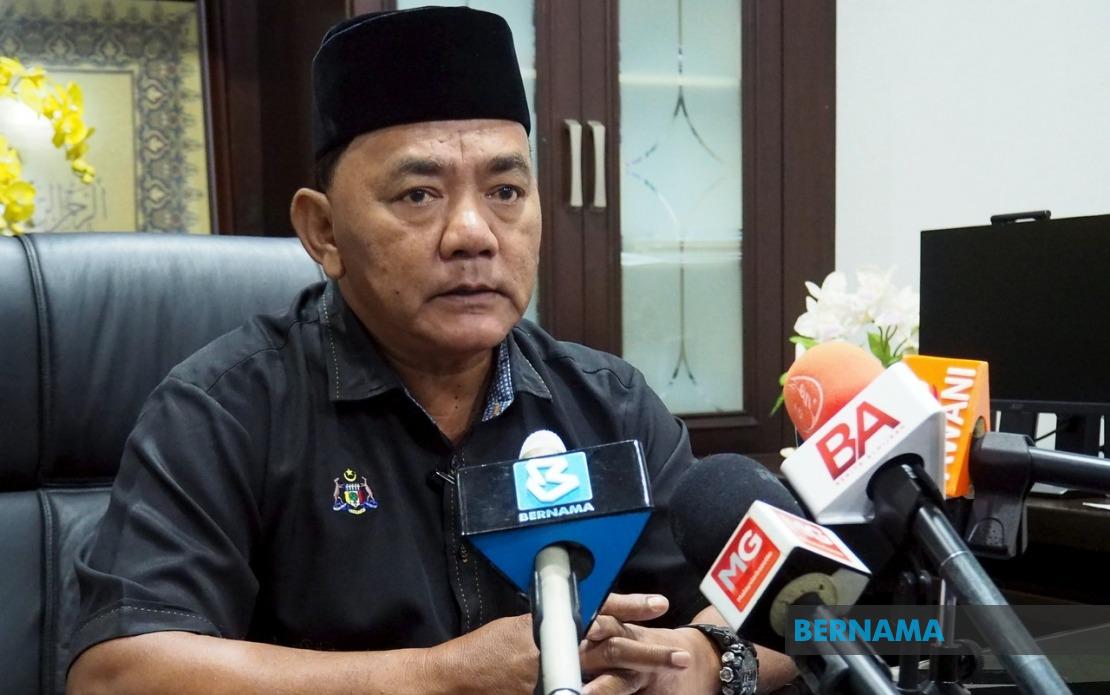
Melaka's state government is moving forward with an ambitious judicial reform agenda, announcing plans to establish a Main Syariah Court during the coming year as a strategic enhancement to its Islamic court hierarchy. Datuk Rahmad Mariman, the state's Education, Higher Education, and Religious Affairs Committee Chairman, disclosed the initiative during his officiation of the Melaka Syariah Court Mahabbah Programme 2026 at the Melaka Syariah Court Complex in Ayer Keroh. The creation of this additional institutional tier represents a significant structural evolution designed to improve case management and judicial accessibility across Melaka's Syariah system.
The establishment of the Main Syariah Court forms part of a comprehensive modernisation package that state authorities have crafted to enhance the efficiency and responsiveness of Islamic judicial administration in the state. The legislative groundwork for these reforms centres on two key instruments: the Melaka Syariah Courts Bill and the Syariah Court Civil Procedure (Court Fees) Rules. These proposals will fundamentally reshape how the state's religious courts operate, addressing procedural bottlenecks whilst simplifying the structural complexity that currently characterises Melaka's Syariah judicial arrangements. The institutional overhaul extends beyond merely adding a new court level, encompassing a thorough recalibration of how judicial officers are appointed and integrated into the system.
According to Rahmad, the appointment process for Syarie judges stands as another critical focus within this broader reform movement. Streamlining these procedures should theoretically reduce administrative delays and enable faster filling of judicial vacancies when they arise. Such measures carry particular significance in a state where Islamic jurisprudential expertise remains a specialised resource. The cumulative effect of these changes—establishment of the Main Syariah Court, procedural rule amendments, and judicial appointment streamlining—is intended to create a more responsive and accessible Islamic court environment that better serves Melaka's Muslim population.
Implementation of this new court remains contingent upon successful completion of the necessary legal procedures. State Assembly approval constitutes a critical gateway, requiring formal tabling and passage of amendments to the relevant enactment during parliamentary sessions. This constitutional requirement underscores the seriousness with which the state treats these judicial reforms, embedding them within the formal legislative framework rather than implementing them through administrative channels alone. The phased approach provides stakeholders, legal professionals, and religious scholars opportunity to scrutinise proposals and offer input before formal adoption.
The announcement arrives against a backdrop of demonstrated performance improvements within Melaka's existing Syariah courts. Between January 2024 and August 2024, the court system resolved 11,037 cases out of a total 13,424 filed—representing an 82 per cent clearance rate across both civil and criminal matters. This metric reveals a system already functioning efficiently under current constraints, yet one that state authorities believe could accommodate additional volume and complexity through structural expansion. The types of cases processed encompass family disputes, rights claims, and various legal issues where Islamic law provides the applicable framework, making effective case management essential for family stability and social cohesion.
Melaka's strategic investment in its Syariah judicial infrastructure reflects broader regional trends across Malaysia where state governments increasingly recognise the Islamic courts' role as social stabilisation mechanisms rather than mere dispute-resolution forums. The Mahabbah Programme 2026, which translates roughly to the "Love" or "Compassion" programme, explicitly aims to narrow the distance between the judicial institution and the public it serves. Through public education initiatives, the programme seeks to demystify Islamic legal procedures and illuminate individual rights and responsibilities when navigating family law matters or disputes. This outreach dimension acknowledges that many Melaka residents may harbour uncertainty about Syariah court processes or feel hesitant about engaging with the system.
Datuk Abdul Halim Tawil, Melaka's Mufti, and Chief Syarie Judge Azzeman Omar attended the Mahabbah Programme's official launch, signifying institutional consensus around the importance of public engagement and systemic reform. Their presence demonstrated coordinated leadership across the religious establishment, religious administration, and the judiciary itself. This alignment matters considerably because successful court reform typically requires harmonious coordination among multiple institutional actors, each bringing distinct perspectives and operational expertise to the modernisation effort.
Beyond the Syariah court expansion, Melaka authorities are also channelling official recognition toward Islamic institutional excellence through state-level Maulidur Rasul celebrations scheduled for August 29 at Dataran 1Malaysia Klebang. The ceremony will present special awards honouring various Islamic administrative categories, creating incentive structures that encourage institutional innovation and heightened performance standards throughout the Islamic bureaucracy. Such recognition mechanisms, though sometimes overlooked in policy discussion, reinforce professional norms and motivate practitioners to adopt best practices.
For Malaysian observers more broadly, Melaka's judicial expansion initiative illustrates how individual state governments can exercise substantial autonomy within the federalised Islamic legal architecture that characterises Malaysia's constitutional settlement. Unlike civil courts, which operate under a unified national judiciary, Syariah courts remain primarily state institutions, permitting jurisdictional variations and policy experimentation. Melaka's approach of combining institutional restructuring with public engagement and judicial appointment reform offers a potentially replicable model for other states contemplating their own modernisation agendas. The relative success of case resolution rates demonstrates that incremental improvements through legislative fine-tuning can yield meaningful outcomes.
The timing of these announcements also reflects demographic and social realities. As Melaka's population continues evolving and family structures grow increasingly complex, demand for accessible Islamic legal recourse intensifies. Intercommunal marriages, inheritance disputes, and custody arrangements increasingly require nuanced legal navigation, tasks for which adequately resourced and structured Syariah courts prove indispensable. Authorities in Melaka appear to be responding proactively to these emerging pressures rather than waiting for systemic breakdown to force reactive reforms.
Moving forward, stakeholders across Malaysia's Islamic governance landscape will likely monitor Melaka's implementation progress closely. Success in establishing and operationalising the Main Syariah Court could generate momentum for similar initiatives elsewhere, whilst difficulties might caution other states against rapid expansion. The constitutional requirement for State Assembly approval also means that these proposals enter the political sphere, potentially becoming subject to partisan consideration alongside their technical judicial merits. Regardless of procedural politics, the underlying objective—creating a more efficient, accessible, and responsive Islamic judicial system—addresses genuine public needs and reflects responsible institutional stewardship.

