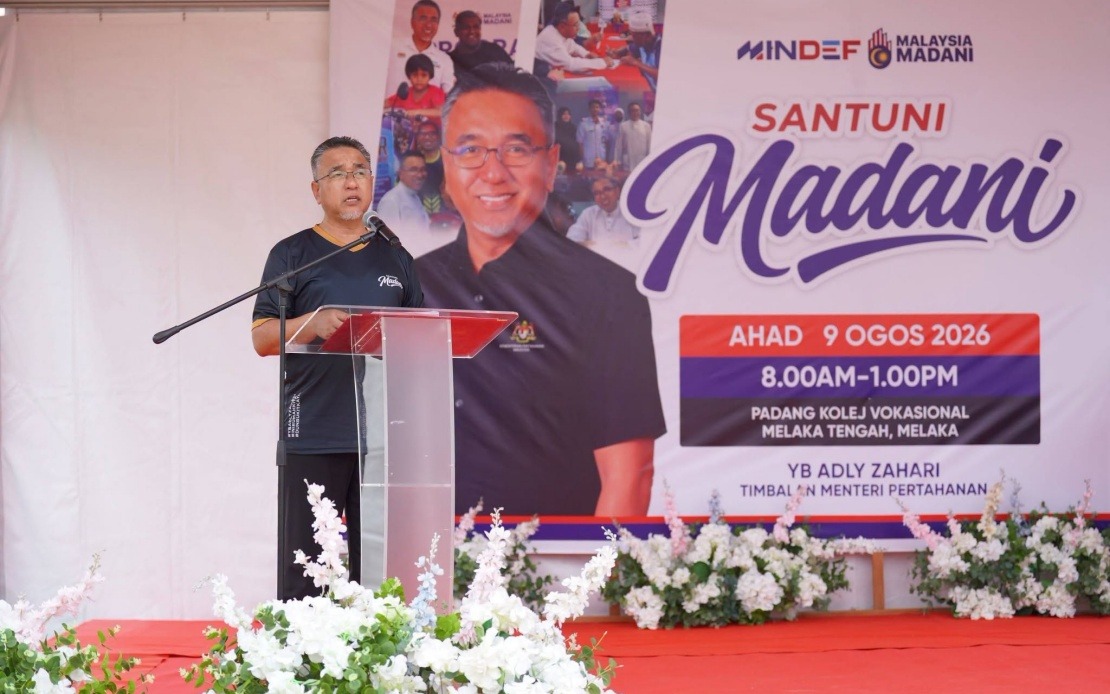
Melaka's Pakatan Harapan coalition is preparing for a significant political repositioning ahead of the state election, with chairman Adly Zahari signalling that the leadership remains willing to engage in discussions with any interested party about potential cooperation arrangements. The measured approach reflects a broader strategy to maximise the coalition's prospects in a state where electoral dynamics differ markedly from other regions where PH participates in Malaysia's Unity Government framework. Although multiple rounds of internal assessment meetings have already taken place to evaluate the coalition's competitive position, Adly stressed that no formal decisions have yet crystallised regarding the scope and mechanics of any external political partnerships.
The openness to negotiation represents a calculated shift from purely internal consolidation efforts. According to Adly, the coalition recognises that in a functioning democratic system, collaboration can take multiple forms depending on local circumstances and shared strategic objectives. Rather than committing to a singular approach, Melaka PH appears content to explore possibilities while maintaining flexibility in how such arrangements might ultimately be structured. The chairman's comments suggest that the party leadership understands the value of maintaining dialogue channels with potential partners, even as the groundwork for candidate selection and campaign preparation continues primarily within existing PH structures.
Notably, Melaka PH has not yet initiated formal discussions with Barisan Nasional, the traditional ruling coalition that retains significant organisational capacity in the state. However, the leadership has indicated that such talks remain theoretically possible should common ground emerge around core policy frameworks and governance principles aligned with the broader Malaysia MADANI national agenda. This conditional openness suggests that ideological or programmatic compatibility—rather than pure electoral calculation—represents the preferred threshold for partnership consideration. The distinction carries importance for understanding how Malaysian coalition politics continues to evolve beyond simple arithmetic of seat-sharing.
The expansion ambitions outlined by Adly reflect genuine optimism about PH's electoral trajectory in Melaka, grounded in demonstrated strength within three parliamentary constituencies where the coalition secured victories in recent national elections. Alor Gajah, Kota Melaka, and Hang Tuah Jaya represent PH's established strongholds, providing a foundation for state-level gains. Beyond these anchor constituencies, the coalition believes it possesses realistic prospects in Tangga Batu, Masjid Tanah, and Jasin, areas where organisational work and community engagement could yield breakthroughs. The jump from five to a substantially larger number of the 28 available state assembly seats would represent a meaningful electoral outcome, reshaping the political balance in the state legislature.
Packaging this ambition into concrete seat allocations remains complicated by the multi-party nature of Melaka's political landscape and the potential involvement of coalition partners. Adly's framing of the goal as increasing PH's "core seats" implies a distinction between seats the coalition contests independently versus those potentially ceded to allies. This language suggests internal discussions about which constituencies represent party priorities and where flexibility might exist if negotiations with other political actors advance. For Malaysian observers, such nuancing reflects the genuine tension between maximising individual party representation and acknowledging the strategic value of broader coalition frameworks.
Representatives from Parti Keadilan Rakyat, one of PH's component parties, have acknowledged that Melaka occupies a distinctive position within the broader Unity Government architecture. Adam Adli Abd Halim, speaking in his capacity as acting chairman of PKR's state leadership council, emphasised that the state's particular political constellation cannot be mechanically treated like other jurisdictions. The recognition that each region operates according to distinct political rules and voter compositions reflects sophisticated coalition management thinking. Rather than imposing uniform approaches across Malaysia's 13 states and three federal territories, PKR and its PH partners appear committed to contextual decision-making.
Communication with Barisan Nasional has continued on informal channels despite the absence of formal negotiation frameworks, according to PKR's Adam Adli. This behind-the-scenes engagement serves multiple purposes: it maintains relationship continuity, signals non-hostile intent, and potentially creates openings should circumstances shift. The emphasis on discussions happening through individual representatives and party channels rather than official negotiating committees suggests deliberate efforts to maintain flexibility while avoiding public commitments that might constrain future options. Such diplomatic subtlety reflects the mature political reality that Malaysian coalitions operate across multiple levels simultaneously.
The current focus of PH state assemblymen remains grounded in constituent service and local governance performance rather than intensive electoral positioning. According to PKR officials, elected representatives are consciously limiting aggressive political messaging that could generate social friction or undermine the stability consensus around the Unity Government arrangement. This disciplined approach reflects recognition that electoral success ultimately depends on public confidence in governance delivery, not merely on rhetorical engagement or factional positioning. For Malaysian voters evaluating political alternatives, the emphasis on substantive performance represents a meaningful signal about coalition priorities.
Melaka's political situation carries broader significance for Malaysian federalism and coalition dynamics. As a state where PH holds five seats but faces an opposition of combined BN and other forces, the outcome of the upcoming election will provide important signals about the coalition's capacity to expand beyond stronghold constituencies. Success would demonstrate that PH's Malaysia MADANI agenda resonates beyond urban, reform-oriented demographics. Conversely, stagnation or decline would suggest the coalition has reached a ceiling in certain geographic contexts. The willingness to explore partnership arrangements rather than contesting every seat independently suggests PH leadership recognises that electoral maximisation sometimes requires strategic accommodation.
For Southeast Asian observers, Melaka's unfolding political competition illustrates how mature democracies in the region negotiate coalition arrangements beyond purely zero-sum calculations. The emphasis on shared values and governance agendas, combined with flexibility on seat-sharing mechanics, contrasts with more rigid or ideologically fractious coalition models. Malaysia's experience demonstrates that durable political partnerships require both tactical pragmatism and principled commitment to common objectives. As Melaka approaches its state election, the emerging framework of cooperation—whether ultimately involving BN, remaining exclusively within PH, or incorporating smaller parties—will reveal how Malaysian political actors balance competition and collaboration.
The coming weeks will prove crucial in determining whether Melaka PH's openness to negotiation translates into actual partnership arrangements or whether the coalition ultimately contests the election primarily through its existing component parties. The chairman's remarks suggest that decisions remain genuinely open, contingent upon whether discussions with potential partners yield sufficient alignment on both electoral mechanics and governance principles. For Malaysian voters in Melaka and observers monitoring coalition politics nationally, the outcome will carry implications extending well beyond a single state election.

