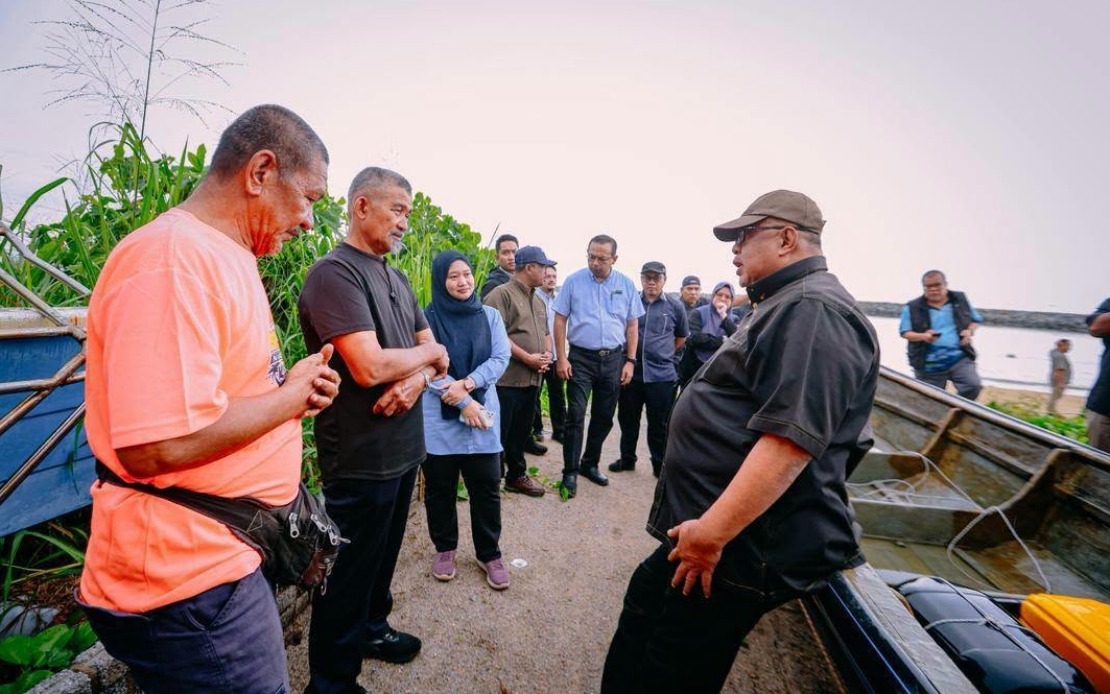
The Melaka government has mobilised multiple agencies to address longstanding infrastructure and environmental challenges confronting fishing communities in Pasir Gembur, Tanjung Bidara. Chief Minister Datuk Seri Ab Rauf Yusoh announced the directive after conducting a site inspection to evaluate progress on a proposed fishermen's complex and to engage directly with residents about their grievances.
The decision reflects an escalation in state-level attention to coastal development issues that have plagued the area for months. By convening meetings with the Public Works Department (JKR), the Drainage and Irrigation Department (DID), and the Alor Gajah Municipal Council, Ab Rauf signalled the government's intent to coordinate a comprehensive response rather than allowing individual agencies to work in isolation. This approach acknowledges that infrastructure problems in fishing communities typically require integrated solutions spanning drainage management, land use planning, and structural engineering.
Among the key interventions ordered, DID has been tasked with conducting a detailed feasibility study into deepening the channel between Pasir Gembur and Batu Tenggek. This waterway is critical for fishing boats accessing the sea, and channel depth directly impacts operational viability, particularly during seasons when tidal patterns restrict vessel movements. A feasibility study indicates the government recognises that simply widening or dredging channels involves complex considerations around sediment management, environmental impact, and long-term maintenance costs.
JKR, meanwhile, has been instructed to identify a more strategically appropriate location for the fishermen's complex. The current site apparently carries significant vulnerability to seawater intrusion and tidal flooding, problems that would compromise facilities designed to serve the fishing industry. Relocation addresses a fundamental planning oversight: coastal infrastructure must account for extreme weather patterns and seasonal variations that characterise the Malaysian maritime environment. This reorientation suggests the original site selection process may have underestimated environmental risks.
The government has also imposed a regulatory freeze on new private construction within the coastal wave-breaker area, a protective measure that prevents further encroachment and loss of public access to marine resources. More significantly, all existing and future structures within the coastal reserve now require both a Temporary Occupation Licence from the Land Administrator and technical department approval. This dual-approval mechanism creates accountability and ensures development aligns with engineering and environmental standards rather than proceeding through informal or ad-hoc arrangements.
These measures carry implications extending beyond Pasir Gembur. Coastal communities throughout Malaysia face comparable pressures: rapid urbanisation, climate change-induced flooding, inadequate drainage infrastructure, and competing demands between residential development and livelihood protection. The Melaka government's structured response provides a potential template for other states wrestling with similar tensions between economic development and community welfare in sensitive maritime zones.
Ab Rauf framed the intervention as more than routine administrative action, positioning the site visit as a demonstration of substantive engagement with constituent concerns. His statement that he came not simply for breakfast but to conduct inspection and listen directly to residents conveys a message about accessibility and responsiveness that resonates with governance expectations in contemporary Malaysian politics. The emphasis reflects an understanding that visible, hands-on leadership generates public confidence in institutional competence.
The Chief Minister explicitly linked these actions to the state's "Melaka Sayang Rakyat" (Melaka Cares for the People) political platform, framing concrete infrastructure decisions as expressions of that commitment. This rhetorical positioning ties material development outcomes directly to electoral narratives and state branding. For fishing communities whose livelihoods depend on functional infrastructure, the distinction between slogan and substantive action carries tangible economic consequences that influence both immediate welfare and longer-term electoral behaviour.
Implementation challenges remain significant. Feasibility studies require time and funding; land acquisition for relocation involves property negotiations and potential resistance from current occupants; regulatory enforcement of the new coastal reserve restrictions demands sustained bureaucratic effort. The fishing community's previous experience with delayed or incomplete infrastructure projects likely generates cautious optimism rather than confidence that announced measures will materialise.
The regulatory framework established through the Temporary Occupation Licence requirement and mandatory technical approvals represents a modest formalisation of what has apparently been an informal or underregulated environment. Formalisation can both protect communities by ensuring standards compliance and burden them through increased bureaucratic requirements and potential licensing costs. How these mechanisms operate in practice will significantly influence their actual impact on fishing community welfare.
Regionally, Malaysia's maritime communities across Peninsular Malaysia, Sabah, and Sarawak confront comparable challenges: infrastructure deficits, environmental pressures, and competition between traditional resource-dependent economies and development imperatives. Melaka's approach to coordinating inter-agency responses and formalising coastal governance structures offers lessons for neighbouring Johor and other states managing similar transitions in fishing-dependent coastal zones.
The announcement also highlights the political sensitivity of resource access and livelihood protection in constituencies where fishing communities constitute meaningful electoral populations. State governments increasingly recognise that visible investment in coastal infrastructure translates into electoral returns and that neglecting maritime communities creates political vulnerability, particularly when competing parties offer alternative development platforms.
Successful implementation will depend on sustained political attention and resource allocation extending beyond the initial announcement phase. Whether the ordered agencies proceed with priority dispatch or revert to bureaucratic routine will determine whether Pasir Gembur's fishing community experiences genuine improvement or renewed disappointment with unfulfilled commitments.

