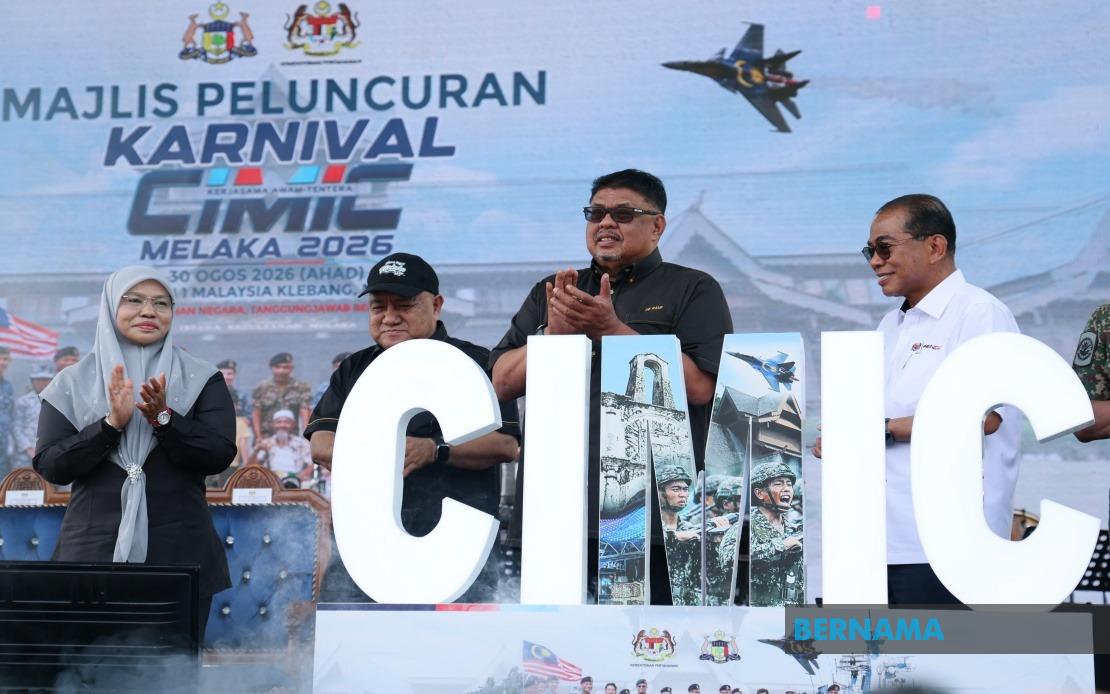
Malaysia's Defence Minister Datuk Seri Mohamed Khaled Nordin has signalled the government's interest in positioning Melaka as an alternative venue for the Langkawi International Maritime and Aerospace Exhibition (LIMA), a biennial gathering that draws regional defence and aerospace stakeholders. Speaking during the launch of the Civil-Military Cooperation Carnival (CIMIC) at Dataran 1Malaysia in Klebang, Mohamed Khaled outlined preliminary assessments of Melaka's suitability for hosting this high-profile international event in coming cycles, conditional on resolving significant infrastructure requirements.
The proposal reflects a pragmatic examination of accessibility challenges that have historically constrained participation in LIMA when held at its traditional Langkawi venue. By relocating to Melaka, organisers anticipate substantially broadening the exhibition's reach across Malaysia's population centres. The Klebang location near Batu Berendam, with its proximity to an operational airport and maritime berthing facilities, presents characteristics that planners believe could accommodate the operational demands of such an exhibition without necessitating the extended travel burden that Langkawi currently imposes on domestic visitors.
Mohamed Khaled's remarks underscore a strategic recalibration of how Malaysia positions its defence and aerospace capabilities on the regional stage. The accessibility argument carries weight in the Malaysian context, where transportation infrastructure and attendance costs often determine participation rates among government officials, defence procurement professionals, and industry representatives from states beyond the peninsula's northern reaches. The Defence Minister's observation that limited numbers currently attend LIMA in Langkawi speaks to a structural constraint that shifting the venue could meaningfully address, particularly for personnel from Sabah, Sarawak, and the southern peninsula who might find Melaka's central location considerably more convenient.
However, realising this vision demands confronting substantial financial and logistical hurdles. Mohamed Khaled explicitly acknowledged that developing Melaka's infrastructure to world-class exhibition standards would require considerable government investment. This candid assessment reflects the complexity of establishing facilities capable of accommodating international defence delegations, military hardware displays, and the comprehensive supporting infrastructure necessary for a biennial gathering of this calibre. The acknowledgment serves as a reality check against what might otherwise appear as an attractive relocation prospect.
Melaka's Chief Minister Datuk Seri Ab Rauf Yusoh echoed the Defence Minister's cautious optimism, indicating the state government's willingness to explore hosting arrangements while emphasising the need for thorough capacity planning. Ab Rauf articulated a measured stance that prioritises rigorous assessment of Melaka's actual capabilities against the exhibition's operational requirements, alongside evaluation of the broader economic and strategic benefits that hosting might generate for the state. This measured approach suggests recognition that hosting LIMA would represent a significant undertaking with consequences extending beyond defence ministry considerations into broader state development planning.
The genesis of this proposal carries particular significance given recent military activities in Melaka waters. The participation of six Royal Malaysian Navy vessels in this year's National Day celebrations highlighted the state's maritime dimension and demonstrated operational capacity within its territorial waters. This visible military presence appears to have catalysed thinking within the Defence Ministry regarding Melaka's potential as a strategic location for showcasing Malaysian maritime capabilities alongside aerospace technologies on an international platform. The Navy's demonstrated activity in Melaka thus becomes a practical foundation for theoretical relocation discussions.
From a geopolitical perspective, the proposal reflects Malaysia's broader efforts to diversify infrastructure investment beyond traditional peninsular concentration patterns. Melaka's historical significance as a maritime crossroads and its current development trajectory make it an increasingly prominent candidate for hosting events of regional and international importance. By positioning Melaka as a future LIMA venue, Malaysia would simultaneously strengthen the state's identity as a centre for strategic maritime dialogue and potentially enhance its attractiveness to defence and aerospace investors and stakeholders seeking to engage with Southeast Asian markets.
The Defence Ministry's framing of this initiative through the CIMIC carnival itself demonstrates the civil-military cooperation framework that would likely govern such an undertaking. CIMIC activities focus on deepening civilian-military engagement and public understanding of armed forces operations, principles directly applicable to preparing a state population and infrastructure base for hosting an international defence exhibition. The timing of these announcements during the carnival suggests strategic communication design aimed at building public receptiveness to the concept among Melaka residents.
Looking forward, implementation would require coordination across multiple government levels and departments. Federal-state cooperation frameworks would need activation to navigate land acquisition, infrastructure development, and operational logistics. The Defence Ministry would work alongside Malaysia's tourism and economic development agencies, state authorities, and potentially private sector partners to establish financial models that justify the substantial initial investment. These discussions, as Ab Rauf noted, would necessarily occur at the federal level, indicating that more formal governmental deliberation lies ahead.
The Langkawi venue's potential obsolescence remains theoretical rather than imminent, with no indication that current hosts face pressure to relinquish LIMA operations in the near term. Rather, this exploration represents forward-looking strategic planning that anticipates future possibilities while building the groundwork for decisions that might materialise across a five to ten-year horizon. The Defence Ministry's articulation of this alternative positions Malaysia's defence establishment as strategically thinking about infrastructure modernisation and national accessibility equity in military capability demonstration.
Beyond venue logistics, the Melaka alternative raises questions about Malaysia's defence exhibition strategy more broadly. As regional powers invest in modern military infrastructure and capabilities, hosting nations increasingly compete for opportunities to showcase technological sophistication and operational readiness to international audiences. By exploring Melaka as a LIMA venue, Malaysia signals its commitment to maintaining prominence within this competitive landscape while simultaneously addressing legitimate concerns about participation equity across its geographic expanse. This dual consideration—competitive positioning and inclusive access—underscores the mature strategic thinking underpinning the proposal.

