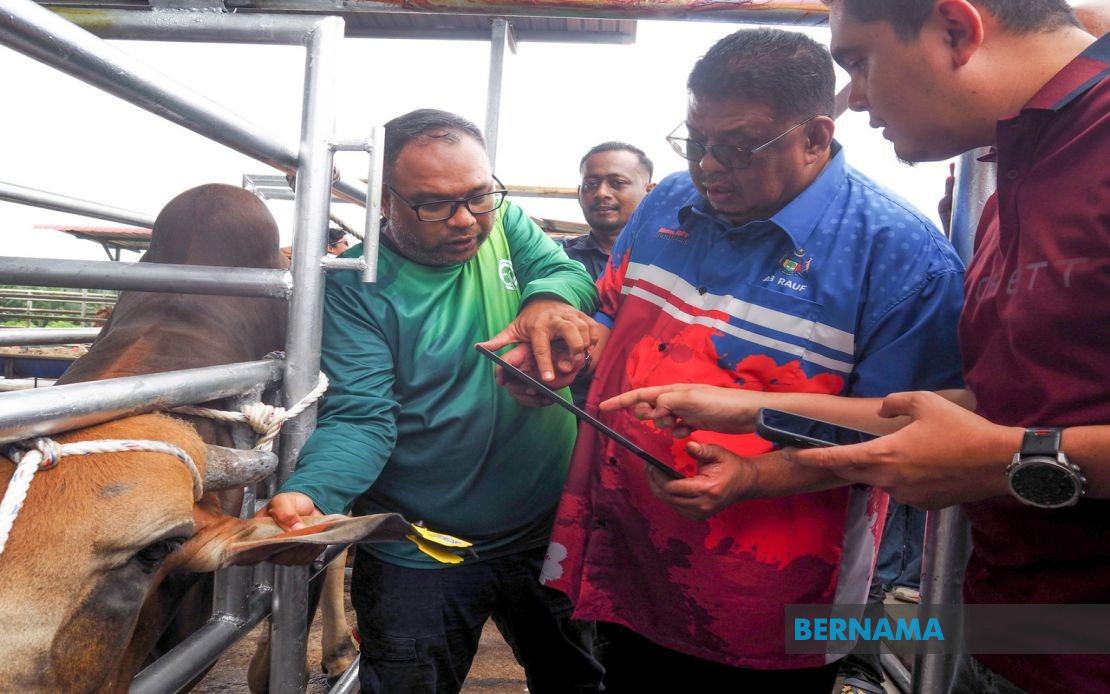
Melaka's state government has taken a significant step toward modernising its agricultural sector by rolling out a Livestock QR Tag system designed to strengthen oversight of animals and swiftly identify their owners when incidents occur. The initiative represents a deliberate shift toward technology-driven solutions in farming management, reflecting broader aspirations within the state to establish itself as a smart, digitally connected jurisdiction.
The programme stems from Chief Minister Datuk Seri Ab Rauf Yusoh's vision and has been developed in partnership with the Melaka Veterinary Services Department (JPV). According to Mahathir Mustafa, chief assistant secretary of the Local Government Unit (UKT) under the Chief Minister Department, the system embodies the state government's commitment to enhancing livestock administration while simultaneously advancing its wider digital transformation agenda. Rather than relying on conventional paper-based records or manual tracking, the QR Tag approach leverages smartphone scanning technology to make animal ownership and farm details immediately accessible to authorities in real time.
The mechanics of the system are straightforward but potentially transformative for livestock management in Melaka. Each registered animal receives a physical tag embedded with a unique QR code and identification number. When scanned using a smartphone, the code instantly reveals critical farming information including the breeder's name, premises identifier, and farm location. This immediate access eliminates the delays and procedural friction that have historically hampered enforcement operations and owner accountability. The tag remains permanently affixed to the animal throughout its lifetime, even if the livestock changes hands through sale or transfer, though ownership records are simply updated in the digital eVetPermit Malaysia system to maintain current accuracy.
As of early June, approximately 2,000 livestock across Melaka had been fitted with QR Tags. The state government's roadmap is to progressively extend the programme to encompass the entire registered population of cattle and buffalo in the state, estimated at over 32,000 animals. This phased rollout allows authorities to refine processes, address technical challenges, and build confidence among breeders before full-scale implementation. The gradual expansion also distributes the administrative burden across time, reducing strain on veterinary services and local authority resources.
The impetus driving this investment in technology reflects a genuine and growing problem. Stray livestock incidents have become an increasingly acute concern for Melaka's residents and road safety authorities. Since 2023, the state has recorded 835 accidents involving livestock alongside more than 50 formal complaints about stray animals. These figures underscore the tangible costs of uncontrolled animals wandering into populated areas and thoroughfares—threats to public safety, disruption to traffic flow, and property damage. By enabling rapid identification and contact with owners, the QR Tag system promises to compress response times and hold breeders accountable for containing their animals, thereby addressing both a public safety imperative and a quality-of-life concern.
Beyond incident response, the system offers several interconnected benefits for livestock administration. Disease control represents a significant advantage; in an era of emerging zoonotic threats and animal health surveillance, the ability to instantaneously trace an animal's ownership, location, and movement history strengthens epidemiological responses. Should an outbreak occur, veterinary authorities can rapidly communicate with affected breeders and coordinate containment measures. Similarly, the system enhances enforcement capabilities against violations of livestock regulations, providing objective evidence linking animals to specific individuals and premises.
The financial incentive structure has been designed to encourage voluntary participation during the initial phase. Until the close of 2024, the Melaka state government absorbs the full cost of QR Tag installation, which amounts to RM6.50 per animal. Breeders need only register their livestock with the Melaka JPV to receive the tags at no charge. This subsidy removes a barrier to adoption and signals government commitment to the initiative. After this introductory period concludes, responsibility for costs shifts to individual farmers. From 2027 onward, new installations or tag replacements will cost RM5 per head, a modest fee that remains affordable for most smallholder and commercial operations while ensuring long-term sustainability.
Feedback from the agricultural community has reportedly been constructive. Breeders perceive the system as a protective mechanism for their own interests, particularly in contexts where ownership disputes or livestock theft occur. The formal identification facilitated by QR Tags provides documentary evidence of legitimate ownership, thereby strengthening the legal position of farmers if conflicts arise. Moreover, industry participants recognise that systematic, technology-enabled livestock management enhances the professional standing and market reputation of Melaka's farming sector, addressing lingering concerns about standards and reliability.
The success of this initiative hinges substantially on institutional coordination. The collaborative framework involving the UKT, JPV, and local authorities (PBT) across Melaka's administrative structure creates potential for seamless information sharing and integrated enforcement. However, such multi-agency initiatives frequently encounter friction points related to communication protocols, data access permissions, and resource allocation. Building durable cooperation mechanisms will be essential to translating the technological infrastructure into sustained operational improvement.
From a regional perspective, Melaka's QR Tag system offers a model with broader applicability across Southeast Asia. Rural and peri-urban livestock management remains a persistent challenge in Malaysia and comparable regional jurisdictions, where rapid urbanisation collides with agricultural traditions. The digitisation of animal ownership records and location data represents a cost-effective solution to a persistent public administration problem. Other Malaysian states and neighbouring countries grappling with similar stray animal and livestock management concerns could adapt or learn from Melaka's approach, potentially catalysing wider adoption of smart farming technologies.
The system also reflects evolving governance priorities within Malaysia regarding technological adoption in traditionally non-digital sectors. Agricultural ministries globally have embraced digital tools, yet implementation in Southeast Asian contexts often lags due to cost, infrastructure limitations, or farmer resistance. By subsidising adoption during an introductory phase and demonstrating tangible public benefits, Melaka demonstrates a pragmatic approach to overcoming these obstacles. Success here could influence attitudes toward similar initiatives in other domains, from fisheries management to environmental monitoring.
Looking forward, the trajectory of Melaka's QR Tag programme will merit close observation. Key performance indicators to monitor include the pace of expansion toward the 32,000-animal target, reduction in stray livestock incidents post-implementation, rate of farmer compliance and system usage, and cost-effectiveness compared to conventional enforcement methods. Should the initiative deliver measurable improvements in animal management and public safety whilst remaining fiscally sustainable, it will reinforce the case for technology-driven solutions in agricultural governance across Malaysia and Southeast Asia.

