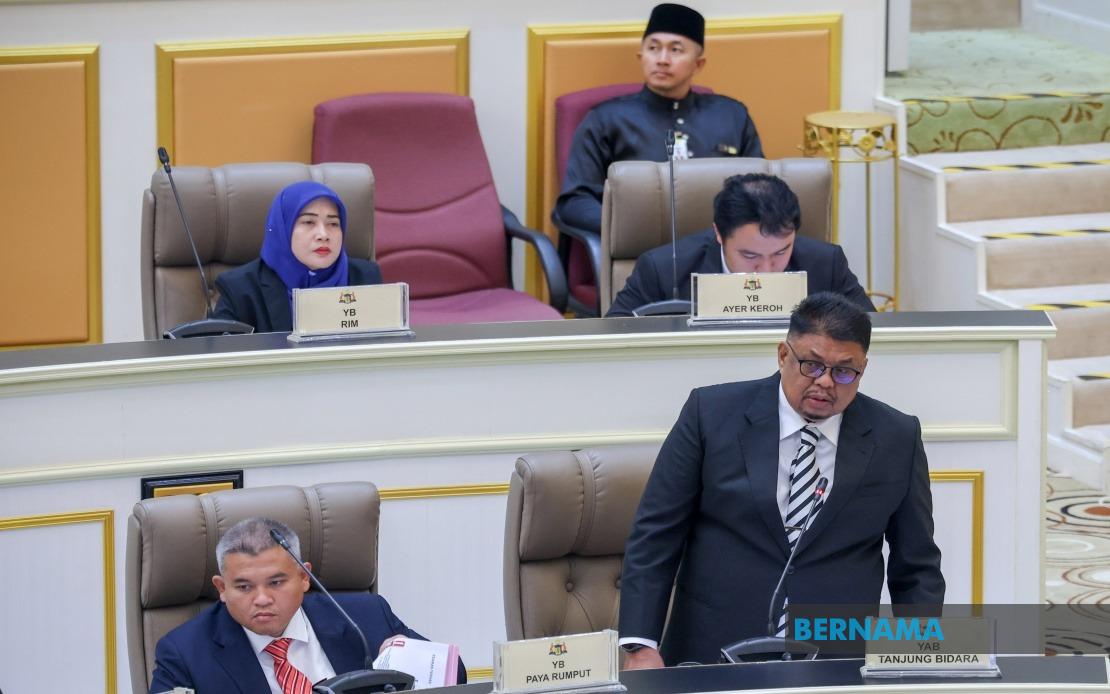
Melaka's State Legislative Assembly has taken a significant step in restructuring its governance framework by passing a constitutional amendment that will permit the appointment of nominated state assemblymen, a mechanism designed to supplement the body's electoral representatives with individuals possessing specialised knowledge and professional credentials. The Melaka State Constitution (Amendment) Bill 2026, which secured approval on July 14 with overwhelming legislative support, will enable the appointment of up to seven such members, marking a departure from the state's purely elected assembly structure and aligning with governance practices already established at the federal level.
The parliamentary session saw 23 assemblymen voting in favour of the amendment while five opposed it, reflecting broad consensus across much of the political spectrum on the merits of the proposal. Chief Minister Datuk Seri Ab Rauf Yusoh, who introduced the legislation alongside Senior State Executive Councillor Datuk Rais Yasin, articulated an expansive rationale for the change that extends well beyond simply filling legislative seats with technical experts. Rather, the amendment represents an attempt to fundamentally rebalance representation within the chamber by creating pathways for voices that may struggle to gain electoral traction yet possess valuable contributions to policymaking and public administration.
The government's stated intention centres on appointing individuals with demonstrated excellence in critical domains including law, economics, education, investment, technology and regional development. Such appointments, Melaka's leadership argues, would inject greater technical rigour into legislative deliberations, allowing the assembly to benefit from professional insights during debates on complex policy matters and bills that require specialist understanding. This approach echoes arguments made internationally regarding appointed second chambers or designated member positions, which proponents contend enhance legislative quality by combining electoral legitimacy with expert input.
Beyond the technical dimension, the amendment explicitly aims to broaden representational equity by creating dedicated pathways for constituencies historically disadvantaged in electoral politics. Women, young people, Orang Asli communities, religious and ethnic minorities, and industry professionals represent groups that the Melaka government identifies as potentially underrepresented in traditionally elected assemblies despite their capacity to contribute substantially to state development. By establishing a formal mechanism for their appointment, the state government seeks to instantiate diversity that might otherwise remain demographically absent from legislative benches.
The appointment mechanism also functions as a check-and-balance instrument within Melaka's legislative architecture. Nominated members, operating outside the electoral pressures that govern their elected counterparts, theoretically possess greater freedom to engage in dispassionate analysis of government proposals and administrative practices. This structural independence potentially strengthens parliamentary scrutiny by introducing voices insulated from partisan political considerations, enabling more objective evaluation of bills and policies affecting the state. The emphasis on this oversight function reveals how the amendment targets not merely diversity of background but diversity of institutional position.
Notably, opposition support materially strengthened the amendment's passage, with Melaka Opposition Leader Dr Mohd Yadzil Yaakub endorsing the legislation during assembly debates. The opposition's backing hinged on satisfaction that the amendment, if administered transparently and oriented toward genuine public interest, could substantially reinforce the state legislative institution. Dr Yadzil advanced the example of federal Dewan Negara appointments, where individuals recognised for expertise, professional achievement and national contribution participate in legislative processes without standing for direct election. This precedent, he suggested, demonstrated that appointed chambers could function legitimately within Malaysia's Westminster-derived constitutional framework when implemented with appropriate procedural safeguards and intellectual integrity.
The amendment's passage represents the culmination of commitments made during the 2021 Melaka state election, when Barisan Nasional incorporated this reform into its campaign platform under a broader political stability agenda. The five-year interval between electoral promise and legislative implementation underscores the lengthy process required for constitutional change, even within states where single coalitions command assembly majorities. The eventual realisation of this commitment demonstrates the persistence of reform-minded state administrations in pursuing structural institutional changes despite competing legislative priorities.
For Malaysian federalism more broadly, Melaka's amendment contributes to an evolving conversation regarding optimal legislative design and representative democracy within the country's decentralised framework. State governments increasingly experiment with mechanisms to enhance institutional legitimacy and functional effectiveness, with this appointment system representing one significant variation among Malaysia's thirteen states. The precedent established in Melaka may influence discussions within other state assemblies regarding their own representational structures, potentially triggering comparable constitutional amendments across different jurisdictions.
The amendment's practical implementation will prove crucial in determining whether appointed members genuinely enhance legislative quality or become vehicles for patronage and political reward. The transparency mechanisms governing appointments, the selection criteria applied, and the genuine independence granted to nominees will substantially influence the institution's trajectory. Melaka's commitment to these principles will be tested as the state government proceeds with its first appointments, establishing precedents that may either vindicate or undermine the amendment's theoretical objectives regarding expertise, diversity and institutional integrity.

