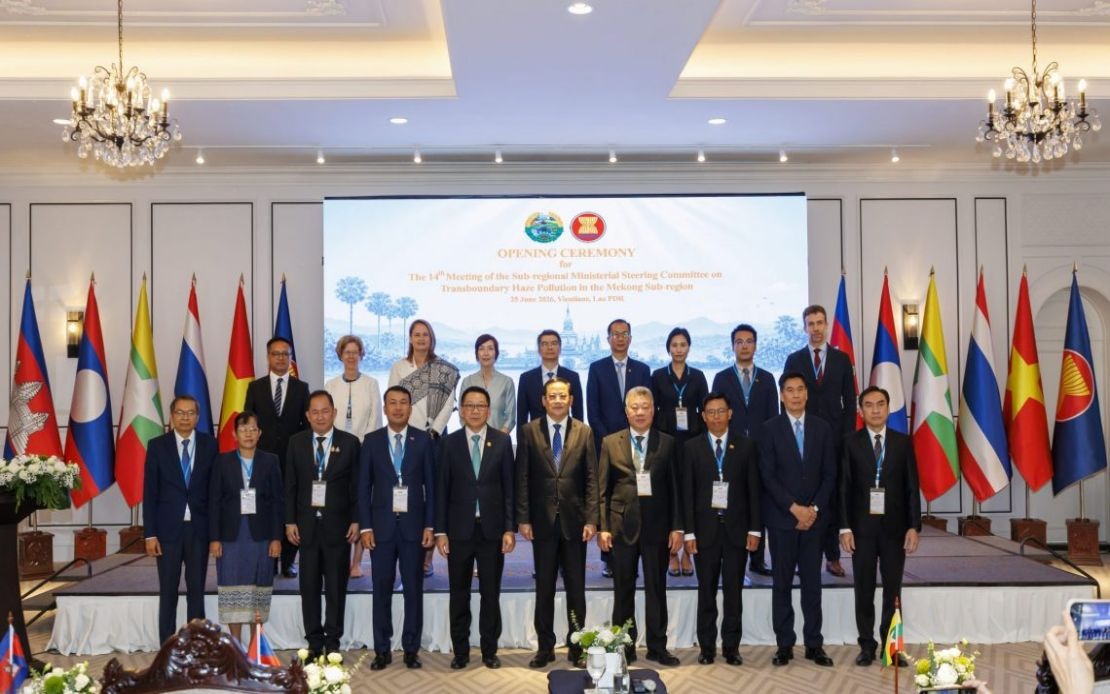
Policymakers across the Mekong subregion are bracing for a potentially severe haze crisis this year, stepping up diplomatic coordination to prevent a repeat of past environmental disasters that have devastated the region's air quality, agriculture, and public health. The warning comes amid mounting evidence that climate patterns and escalating temperatures are creating ideal conditions for widespread forest and peatland fires, with governments from Thailand to Vietnam already grappling with unseasonable heat waves despite the arrival of the monsoon season.
The heightened alarm was sounded during the 14th Meeting of the Sub-Regional Ministerial Steering Committee on Transboundary Haze Pollution in the Mekong Sub-Region, held on June 25 in Vientiane, Laos, where environment ministers and senior officials gathered to assess the deteriorating situation and coordinate preventative strategies. Lao Prime Minister Sonexay Siphandone provided a stark assessment during the meeting, cautioning that forest fires and resulting air pollution have become defining threats across the Greater Mekong Subregion, with cascading impacts on biodiversity loss, public health emergencies, and regional economic performance that cannot be ignored.
Statistical evidence of the worsening trend is undeniable. Between December 2025 and May 2026, the number of fire hotspots detected across the region climbed approximately eight percent compared to the identical six-month window in the previous year, according to statements released via the ASEAN Secretariat. This upward trajectory underscores how conditions are becoming increasingly conducive to fire ignition and spread, suggesting that without aggressive intervention, the coming months could prove particularly challenging for air quality management across multiple countries.
The climatic backdrop amplifies these concerns considerably. Major urban centres from Bangkok to Ho Chi Minh City are experiencing intense and prolonged heatwaves that defy seasonal expectations, with meteorologists attributing this phenomenon to the compound effects of long-term climate change superimposed with the developing El Niño weather pattern. The convergence of these two forces is unusual, as the rainy season typically provides some relief from extreme temperatures; instead, several parts of the region are encountering erratic precipitation, with some areas seeing unpredictable and inadequate rainfall that fails to provide the moisture needed to suppress fire risk.
The Lao Ministry of Agriculture and Environment has issued forward-looking projections that reflect serious concern about the near-term outlook. Temperature forecasts suggest that certain zones within the country could see peaks reaching between 35 and 38 degrees Celsius during the upcoming months, accompanied by highly irregular rainfall patterns, extended dry spells, and declining water availability in vulnerable regions. Such conditions create a perfect storm for environmental stress, potentially triggering a cascade of agricultural failures, livestock losses, acute water shortages, and uncontrollable wildfire scenarios that would overwhelm existing containment capacity.
Weather specialists have further amplified alarm by cautioning that atmospheric and oceanic indicators suggest the possibility of a Super El Niño event materialising within the calendar year, a scenario that would intensify every adverse factor already in play. A Super El Niño typically means warmer-than-normal waters across the tropical Pacific, atmospheric circulation changes that disrupt normal rainfall distribution, and a substantial probability of severe drought conditions across Southeast Asia. If such an event occurs during peak fire season, the consequences could rival or exceed the devastating 2015 haze crisis that affected hundreds of millions of people across Indonesia, Malaysia, and neighbouring countries.
Regional governments have responded to this mounting pressure by renewing and strengthening their collaborative commitments. During the Vientiane meeting, ASEAN member states formally pledged to intensify efforts to reduce fire hotspots and suppress transboundary haze pollution specifically during the high-risk dry seasons, signalling recognition that unilateral action by individual countries is insufficient given the transnational nature of smoke dispersal and fire dynamics. This diplomatic consensus represents an acknowledgment that preventing fires in one nation directly protects the air quality and public health of citizens in neighbouring countries.
For Malaysia and Singapore, which have historically borne the brunt of transboundary haze from Indonesian sources, the regional mobilisation offers both encouragement and ongoing uncertainty. Past episodes have demonstrated that even well-coordinated international efforts face enormous practical challenges in controlling fires across vast territories with limited enforcement resources and deep-rooted agricultural burning practices. The question of whether the current diplomatic momentum will translate into measurable on-the-ground improvements in fire suppression and prevention remains unresolved, particularly given the economic pressures on smallholder farmers and plantation operators who often resort to clearing fires during periods of financial stress.
The economic calculus of haze prevention is substantial. Transboundary air pollution episodes impose enormous costs on healthcare systems managing respiratory illnesses, transportation and logistics disruptions as visibility declines, agricultural losses from ash deposition and reduced sunlight, and tourism revenue collapses when air quality indices reach hazardous levels. A comprehensive assessment of 2015 haze impacts suggested economic losses exceeding US$30 billion across affected countries, a figure that underscores the massive financial incentive for regional investment in fire prevention and management infrastructure.
The urgency is further heightened by the reality that climate change is making the Mekong region structurally more vulnerable to fire risk. Rising baseline temperatures mean that the threshold for fire ignition is lower, dry seasons are becoming more pronounced, and the window of high fire danger is expanding. This creates a long-term challenge that transcends any single El Niño event or dry season, requiring sustained institutional investment in fire monitoring, early warning systems, and rapid response capacity that must persist regardless of which political parties hold office in individual countries.
Implementation challenges remain formidable. The coordination required to deploy fire suppression resources across borders, share real-time satellite data on hotspot detection, and enforce agricultural burning restrictions faces obstacles ranging from bureaucratic delays to divergent national environmental standards and competing resource allocation priorities. Smaller nations like Laos and Cambodia, which lack the fiscal resources of larger neighbours, may struggle to fund their share of regional initiatives while simultaneously managing domestic pressures to permit agricultural clearing that provides immediate livelihood income.
Looking forward, the Mekong region faces a critical test of whether its governments can translate diplomatic declarations into sustained operational commitment. The approaching months will reveal whether increased monitoring, enhanced regional coordination, and renewed pledges to reduce hotspots actually materialise in demonstrable improvements in fire management and air quality preservation, or whether systemic constraints and competing priorities once again allow transboundary haze to become a regional crisis affecting hundreds of millions of citizens across multiple countries.

