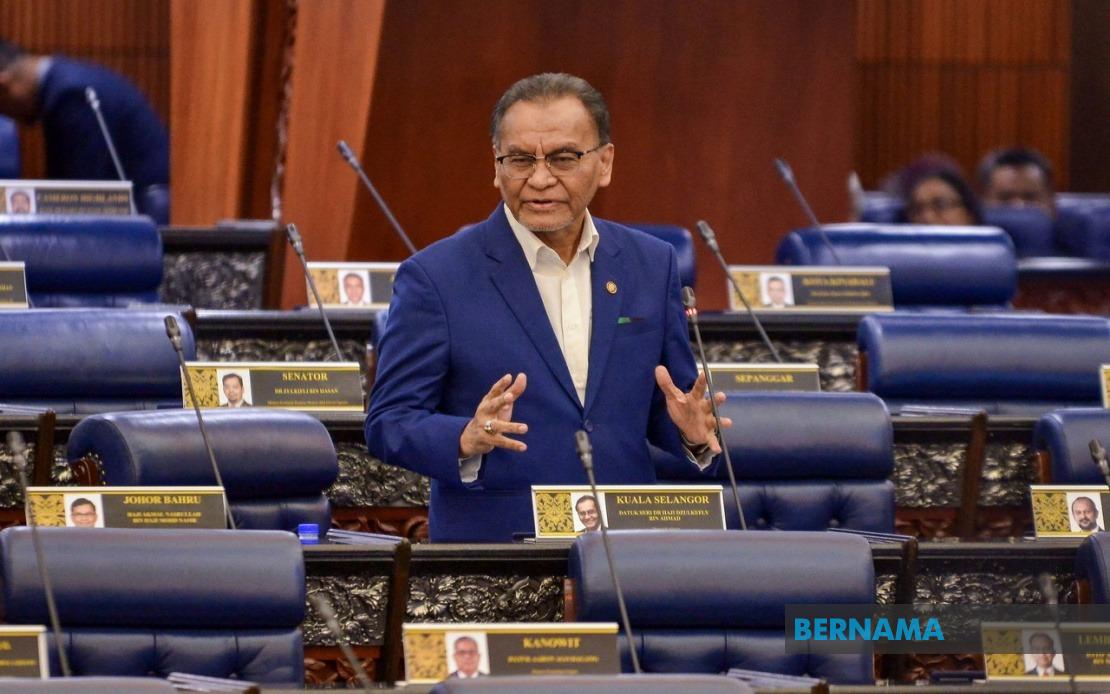
Health Minister Datuk Seri Dr Dzulkefly Ahmad has unveiled MediAsas as a cornerstone initiative to broaden healthcare protection for Malaysians in the M40 and B40 income brackets, positioning it alongside existing schemes designed to shield lower-earning households from ballooning medical costs. The announcement reflects growing government concern over private sector healthcare inflation and the resulting gaps in coverage for middle-income earners who often fall between subsidised public services and expensive private options. MediAsas represents one of several coordinated measures being deployed under the RESET framework to recalibrate how Malaysians access and pay for private medical care.
The MediAsas Plan operates as an insurance and takaful product structured around affordability as its defining characteristic. By anchoring premium rates to accessibility, the scheme aims to convert private healthcare from a luxury into a viable option for the M40 demographic—those earning between RM4,850 and RM10,959 monthly. Crucially, the product will progressively introduce Diagnosis Related Group-based payment mechanisms at participating private hospitals, a technical restructuring that encourages efficiency and cost containment throughout the supply chain rather than simply passing expenses to patients.
Implementation will occur in phases, beginning with a pilot rollout in the Klang Valley region before the month concludes. Six insurance and takaful providers will participate in this initial stage, allowing the government and insurers to test operational mechanisms, refine pricing models, and assess uptake patterns before the programme scales nationally from January 2027. This measured approach provides time to identify bottlenecks and adjust design elements based on real-world enrollment data.
The Health Minister stressed that MediAsas functions as a complement to rather than replacement for Malaysia's public healthcare infrastructure. This distinction matters because it signals that universal health coverage remains the cornerstone of national health policy, sustained through tax-funded public facilities. The public system continues to provide foundational protection for all citizens through 154 hospitals and over 3,000 public healthcare facilities nationwide. Rather than diminishing public healthcare, MediAsas expands the ecosystem by offering private coverage pathways for those who desire additional options or faster access to certain services.
For the B40 group, the government maintains dedicated protection through multiple channels. The Healthcare Scheme for the B40 Group, known as PeKa B40, remains active alongside the MADANI Healthcare Scheme and MySalam, creating overlapping safety nets that ensure lower-income households retain access regardless of private sector dynamics. This multi-layered approach acknowledges that income-stratified healthcare access requires tailored solutions rather than one-size-fits-all coverage.
The MediAsas initiative directly addresses challenges that the M40 segment faces navigating Malaysia's healthcare landscape. Members of this group frequently encounter obstacles with pre-existing condition exclusions from standard insurance products, insufficient coverage for non-communicable diseases, and limited mental health benefit provisions. By incorporating these considerations into MediAsas from inception, the government attempts to prevent the M40 from becoming medically vulnerable due to insurability gaps that plague conventional private insurance markets.
Interoperability of electronic medical records constitutes another pillar within the RESET framework supporting MediAsas's objectives. When hospitals share patient data seamlessly, duplicate testing and imaging decline substantially, reducing both costs and radiation exposure. This technical standardisation creates efficiency gains that benefit insurers through lower claim volumes while improving patient experience through streamlined care coordination. For a middle-income group conscious of spending, such waste reduction translates directly into premium affordability.
The restructuring of private hospital billing practices represents perhaps the most consequential element of RESET beyond MediAsas itself. By implementing standardised payment mechanisms tied to clinical procedures rather than facility-based charges, the government introduces price transparency and competitive pressure. Hospitals must justify service costs through evidence-based groupings, fundamentally altering the economics of private healthcare delivery and constraining the inflation that has rendered private insurance increasingly expensive for ordinary Malaysians.
Regional implications extend beyond Malaysia's borders, as neighbouring countries grapple with similar healthcare affordability crises. The MediAsas model—combining public-private collaboration, income-stratified design, and administrative innovation through electronic records—offers a template for Southeast Asian policymakers confronting rising non-communicable disease burdens and ageing populations. Thailand, Indonesia, and the Philippines all face comparable pressures to expand coverage while controlling costs, making Malaysia's experimental approach potentially instructive.
The timing of MediAsas aligns with broader MADANI framework objectives emphasising social protection and economic inclusion. By extending middle-income households access to quality private healthcare at manageable rates, the government strengthens social cohesion and reduces the financial catastrophe risk that medical emergencies pose to previously middle-class families. This prevents income-smoothing disruptions that cascade through communities when unexpected health crises deplete household savings.
Implementation success hinges on achieving critical mass among insurers, hospitals, and enrollees. Insurance companies must balance affordability with actuarial sustainability, avoiding adverse selection where only the sickest M40 members purchase coverage. Participating hospitals require confidence that DRG-based payments adequately compensate for services rendered. Without sufficient enrollment, however, neither insurers nor providers will commit resources, creating a coordination challenge that government facilitation must overcome during the pilot phase.
The MediAsas Plan ultimately reflects recognition that Malaysia's two-tier healthcare system—public for those who cannot afford private care, private for those who can—leaves the M40 stranded in an uncomfortable middle ground. By crafting an intermediate product that acknowledges their specific vulnerabilities and purchasing constraints, policymakers attempt to integrate this crucial segment into a more coherent national health protection architecture.

