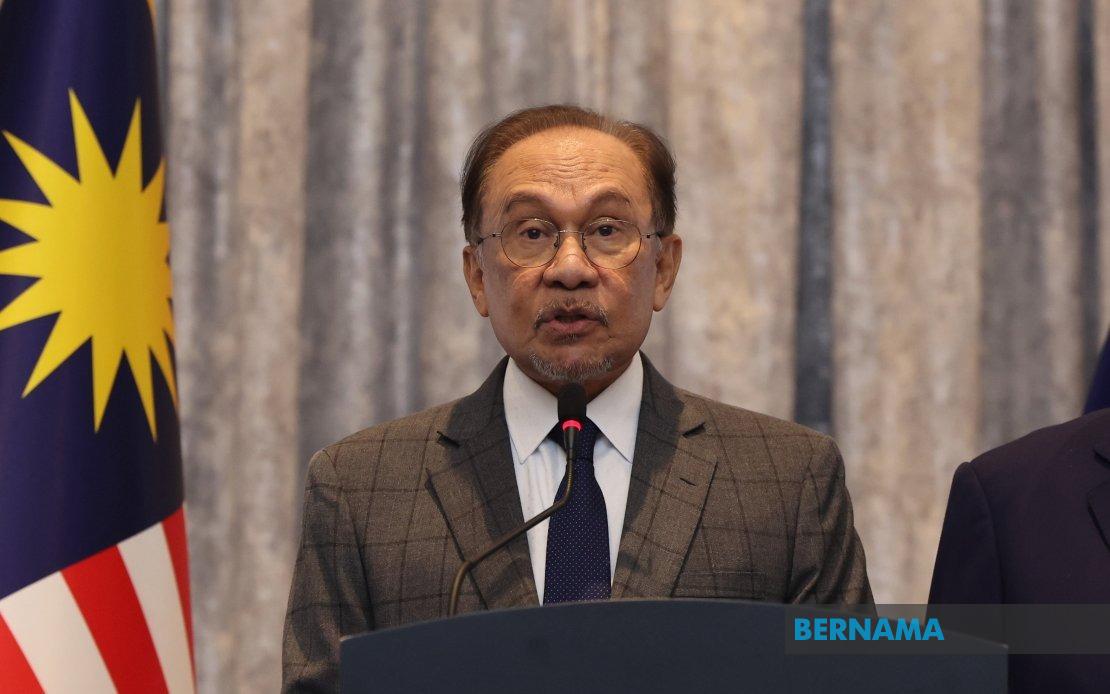
Prime Minister Datuk Seri Anwar Ibrahim has cautioned the Malaysian media industry against allowing the pursuit of technological progress to erode fundamental journalistic principles and cultural identity. Speaking at the Malaysian Press Night 2025 and Malaysian Press Institute-PETRONAS Journalism Awards 2026 ceremony in Kuala Lumpur on July 17, Anwar emphasised that while innovation in information technology, digital systems and artificial intelligence should be encouraged, these tools must remain anchored in ethical frameworks and national values. The reminder comes as newsrooms worldwide grapple with the dual challenge of modernising operations while maintaining editorial integrity under mounting commercial pressures.
The prime minister framed the issue as one of strategic importance for Malaysia's future trajectory. In an era when technological capability increasingly determines geopolitical influence, Anwar warned that complacency risked allowing Malaysia to drift toward frameworks shaped by external interests rather than domestic priorities. He pointed to historical precedent, noting how Western dominance of global media infrastructure has long enabled powerful nations to establish narratives aligned with their own strategic agendas. This historical pattern, he suggested, offers instructive lessons as the country navigates digital transformation at a moment when technological tools wield unprecedented influence over public discourse and perception.
Anwar drew a distinction between two forms of external control that threaten national autonomy. He characterised the first wave as overtly political and colonial in nature, whereas contemporary challenges operate through technological channels and often advance cultural or ideological values fundamentally misaligned with Malaysian society. This framework reflects growing concern across Southeast Asia about how digital platforms and artificial intelligence systems, typically designed and controlled by Western or Chinese entities, embed assumptions and values that may conflict with local democratic traditions and social cohesion. The term "captive mind," borrowed from Cold War discourse about information control, has thus evolved to describe how algorithmic systems and digital infrastructure can subtly shape public understanding without explicit coercion.
Communications Minister Datuk Seri Fahmi Fadzil and the Malaysian Communications and Multimedia Commission (MCMC) share governmental responsibility in supporting the media sector through this transition, according to Anwar. The prime minister indicated that his administration intends to remain receptive to industry perspectives and open to constructive criticism regarding technology policy and media regulation. This conciliatory stance reflects recognition that sustainable digital governance requires consensus-building across government, industry and civil society rather than top-down mandates. Anwar explicitly cautioned against allowing divisive approaches to dominate the policy landscape, framing media resilience as a matter of national unity.
The prime minister extended particular commendation to the Malaysian Press Institute, supported by PETRONAS, as well as the Malaysian Media Council, for their efforts to foster media innovation and institutional reform. These organisations are working to develop frameworks that allow Malaysian news organisations to adopt emerging technologies without becoming intellectually or editorially beholden to foreign narrative templates. Such initiatives gain urgency as newsrooms experiment with artificial intelligence for editorial tasks, algorithmic content distribution and data analysis. Without deliberate institutional safeguards, Anwar implied, adoption of these tools could inadvertently transform the nature of journalism itself in ways that diminish local agency and distinctive Malaysian perspectives.
The timing of Anwar's remarks reflects broader regional anxieties about technology governance. Across Southeast Asia, policymakers increasingly recognise that digital infrastructure decisions made today will shape information environments for decades. Malaysia's strategic position as a multicultural, multiethnic democracy makes the challenge particularly acute. Social cohesion depends partly on public trust in domestic media institutions to reflect the complexity of Malaysian society with fairness and nuance. If algorithmic systems and digital platforms are configured according to foreign design principles, they risk fragmenting that fragile consensus through polarisation algorithms optimised for engagement rather than understanding.
Anwar's comments also implicitly acknowledge the economic pressures facing traditional newsrooms. As advertising revenue has migrated to digital platforms controlled by international tech companies, Malaysian news organisations have faced mounting financial constraints. This economic squeeze can create incentives to prioritise technological adoption for efficiency gains without adequately considering downstream implications for editorial independence or journalistic quality. The prime minister's emphasis on maintaining values suggests recognition that short-term efficiency gains achieved through unreflective technology adoption could undermine the long-term legitimacy and social utility of the press itself.
The prime minister thanked journalists for continuing to uphold democratic principles through substantive reporting, critical analysis and constructive recommendations to government. This acknowledgment of the press's democratic function represents an important statement at a moment when tension between government and media institutions periodically surfaces in Malaysian politics. By publicly recognising journalism's essential role, Anwar signalled that technological modernisation should enhance rather than diminish the press's capacity to serve its watchdog and informational functions. The distinction matters because some technology implementations, particularly those emphasising speed and engagement metrics, can actually degrade the investigative and analytical depth that distinguishes quality journalism.
The ceremony also highlighted institutional commitments to journalistic excellence and reform. The Malaysian Press Institute and PETRONAS Journalism Awards 2026, joined by the Malaysian National News Agency (Bernama), represent infrastructure designed to maintain professional standards and recognise outstanding work in the field. Such institutional mechanisms become especially valuable during periods of technological disruption, when professional norms can become diffuse. By continuing to identify and celebrate exemplary journalism, these organisations help establish and maintain standards that persist even as the technological tools and distribution channels for news continue evolving.
For Malaysian readers and the broader Southeast Asian media landscape, Anwar's intervention carries several implications. First, it signals that Malaysia's government recognises technology governance as a strategic priority equivalent to defence or economic policy. Second, it reflects acknowledgment that media institutions require active support and policy attention to remain resilient and autonomous during technological transitions. Third, it frames digital nationalism not as isolationism or technophobia, but as intentional stewardship ensuring that technological adoption serves Malaysian democratic and social values rather than external agendas. This positioning may influence how regional neighbours approach similar challenges, particularly other ASEAN members navigating comparable pressures around media autonomy and digital governance.

