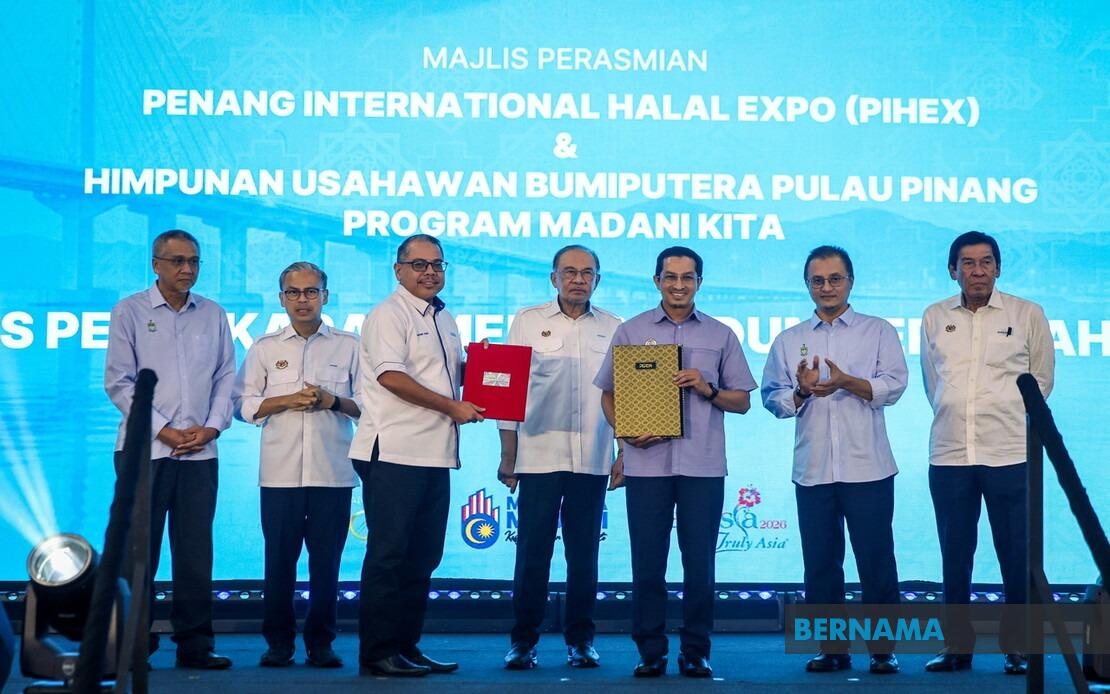
The Malaysian Communications and Multimedia Commission has entered uncharted territory by partnering with Penang Halal International to deliver the MADANI Kita Programme during the Penang International Halal Expo 2026. This marks the first collaborative deployment of the whole-of-government initiative through NADI, the National Information Dissemination Centre, creating what organisers describe as a centralised hub where citizens and business operators can access federal services under a single venue. Held at Seberang Perai Polytechnic from July 24 through July 25, the programme gained momentum when Prime Minister Datuk Seri Anwar Ibrahim formally opened proceedings, with Communications Minister Datuk Seri Fahmi Fadzil and MCMC chairman Tan Sri Mohamad Salim Fateh Din in attendance.
The MADANI Kita Programme operates as a coordinated initiative steered by the Performance Acceleration Coordination Unit within the Prime Minister's Department. Its fundamental architecture rests on consolidating multiple government touchpoints—typically scattered across different agencies and locations—into an accessible, user-centric ecosystem. This methodology recognises a persistent challenge in public administration: citizens often navigate bureaucratic fragmentation, requiring multiple visits to various offices to complete related transactions or gather information. By hosting federal ministries and agencies simultaneously, the programme attempts to dissolve these inefficiencies while maintaining service quality standards.
The strategic alignment between MCMC and Penang Halal International signals how government agencies increasingly view thematic expos and industry gatherings as platforms for citizen engagement. The halal sector commands substantial economic weight in Malaysia and across Southeast Asia, with the Penang International Halal Expo attracting considerable commercial interest. Embedding the MADANI Kita Programme within this environment positions government services alongside commercial and entrepreneurial activity, potentially widening the demographic reach beyond traditional government service users.
Offerings at the venue span health screenings provided by relevant medical agencies, Rahmah Sales initiatives addressing cost-of-living pressures, and Agro MADANI Sales promoting agricultural products and support schemes. Multiple government agency booths occupy the space, supplemented by community service representatives. These components collectively attempt to address varied citizen priorities, from wellness and nutrition to economic opportunity and agricultural productivity, all within a single expedition.
The programme incorporates technological dimensions through NADI's E-Sports MADANI Legend competition and complimentary Wi-Fi accessibility via NADI On Wheels infrastructure. These elements serve multiple purposes: they attract younger demographics who might otherwise show limited interest in government services, establish digital engagement pathways reflecting Malaysia's ongoing technology adoption drive, and test innovative delivery mechanisms that could inform future government service design.
Digital inclusion forms a strategic underpinning for this collaboration. Malaysia's economic transformation increasingly depends on broadening technology adoption across regions and demographic segments. By coupling government service accessibility with digital infrastructure and e-sports engagement, MCMC and PHI position technology not as an abstract aspiration but as a practical tool embedded within immediate utility. This approach mirrors how successful digital initiatives globally have leveraged entertainment and convenience alongside civic functionality.
The partnership demonstrates MCMC's expanded conception of its institutional role. Traditionally viewed primarily through a telecommunications and broadcast regulation lens, the commission has positioned itself as a moderniser of citizen-government interaction. This repositioning aligns with broader administrative reform priorities articulated through Malaysia MADANI, the governing framework emphasising democratic values, enhanced public service, and inclusive development.
For Penang specifically, hosting this integrated programme during a major halal expo reinforces the state's positioning as an economic and administrative hub. The arrangement generates comparative advantage by concentrating government capacity during high-traffic commercial events, maximising public awareness of available support mechanisms while minimising organisational duplications. This model potentially establishes replicable methodology for other expos, fairs, and public gatherings across the region.
The collaboration's emphasis on supporting local economic development extends beyond immediate service delivery. By situating agricultural sales initiatives, entrepreneurial support, and community services alongside commercial expo activity, the programme facilitates organic networking between government support mechanisms and private enterprise. Entrepreneurs encountering Agro MADANI schemes or community business support may establish longer-term relationships with government facilitators, potentially stimulating rural and small-business sector development.
MCMC's stated commitment to strategic partnerships reflects recognition that government effectiveness increasingly depends on institutional coordination beyond traditional hierarchies. By collaborating with Penang Halal International, a sector-specific organisation, MCMC acknowledges that thematic expertise and commercial networks held by industry bodies enhance public service relevance and accessibility. This approach invites similar partnerships across other sectors—technology, manufacturing, services—potentially transforming how government agencies conceptualise and deploy resources.
The PIHEX 2026 deployment occurs within Malaysia's broader digitalisation agenda and post-pandemic reckoning regarding service delivery. The COVID-19 pandemic exposed vulnerabilities in government responsiveness and accessibility, spurring renewed focus on integrated, efficient mechanisms. Initiatives like MADANI Kita represent institutional evolution responding to these pressures while simultaneously addressing pre-existing structural inefficiencies in citizen-government interaction.
Regional implications deserve consideration. Southeast Asian governments collectively grapple with extending effective public services across geographically dispersed and economically diverse populations. Malaysia's experimentation with integrated service delivery models, particularly when coupled with digital infrastructure and coordinated private-sector participation, generates lessons potentially adaptable across ASEAN. The emphasis on whole-of-government coordination reflects challenges recognised across the region's developmental agenda.

