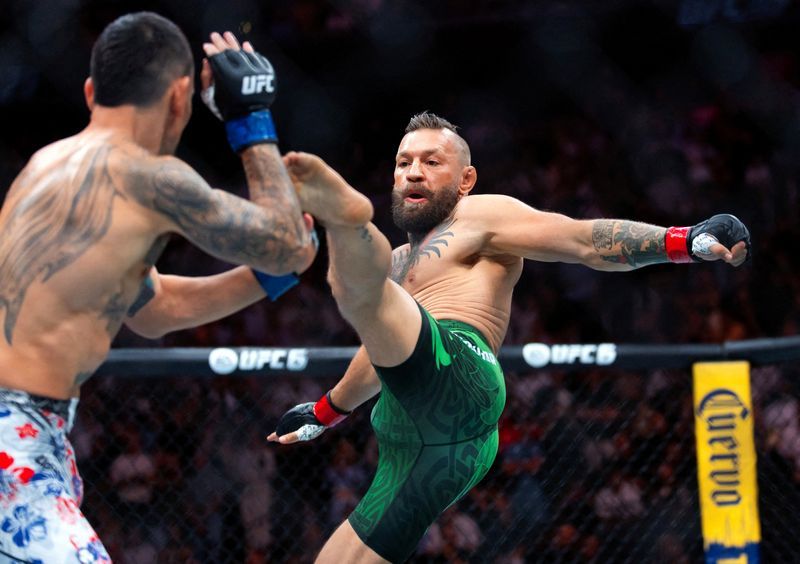
Conor McGregor's much-publicized return to mixed martial arts competition has been derailed once again, this time within the opening minute of his fight against Max Holloway on Saturday in Las Vegas. The Irish fighter suffered a knee injury barely over a minute into the bout after landing awkwardly during an attempted jump kick, forcing him to withdraw from the contest. Despite brief attempts to continue, McGregor signalled to the referee that he was unable to proceed, bringing an abrupt end to what had been a heavily anticipated comeback event.
The 37-year-old former two-weight champion announced his surgical plans and determination to fight again through a social media post on Monday, signalling an optimistic outlook despite the setback. In an Instagram message laden with religious references, McGregor outlined his intended recovery trajectory, including surgery, preparatory rehabilitation work, and a gradual return to martial arts training. He also referenced a final contractual obligation, suggesting that another bout remains on his agreement with the promotion.
McGregor's career has become defined by a troubling pattern of interruptions extending beyond the octagon. The fighter's recent history reveals a succession of obstacles that have prevented sustained competition, creating considerable frustration among fans and promoters alike. Over the past five years, injuries, personal controversies, and regulatory matters have conspired to fragment his competitive timeline, making consistent title contention increasingly difficult.
The injury that ended Saturday's bout recalled McGregor's previous serious damage when he fractured his leg during a bout with Dustin Poirier approximately five years prior. That injury required an extended rehabilitation period and set the stage for subsequent booking challenges. Last year, McGregor had been scheduled to face Michael Chandler in June 2024, but that engagement collapsed when he sustained a broken toe during training sessions, demonstrating how even preparation-phase mishaps can derail his schedule.
Beyond physical injuries, McGregor has contended with severe legal and regulatory complications that have complicated his comeback attempts. In an Irish civil court proceeding, a jury determined in 2024 that the fighter bore liability regarding allegations of sexual assault against Nikita Hand dating to 2018. This civil determination added another dimension of complexity to his already troubled return timeline.
Additionally, McGregor faced a regulatory sanction from the Combat Sports Anti-Doping authority in October 2025 after missing three scheduled sample collection attempts during 2024. The resulting 18-month suspension, though backdated to March, represented another administrative barrier to his competitive participation. Such whereabouts violations underscore broader concerns about his commitment to testing protocols during the extended hiatus that has characterized his recent years away from active competition.
For Malaysian and Southeast Asian mixed martial arts enthusiasts, McGregor's ongoing struggles present a cautionary narrative about the vulnerability of even elite athletes when confronted with a convergence of physical injuries, legal entanglements, and regulatory compliance issues. The sport has expanded considerably across the region, with growing audiences and emerging talent pools creating genuine local interest in major international events. McGregor remains one of the promotion's most recognizable and commercially significant athletes globally, making his availability and competitive status matters of genuine broadcast and commercial importance.
The fighter's path forward appears uncertain despite his publicly stated confidence. Recovery from knee injuries typically requires substantial rehabilitation timeframes, and at 37 years old, McGregor faces biological realities that younger competitors might navigate more readily. Whether his contracted final bout materializes depends not only on successful surgery and physical rehabilitation but also on sustained compliance with anti-doping protocols and the absence of additional unforeseen complications.
McGregor's situation also highlights the increasingly complex landscape facing elite combat sports athletes, where regulatory frameworks, civil legal exposure, and physical conditioning must all align for competitive participation to proceed. His repeated postponements and cancellations have had ripple effects throughout the promotion's scheduling apparatus, affecting other fighters and venue planning. The industry requires predictability and consistent access to marquee talent to maintain broadcast partnerships and ticket sales across multiple global markets.
Looking ahead, observers will monitor McGregor's recovery trajectory closely. If surgical repair proceeds successfully and rehabilitation advances according to timeline, a return to training and eventual competition remains theoretically possible. However, his demonstrated vulnerability to seemingly minor injuries—such as the broken toe that cancelled his Chandler engagement—suggests that even careful preparation cannot guarantee uninterrupted progress toward competition.
The coming months will prove decisive in determining whether McGregor can finally achieve the sustained comeback that has eluded him for years. His expressed commitment to surgery, rehabilitation, and returning to martial arts training reflects at least surface-level determination, yet his track record suggests that numerous obstacles could still intervene between intention and execution. For the broader mixed martial arts community, and particularly for Southeast Asian audiences increasingly invested in the sport, McGregor's next chapter will warrant close attention.

