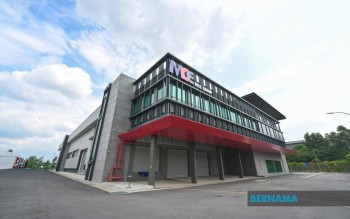
MCE Holdings Bhd marked a significant milestone in Malaysia's automotive manufacturing landscape by formally launching the MCE Auto Hub, a RM50 million advanced facility nestled within the UMW High Value Manufacturing Park in Serendah, Hulu Selangor. The launch, officiated by Investment, Trade and Industry Minister Datuk Seri Johari Abdul Ghani, represents a major vote of confidence in Malaysia's capabilities as a hub for sophisticated automotive electronics manufacturing and positions the company as a key player in the region's transition towards next-generation mobility solutions.
The 5.52-hectare MCE Auto Hub represents merely the opening chapter of an ambitious corporate strategy, as the company has committed to a longer-term investment pipeline of up to RM200 million. This phased expansion approach underscores MCE's confidence in Malaysia's market fundamentals and its ability to attract and retain high-value manufacturing operations. The immediate impact of the facility becoming operational is substantial: MCE's production capacity will more than double, enabling the group to respond to accelerating demand for automotive electronics across internal combustion engine and electric vehicle segments.
MCE has established itself as a formidable Malaysian tier-1 automotive electronics supplier over more than thirty years of continuous operation. The company began its industrial journey in 1990 with a contract to supply remote alarms and central locking systems to the domestic market—a modest foundation that has evolved into a comprehensive capability spanning original equipment manufacturing and original design manufacturing services. This trajectory reflects not merely commercial success, but a deliberate strategy of technological upgrading and skill accumulation that mirrors Malaysia's broader aspirations in advanced manufacturing.
The MCE Auto Hub has been engineered as an Industry 4.0-ready manufacturing environment, incorporating clean room production areas and precisely controlled manufacturing conditions essential for cutting-edge automotive electronics. This design philosophy acknowledges the reality that modern automotive electronics demand manufacturing standards comparable to semiconductor fabrication facilities. The facility's architecture enables MCE to support increasingly complex programmes for both traditional internal combustion powertrains and the emerging electric vehicle segment, a dual capability that positions the company as a versatile partner during an industry transformation period.
With the MCE Auto Hub now operational, the company's workforce has expanded to 680 employees distributed across its facilities in Johor Bahru, Port Klang, and Serendah. More significantly, the group has assembled an engineering cohort of 90 specialists, a concentration of technical talent that amplifies MCE's ability to undertake sophisticated design, development, and manufacturing activities. This emphasis on engineering depth rather than mere production volume reflects a deliberate positioning strategy—MCE is building capability to serve not just as a contract manufacturer, but as a solutions partner capable of contributing to product innovation.
Minister Johari's remarks at the launch emphasised the broader significance of MCE's investment beyond the company itself. He framed the project as evidence of renewed confidence in Malaysia's automotive sector and highlighted the necessity for local suppliers to maintain competitive advantage through manufacturing excellence, engineering expertise, and technological innovation. This positioning is crucial because Malaysia faces intensifying competition from Thailand, Vietnam, and Indonesia for regional automotive manufacturing investments, particularly as global automakers reassess supply chain configuration in response to geopolitical uncertainties and the accelerating shift towards electrification.
MCE group managing director Dr Goh Kar Chun articulated a vision of progressive technological sophistication, tracing the company's evolution from traditional automotive components into advanced electronics and mechatronic solutions. Crucially, Goh emphasised that MCE now serves customers across Malaysia, the broader ASEAN region, and the United States—a geographic footprint reflecting the company's integration into complex global automotive supply networks. The MCE Auto Hub, in this narrative, represents not an insular domestic investment but a facility designed to strengthen Malaysia's position within interconnected international automotive ecosystems.
A critical dimension of MCE's strategy centres on supporting Malaysia's localisation objectives within the automotive industry. The company recognises that future competitiveness depends upon developing comprehensive local supply chains rather than importing finished components or intermediate assemblies. By strengthening MCE's design and manufacturing capabilities, the facility creates pathways for Malaysian engineers, technology enterprises, and suppliers to participate in the conception, development, and production of advanced automotive technologies domestically. This approach aligns with government policy priorities aimed at elevating Malaysia's role from assembly location to innovation contributor.
Dr Goh articulated an ecosystem perspective that transcends MCE's individual corporate interests. He advocated for closer collaboration between automotive original equipment manufacturers, tier-1 suppliers like MCE, and complementary Malaysian technology providers in semiconductors and electrical and electronics manufacturing. This collaborative framing recognises a fundamental reality: Malaysia's automotive competitiveness cannot be sustained through isolated corporate excellence but requires coordinated capability development across multiple nodes of an integrated value chain. The MCE Auto Hub becomes, from this perspective, a catalyst for ecosystem strengthening rather than merely a company facility.
The MCE Auto Hub will function as the group's primary manufacturing and engineering headquarters, consolidating design, development, and production activities for high-value automotive electronics and mechatronic solutions destined for domestic, regional, and international customers. This consolidation differs markedly from distributed manufacturing models, as it concentrates technical expertise and advanced equipment at a single location—a decision that reflects confidence in Serendah's operational environment and positioning within Malaysia's industrial geography. The facility's location within the established UMW High Value Manufacturing Park provides access to supporting infrastructure and proximity to other automotive sector participants.
Malaysia's automotive industry faces a consequential transition period as global electrification momentum accelerates and supply chain reconfigurations reshape competitive dynamics. MCE's RM50 million investment, and the broader RM200 million capital commitment it represents, signals that Malaysian enterprises perceive substantial opportunity within this transformative environment. The company's emphasis on engineering capability, advanced manufacturing technology, and ecosystem participation reflects a sophisticated understanding that surviving and prospering in automotive electronics manufacturing requires continuous technological advancement and integration into global innovation networks—not merely cost-based competition.

