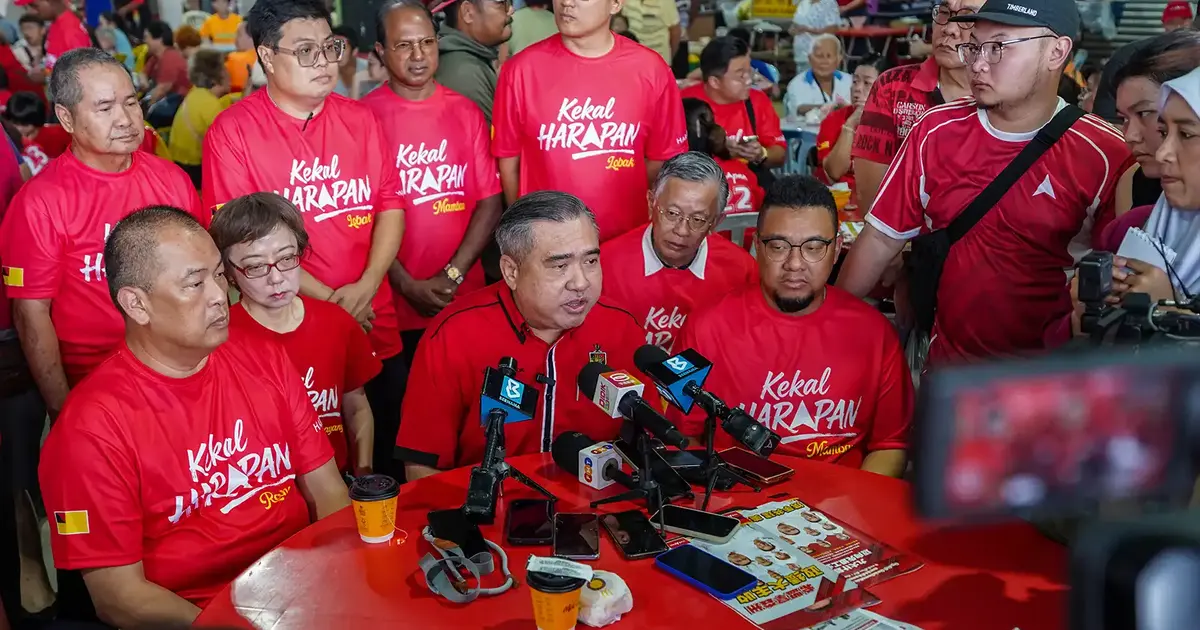
DAP secretary-general Loke Siew Fook has characterised the Malaysian Chinese Association as the primary casualty of a bargain struck between Barisan Nasional and Perikatan Nasional in Negeri Sembilan, claiming the coalition partner surrendered control of three traditionally held constituencies as part of a grand deal to simplify the electoral landscape. The arrangement, designed in theory to eliminate the prospect of three-way contests that could splinter opposition votes, appears to have backfired when Bersatu declined to honour the terms agreed upon.
The reallocation of constituencies represents a meaningful shift in the political geography of Negeri Sembilan, where MCA has long maintained a foothold. By stepping aside from three seats where the party historically possessed electoral advantages, MCA positioned itself as the architect of a compromise meant to strengthen Barisan Nasional's overall competitiveness against fragmented opposition forces. The strategy reflected broader coalition mathematics whereby established parties would sacrifice individual seat allocations to prevent scenarios where vote splitting might benefit neither coalition partner.
However, Loke's critique goes beyond mere political commentary. His assertion that MCA emerged as the "biggest loser" signals a perception within the DAP leadership that the Chinese-based coalition party received inadequate compensation for its concessions. This perspective carries weight in Malaysian political discourse, where seat allocation remains a highly sensitive indicator of a party's standing within larger coalitions. The optics of MCA surrendering three constituencies without reciprocal guarantees underscore deeper tensions within the Barisan Nasional framework itself.
The involvement of Perikatan Nasional in this arrangement introduces another layer of complexity to the Negeri Sembilan political equation. As a relative newcomer to state-level coalition arrangements, Perikatan Nasional's presence alongside the traditionally dominant Barisan Nasional created potential friction points over seat distribution. Bersatu, the primary component of Perikatan Nasional, has demonstrated in other state contexts a willingness to pursue independent pathways when coalition deals prove unfavourable, a pattern evident in its behaviour during the Negeri Sembilan negotiations.
The Bersatu factor explains why the carefully constructed arrangement collapsed or faced significant revision. Rather than adhering to the framework that had prompted MCA to vacate three seats, Bersatu evidently pursued its own electoral ambitions without maintaining the agreed-upon constraints. This departure from established terms left MCA in a peculiar position: having already conceded territory in anticipation of a stable coalition arrangement, only to find that stability evaporating as coalition partners pursued divergent strategies.
From a Malaysian political perspective, the Negeri Sembilan situation illuminates broader patterns affecting component parties within large coalitions. Barisan Nasional has historically functioned through elaborate power-sharing arrangements that allocate seats based on historical performance, demographic composition of constituencies, and inter-party negotiations. The introduction of Perikatan Nasional as a coalition partner complicates these established formulas, as newer players lack the institutional memory and cross-party relationships that govern traditional allocations within Barisan Nasional.
MCA's predicament also reflects the party's evolving position within Malaysian politics. The Malaysian Chinese Association, traditionally the primary vehicle for ethnic Chinese political representation within the ruling coalition, has witnessed gradual electoral decline over successive election cycles. Accepting reduced seat allocations in state elections like Negeri Sembilan represents a pragmatic acknowledgment of these demographic and political realities. Yet when such concessions fail to produce compensatory benefits—such as coalition unity or heightened chances of electoral victory—the party's leadership faces domestic pressure to justify the compromise to party members and community stakeholders.
Loke's public articulation of MCA's disadvantage serves multiple purposes within the Malaysian political system. For the DAP, it reinforces the party's opposition credentials by highlighting fractures and contradictions within the ruling coalition. For MCA members and supporters, Loke's commentary underscores the challenges of coalition participation, potentially strengthening arguments within MCA for more assertive negotiating positions in future arrangements. The timing and tone of such criticism also signals to political observers how various opposition parties perceive weakness or opportunity within the government coalition structure.
The Negeri Sembilan arrangement ultimately demonstrates that seat allocation negotiations in Malaysian politics remain fluid and unpredictable, particularly when multiple coalitions with divergent institutional histories attempt to coordinate. The multi-cornered fight strategy that prompted MCA's initial sacrifice depended on strict adherence to agreed boundaries, yet Bersatu's apparent willingness to ignore these constraints suggests that newer political players operate according to different decision-making calculus than established Barisan Nasional components.
For political observers across Southeast Asia monitoring Malaysian developments, the MCA-Negeri Sembilan situation offers insights into how coalition arrangements function under stress. It illustrates that even carefully negotiated deals can fracture when one party perceives greater advantage in breaking established terms. It also reveals how established component parties within large coalitions must continually renegotiate their positions as new players enter the system and old electoral patterns shift.
Moving forward, the Negeri Sembilan precedent may influence how MCA approaches future coalition agreements. The party may demand stronger enforcement mechanisms or reciprocal guarantees before again relinquishing seats to coalition partners. Alternatively, MCA leadership might use the situation to justify closer coordination with other component parties, building stronger internal coalition discipline against partners like Bersatu that prove unreliable. Either way, the episode reinforces that Malaysian political coalitions remain works in constant progress, requiring perpetual negotiation and adaptation.

