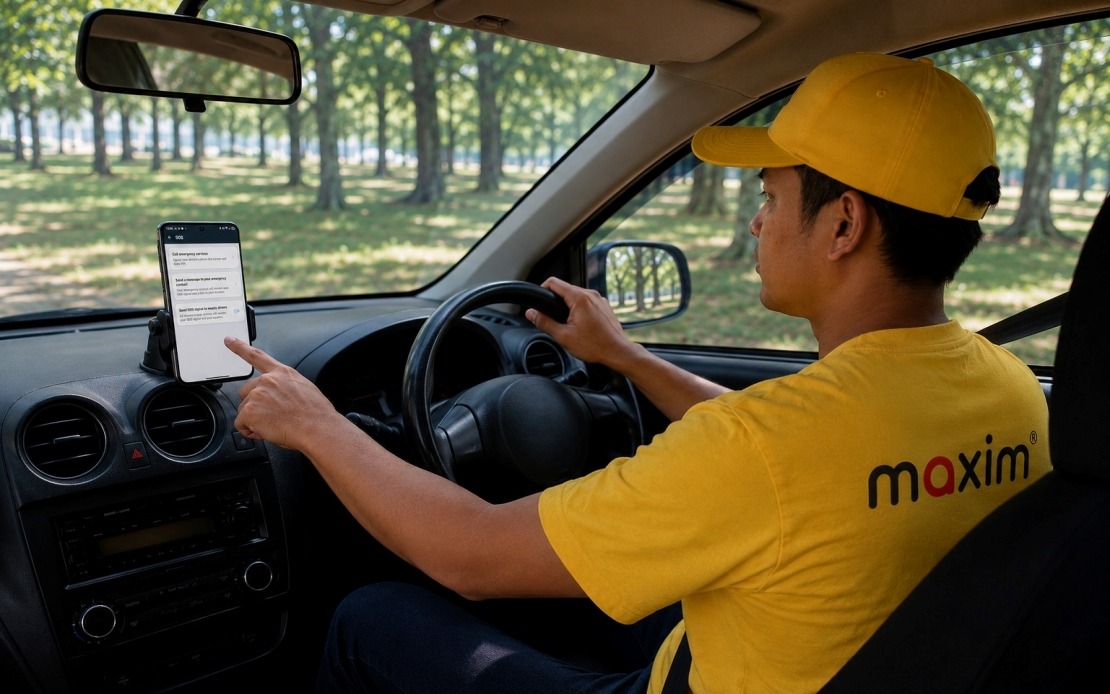
Ride-hailing platform Maxim Malaysia has significantly strengthened its commitment to user safety by deploying a comprehensive upgrade to its emergency response capabilities. The initiative, unveiled on July 13, introduces a standardised SOS system accessible to both passengers and driver-partners, fundamentally reshaping how both groups access assistance during critical moments on Malaysian roads. The enhancements represent a strategic response to growing safety concerns within the gig economy transportation sector across Southeast Asia, where users increasingly demand faster, more reliable emergency protocols integrated directly into their mobility apps.
The centrepiece of the upgrade is a redesigned SOS button that operates with significantly improved response times and reliability compared to its predecessor. Unlike traditional single-button emergency systems that typically route users to a single predetermined contact or service, this new iteration grants users immediate flexibility in choosing whom to alert first when facing danger. The button functionality works identically for passengers and drivers, ensuring consistency across the platform and reducing confusion during high-stress situations when users must act quickly.
A distinctive feature of the system allows users to simultaneously notify up to three emergency contacts through a single action. Upon activation, these designated individuals receive text messages containing the user's precise GPS coordinates and a live link enabling real-time trip tracking. This design proves particularly valuable in Malaysia's varied geographic and communication landscape, where internet connectivity fluctuates significantly between urban centres and rural areas. The SMS-based notification mechanism ensures alert delivery persists even when data connections falter, addressing a genuine infrastructure challenge affecting many Southeast Asian users who operate in areas with spotty network coverage.
For professional drivers on the Maxim platform, the company has introduced a specialised Driver Alert System designed to create informal support networks across the road network. When a driver-partner activates the emergency alert, the system broadcasts details about the incident type and precise location to all other Maxim drivers operating within a three-kilometre radius. This crowdsourced safety model leverages the platform's existing driver base as a distributed emergency response resource, enabling faster initial assistance before formal emergency services arrive. The approach reflects growing recognition within the ride-hailing industry that peer support networks can meaningfully reduce response times in congested urban environments or remote areas where traditional ambulance services face longer delays.
Mohd Hazwan Musli, Maxim Malaysia's director, framed the enhancements as a philosophical shift toward user autonomy in emergency response. Rather than imposing a single standardised alert protocol, the upgraded system recognises that different emergencies demand different response strategies. A medical crisis might prioritise contacting family members and professional emergency services simultaneously, while a vehicle breakdown might benefit from immediate assistance from nearby drivers. By collapsing the decision-making process into a few seconds of app interaction, the system eliminates time-consuming deliberation during moments when every second carries genuine consequences for safety outcomes.
The technical architecture supporting these features incorporates modern encryption protocols ensuring all data transmitted through the SOS function, Driver Alert System, and associated trip-sharing features remains protected from unauthorised access. Maxim has implemented security standards that restrict decryption capabilities to authorised security personnel and relevant government authorities operating under established legal procedures. This approach attempts to balance legitimate safety imperatives with privacy protections, though the specifics of data-sharing arrangements with Malaysian law enforcement remain undefined in the company's public statements.
Passengers gain access to complementary safety tools including a secure in-app messaging system designed to prevent fraud, comprehensive internal trip monitoring that tracks essential journey parameters, and GPS tracking embedded within every transaction. The platform's Trip Sharing feature allows passengers to instantly generate a live tracking link sent to family members or friends immediately upon entering the vehicle. This capability addresses a longstanding passenger safety concern in the ride-hailing sector: the difficulty of letting trusted contacts know one's real-time location without manual, ongoing communication that distracts from route monitoring.
The initiative arrives as ride-hailing services across Malaysia and Southeast Asia face intensifying pressure to strengthen safety infrastructure. High-profile incidents involving passenger assault, driver robbery, and accidents have periodically prompted regulatory scrutiny and public demands for enhanced protective measures. Maxim's investment in this upgrade suggests the company views safety investment as both a moral imperative and a competitive differentiator in a market where passenger and driver confidence directly correlates with platform adoption rates.
The implementation of these features across Malaysia's diverse geographic, economic, and infrastructure landscape presents ongoing challenges. Urban areas with robust internet connectivity will fully leverage all system capabilities, while more remote regions may rely primarily on SMS-based emergency alerting. Maxim's explicit design choice to ensure functionality under poor connectivity conditions acknowledges this reality, though whether the three-kilometre radius for driver alerts extends meaningfully into rural areas remains uncertain given lower driver density in such regions.
The upgrade also reflects broader industry trends toward standardising emergency response features across competing platforms. As regulatory bodies in Malaysia and throughout Southeast Asia develop frameworks governing ride-hailing safety standards, companies that proactively implement robust systems create precedents influencing eventual regulatory requirements. Maxim's decision to equalise safety features between passengers and drivers suggests recognition that both groups face genuine risks and deserve equivalent protective infrastructure, a stance that challenges historical assumptions portraying drivers primarily as service providers rather than vulnerable workers.
Longer-term implications for Malaysian users extend beyond immediate emergency response capabilities. Platforms that accumulate extensive location data and driver-network information develop increasingly sophisticated understanding of dangerous areas, accident-prone routes, and crime-prone locations. This data, properly analysed while maintaining privacy, could inform driver education, route recommendations, and systematic safety improvements addressing root causes rather than merely managing emergencies after they occur. Whether Maxim Malaysia pursues such analytical approaches remains to be seen, but the infrastructure supporting such analysis is now demonstrably present.

