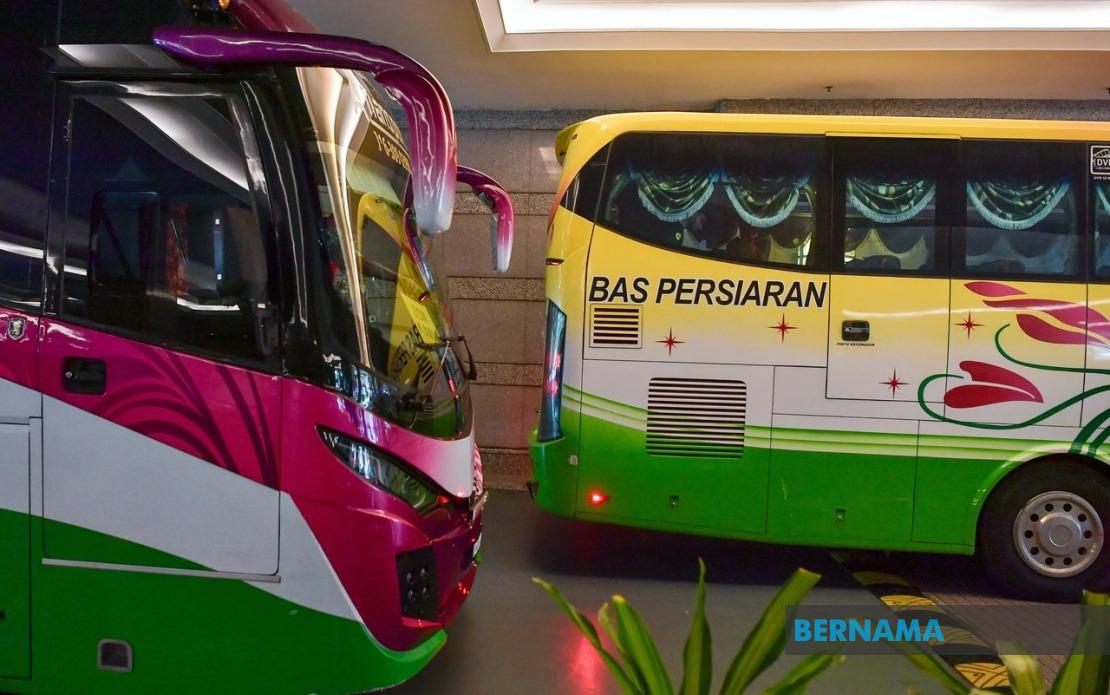
The Malaysian Association of Tour and Travel Agents (MATTA) has launched a public push to reverse a controversial government decision that strips diesel subsidies from licensed tourism transport operators, contending that the exclusion mischaracterises how the industry actually functions and will impose real costs on Malaysian holiday-makers.
MATTA president Nigel Wong directly contradicted recent remarks by Finance Minister II Datuk Seri Amir Hamzah Azizan, who claimed the subsidy would primarily benefit international visitors. Wong's rebuttal underscores a fundamental disagreement over whether tourism transport serves a genuinely mixed clientele or operates mainly to serve foreign travellers. In his statement, Wong highlighted that licensed operators run services for domestic holidaymakers, school groups, corporate team-building events, incentive travel programmes, religious pilgrimages, educational excursions and community activities—a diverse portfolio that clearly extends far beyond catering to overseas tourists.
The practical implications of removing the subsidy are substantial and immediate. Tourism transport operators will face sharply elevated fuel costs with no corresponding offset, forcing them to absorb losses or adjust their pricing structures. That dilemma leaves operators with a narrow choice: accept margin compression or pass increases to customers. For Malaysian families and groups already budget-conscious about domestic travel, higher charter and tour coach fares could prove the difference between taking a holiday or staying home. The affordability factor that currently makes domestic tourism accessible to middle and lower-income Malaysians would erode, potentially shrinking the domestic visitor base that underpins the broader sector.
Wong's argument contains an economic multiplier dimension that deserves serious consideration from policymakers. When Malaysians travel domestically via affordable tour and charter services, their spending ripples through local supply chains—hotels, restaurants, attraction venues, retail shops, and ground transport operators all benefit. That cascading effect generates employment and tax revenue well beyond the tourism transport segment itself. By raising the entry cost to domestic tourism, the subsidy removal risks dampening activity across this entire ecosystem, creating unintended consequences that extend far beyond the immediate transport operator sector.
The timing compounds the concern. The government is actively promoting Visit Malaysia 2026 (VM2026), a signature campaign designed to boost both international arrivals and domestic tourism participation. Raising fares for tourism transport at the very moment when the nation is making a coordinated push to encourage more Malaysians to travel domestically creates an inherent contradiction in messaging and policy. International visitors shopping for Malaysian package tours will also encounter higher costs, potentially weakening Malaysia's competitive positioning against regional alternatives where transport subsidies may remain intact or where underlying costs are lower.
Wong also raised an uncomfortable secondary effect: the risk that fare increases could push some Malaysian travellers toward unlicensed or informal operators to save money. Licensed operators maintain safety standards, insurance coverage, and regulatory compliance that protect passengers. Driving customers toward unregulated alternatives out of cost pressure introduces public safety risks and undermines the formal economy while eroding tax bases and enforcement authority. This perverse outcome would harm the very consumers the subsidy removal ostensibly seeks to protect or exclude from benefits.
MATTA's formal position calls for the Finance Ministry to reconsider the exclusion outright and to engage collaboratively with the Ministry of Tourism, Arts and Culture (MOTAC) to design a more nuanced subsidy mechanism. The association argues this should be framed as a strategic investment in the tourism economy rather than treated as a budgetary line item to be eliminated on narrow fiscal grounds. That reframing reflects a broader disagreement over whether tourism transport infrastructure deserves the same strategic importance as, say, logistics or manufacturing inputs—a position likely to resonate with tourism-dependent regions and businesses but faces headwinds from budget hawks focused on subsidy rationalisation.
The Finance Ministry's original rationale—that tourism transport subsidies predominantly aid foreign visitors—rests on an assumption about end-user composition that MATTA disputes with concrete operational examples. If the data genuinely shows that licensed tour operators derive 70 or 80 percent of revenue from foreign tourists, the Finance Ministry's position gains traction. Conversely, if domestic usage is comparable or substantial, the exclusion appears poorly targeted. This factual disagreement could be resolved through transparent data sharing, but the absence of such granular public information suggests the decision may have proceeded without comprehensive industry consultation.
Regionally, Malaysia's competitive standing in Southeast Asian tourism is relevant context. Thailand, Vietnam, and Indonesia all employ various mechanisms to support tourism operator viability and affordability. A unilateral subsidy removal could subtly disadvantage Malaysian operators relative to competitors offering cheaper package prices due to domestic fuel support. The Visit Malaysia 2026 campaign targets 25 million arrivals; losing even marginal market share to better-priced regional competitors would undercut that goal and reduce foreign exchange inflows from tourism.
MATTA's underlying message to government is that short-term fiscal savings from subsidy removal risk generating larger economic losses through dampened tourism activity and employment. The association is essentially asking policymakers to weigh immediate budget relief against longer-term tourism revenue forgone—a calculus that hinges on assumptions about demand elasticity, operator pricing behaviour, and multiplier effects that merit public scrutiny and transparent analysis.
The diesel subsidy question also reflects broader tension within Malaysia's economic policy between targeted support for strategic sectors and across-the-board subsidy rationalisation. As government budgets tighten, such decisions become more frequent and contested. MATTA's challenge signals that industry stakeholders will push back when they believe exclusions are ill-conceived or counterproductive, and it sets the stage for potential negotiation between the Finance Ministry and MOTAC over whether tourism transport merits special status or protection within broader subsidy frameworks.

