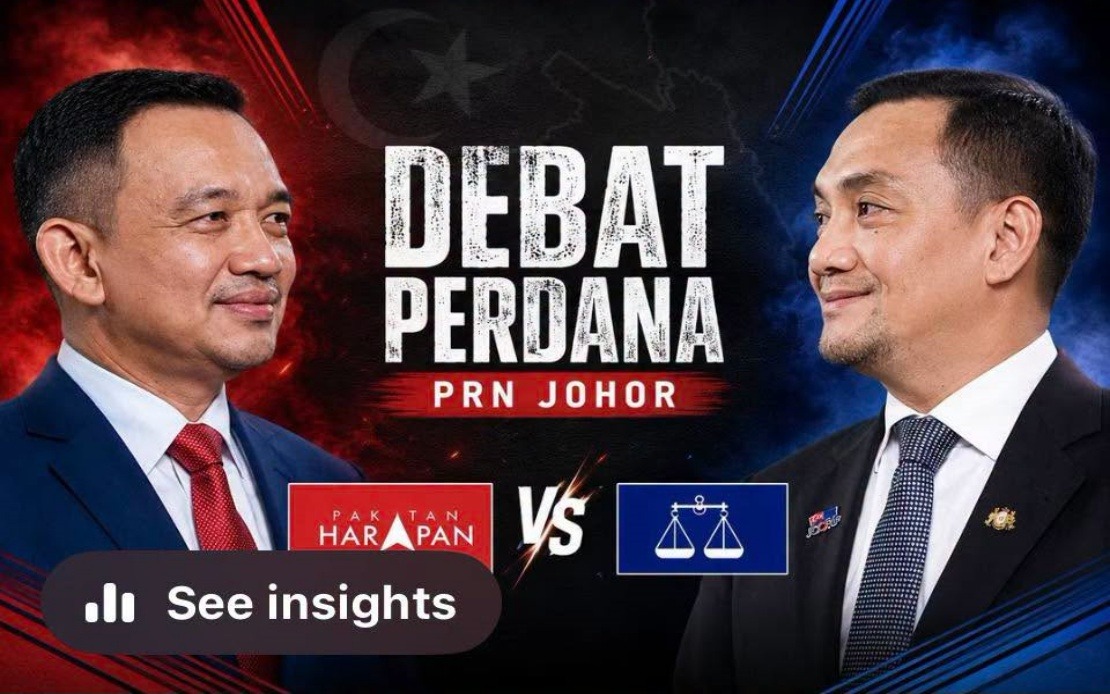
Former Education Minister Maszlee Malik has confirmed his willingness to participate in a debate with Johor Menteri Besar Onn Hafiz Ghazi as the southern state prepares for its upcoming election. Maszlee, who represents Pakatan Harapan as the coalition's candidate for the Puteri Wangsa seat, announced his acceptance through a Facebook post, framing his decision as a commitment to strengthening democratic engagement within the electoral process.
The proposed "Johor State Election Grand Debate" emerged from a suggestion by social media influencer Muhamad Harris Nasril and was subsequently amplified through the Redaksi.com Facebook page. The initiative gained traction following PH chairman Anwar Ibrahim's announcement of all 56 coalition candidates contesting the state election, with the debate potentially becoming a marquee event during the campaign period. Considerable public interest has already materialised, with multiple parties reaching out to Maszlee to confirm whether he would take part in what is shaping up to be a high-profile political engagement.
Maszlee's acceptance reflects a deliberate choice to leverage such forums as vehicles for elevating public discourse. In his statement, he emphasised that debates serve a broader pedagogical function beyond immediate electoral competition, potentially fostering what he termed a culture of mature politics among the electorate. By accepting the challenge rather than dismissing it, the former minister has positioned himself as someone willing to engage directly with political opponents in a transparent, structured environment—a posture that contrasts with the sometimes acrimonious nature of election campaigns in Malaysia.
The Johor state election represents a significant political contest in a state long considered strategically important to Malaysia's broader political landscape. Johor has traditionally been a powerhouse for UMNO and the Barisan Nasional coalition, making any gains by Pakatan Harapan potentially consequential for the opposition's standing nationally. The Election Commission has scheduled nomination day for this Saturday, with early voting on July 7 and polling on July 11, leaving candidates and parties a compressed timeframe to campaign and build momentum.
Pakatan Harapan's candidature distribution across the 56 seats reveals the internal coalition dynamics, with PKR fielding 20 candidates, Amanah providing 19, and DAP contributing 17. This allocation reflects ongoing negotiations within the three-party coalition regarding seat distribution and candidate viability. For PKR, Maszlee's high-profile participation as a former cabinet minister adds credibility to the coalition's campaign, particularly among urban voters and those concerned with educational policy continuity.
Onn Hafiz's decision to propose such a debate suggests confidence in his ability to articulate the Barisan Nasional's record and vision for Johor. As the incumbent Menteri Besar, he represents continuity and the state government's administrative track record. The debate framework provides an opportunity for voters to evaluate competing visions directly, moving beyond selective campaign messaging and allowing for substantive engagement on policy, governance, and future direction.
The emergence of social media influencers as catalysts for political events reflects broader shifts in how campaigns are organised and publicised in Malaysia. Muhamad Harris Nasril's role in initiating the debate proposal demonstrates how digital platforms and personalities can shape political discourse, sometimes moving beyond traditional party machinery or media gatekeepers. This democratisation of campaign events, while potentially beneficial for voter engagement, also raises questions about moderation standards and the curation of debate topics and participation rules.
For Maszlee specifically, accepting the debate invitation represents an attempt to reclaim political relevance following his departure from the Education Ministry. His earlier tenure in that portfolio and subsequent political transitions have kept him in public consciousness, particularly among PH supporters. The Puteri Wangsa seat candidacy offers a platform for renewed engagement, and a high-stakes debate performance could meaningfully influence voter perceptions and seat-level dynamics.
The timing of such a debate, scheduled during the compressed campaign period, could amplify its impact on voter sentiment. Television coverage and social media circulation of debate highlights often far exceed the live audience, creating ripple effects across constituencies. For both camps, the debate becomes an opportunity not merely to persuade uncommitted voters but also to energise respective party supporters and generate favourable online narratives that extend the message beyond the formal debate venue.
Broader implications for Malaysian politics include signals about opposition willingness to contest incumbents directly and visibly, rather than relying solely on backroom manoeuvring or indirect criticism. Maszlee's acceptance articulates a vision of electoral competition grounded in transparency and reasoned debate. Should the debate materialise as proposed, it could establish a template for future state and national elections, normalising such engagement as an expected element of democratic competition rather than an exceptional occurrence.