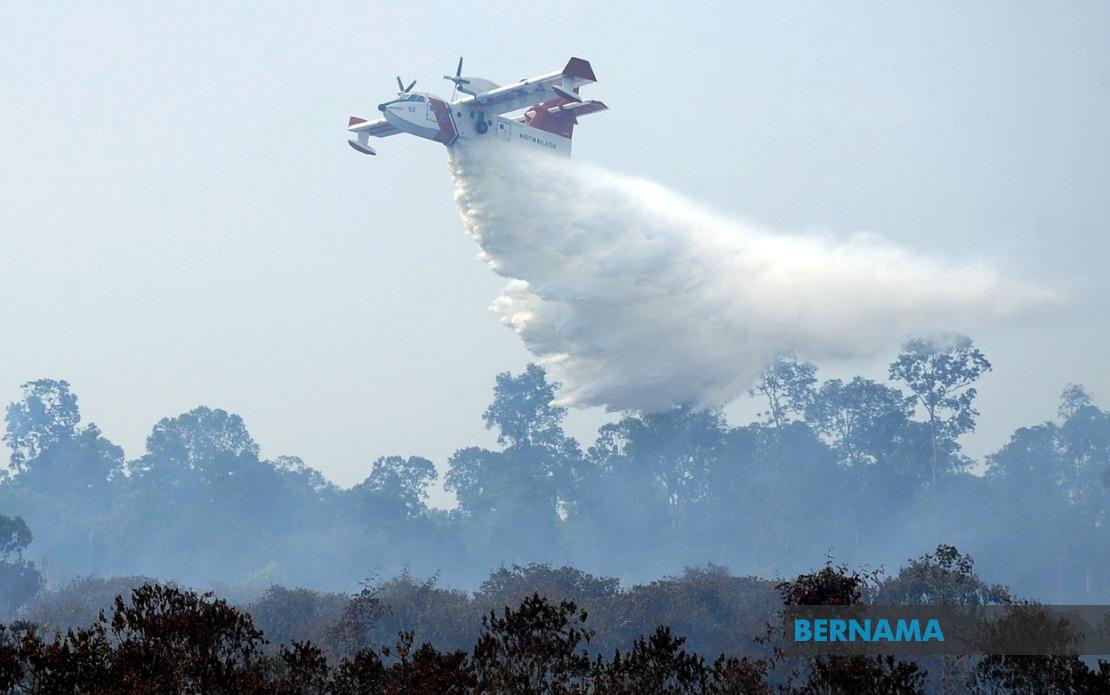
Sarawak's emergency services faced a demanding day on August 22 as firefighting crews tackled two separate but substantial blazes across the state. The most pressing incident saw a massive peatland fire consuming 30 hectares of a former oil palm plantation near Jalan Bungin in Serembang, Betong, forcing the Sarawak Fire and Rescue Department to mobilise ground crews and coordinate with multiple agencies to contain the rapidly spreading flames.
The initial emergency alert came through at 2.44 pm, prompting six personnel from the Betong Fire Station to rush toward the affected area. By 3.15 pm, the first responders had arrived on scene, only to discover that conventional firefighting equipment faced severe operational limitations. The challenging terrain and sparse infrastructure in the area immediately complicated containment efforts, setting the stage for a lengthy and resource-intensive operation that would stretch into the evening hours.
As of 5 pm, when authorities released their initial situation report, active firefighting continued but responders grappled with persistent difficulties stemming from poor road access and the complete absence of nearby water sources. These environmental constraints forced the department to adopt a multi-agency approach, requesting assistance from the Betong Drainage and Irrigation Department to supply specialised equipment better suited to the terrain. Heavy fire engines, normally the backbone of major fire response operations, proved unsuitable for the narrow plantation tracks, necessitating the deployment of smaller water tankers and excavation equipment instead.
The peatland nature of the fire presented additional technical challenges. Peatland fires are notoriously difficult to extinguish because peat burns both above and below ground level, creating subsurface combustion zones that standard surface water-bombing techniques cannot always reach. The underground carbon stores in peatlands burn with tremendous intensity once ignited, and the water absorption rates differ markedly from mineral soil fires. This distinction meant that conventional firefighting tactics required substantial modification to address the particular characteristics of peatland combustion.
While firefighters battled the Betong inferno, Sarawak's aerial assets proved significantly more effective in managing a second fire emergency approximately 90 kilometres away in Lundu. The Sarawak Fire and Rescue Department's Air Unit initiated water-bombing operations against a forest fire spreading across nearly two hectares within the Samunsam Forest Reserve. The aerial campaign commenced at 12.55 pm and maintained continuous operations for just under two hours, with pilots completing 13 distinct bombing runs before bringing the blaze under sufficient control to cease aerial operations at 2.47 pm.
The success of the water-bombing campaign in Lundu reflected the distinct advantages of aerial fire suppression in accessible terrain. From the air, aircraft could deliver concentrated water payloads directly onto active fire zones without navigating ground-level obstacles. The coordination between aerial operations and ground crews proved efficient, with Lundu Fire Station personnel switching to traditional fire-beating techniques once the intensity of the blaze had been substantially reduced by water-bombing efforts.
Ground operations in Lundu continued through 4.30 pm, focusing on mopping-up activities to ensure complete extinguishment of the fire zone. By the conclusion of ground operations, approximately 1.8 hectares of the previously burning area had been fully extinguished and secured against reignition. While the aerial operation had controlled the fire's spread and intensity, the patient work of ground crews remained essential to achieving the complete elimination of burning material and preventing potential rekindling.
The contrast between the two incidents highlights the varying challenges faced by regional fire services depending on local geography and accessibility. The Betong peatland fire, constrained by poor access and absent water infrastructure, required creative solutions and inter-agency cooperation. The Lundu forest fire, occurring in terrain more amenable to aerial operations, benefited from the speed and reach of helicopter water-bombing capabilities. Both incidents underscored the strain placed on Sarawak's emergency services when major fires strike simultaneously across dispersed locations.
For Malaysian policymakers and emergency management officials, the August 22 incidents offer relevant lessons regarding fire preparedness in agricultural areas and forest reserves. Peatland regions, increasingly common in Southeast Asia's plantation economies, require specialised response protocols and pre-positioned equipment. The difficulties encountered in Betong—particularly the absence of accessible water sources and inadequate road infrastructure—suggest that land development planning in fire-prone regions must consider emergency access requirements and water availability for firefighting purposes.
The incidents also demonstrate the critical importance of maintaining and funding specialised aerial firefighting capabilities. The success of the Lundu operation, contrasted with the prolonged struggle in Betong, illustrates how helicopter-based water-bombing can dramatically reduce response times and contain fire spread in accessible terrain. For a state like Sarawak, with vast forested areas and scattered plantation developments, maintaining air assets dedicated to fire suppression represents a significant public safety investment.

